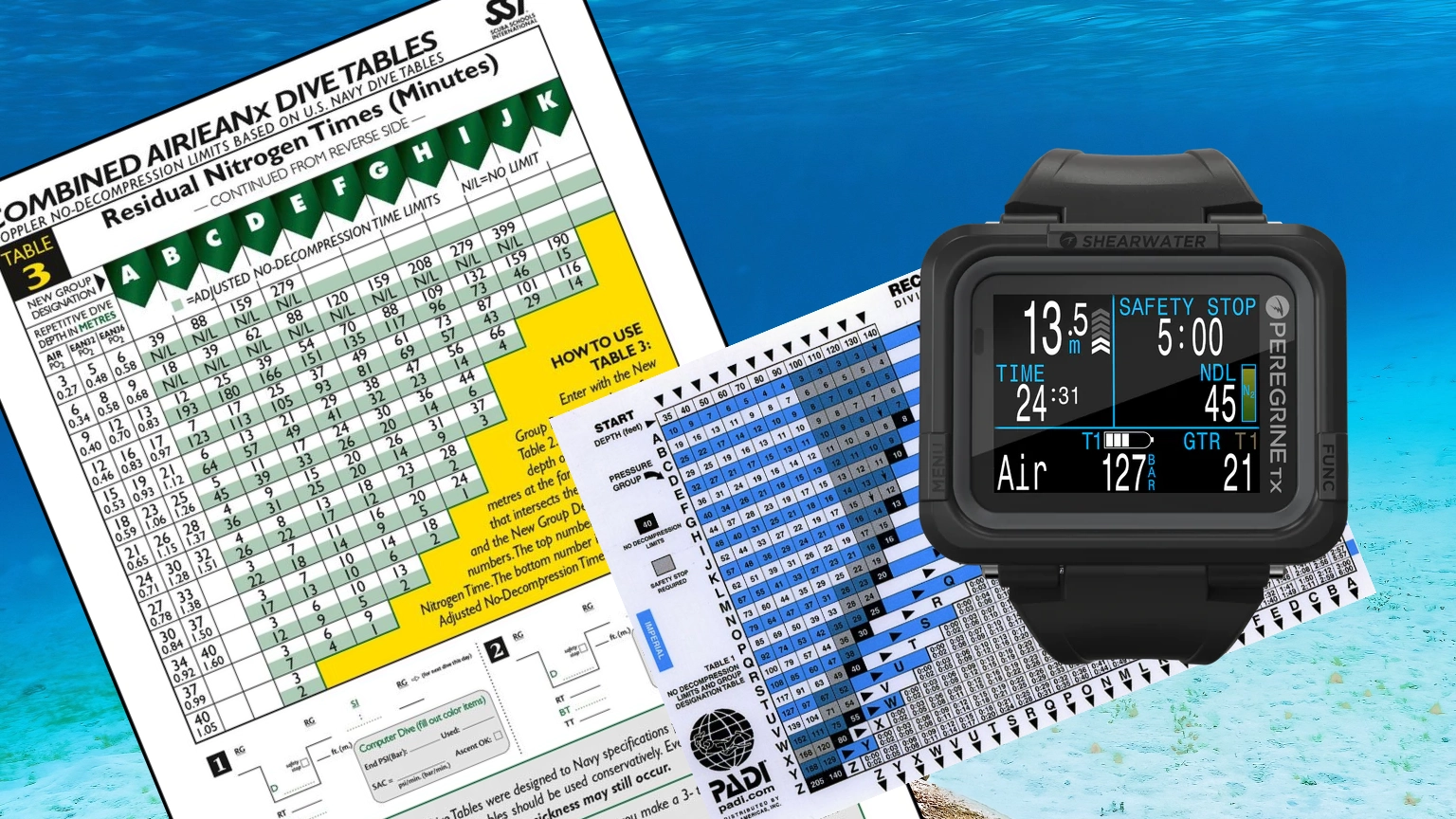
The recent diving tragedy in the Maldives has once again highlighted an important subject in scuba diving safety: understanding your limits underwater. One term often mentioned after diving incidents is the NDL, or No-Decompression Limit.
For many new divers, it sounds technical and intimidating. In reality, understanding NDLs is one of the most important parts of becoming a safer and more confident diver.
At Ocean Tribe in Diani Beach, Kenya, we strongly encourage divers not only to understand the basics of dive tables and decompression theory, but also to learn how to properly use modern dive computers through the SSI Computer Diving Specialty Course.
What Is an NDL in Scuba Diving?
The No-Decompression Limit (NDL) is the maximum amount of time a diver can stay at a certain depth and still make a direct ascent to the surface without mandatory decompression stops.
Put simply:
The deeper you go, the less time you can safely stay there.
When you dive underwater, your body absorbs nitrogen from the air you breathe. The deeper you dive and the longer you stay, the more nitrogen builds up in your tissues.
If you ascend too quickly — or exceed safe limits — that nitrogen can form bubbles in the body, potentially causing Decompression Sickness (DCS), sometimes called “the bends.”
The NDL is designed to help divers avoid this.
Example of an NDL
Here is a rough example using recreational dive limits:
- At 18 metres: your NDL may be around 56 minutes
- At 30 metres: your NDL may drop to around 20 minutes
- At 40 metres: your allowable time becomes extremely short
Even a few extra minutes at depth can significantly increase risk.
This is why depth awareness and time monitoring are so important on every dive.
Why Does the NDL Matter So Much?
Most recreational scuba diving is planned specifically to remain within no-decompression limits.
Exceeding your NDL can mean:
- Longer decompression obligations
- Increased risk of DCS
- Greater stress during ascents
- Increased gas consumption
- More complicated emergency situations
In many diving accidents around the world, multiple small factors combine:
- Depth
- Task loading
- Anxiety
- Poor buoyancy
- Inexperience
- Equipment familiarity
- Rapid ascents
- Exceeding limits
Understanding your NDL helps prevent these problems before they start.
The Maldives Tragedy and the Importance of Dive Planning
The recent tragedy in the Maldives serves as a reminder that scuba diving is an adventure activity that requires proper training, awareness, and decision-making.
While investigations into any incident take time and circumstances vary greatly, one consistent lesson from many dive accidents is this:
Divers must understand their own limits and monitor them carefully throughout the dive.
Modern recreational diving is extremely safe when conducted properly. But safety depends on:
- Good training
- Conservative diving
- Situational awareness
- Proper supervision
- Correct use of equipment
This includes understanding no-decompression limits and monitoring them during every dive.
Why Dive Computers Have Changed Diving
Years ago, divers relied almost entirely on printed dive tables.
Today, dive computers have transformed recreational diving safety.
A modern dive computer constantly tracks:
- Your depth
- Dive time
- Ascent rate
- Nitrogen loading
- Safety stops
- Surface intervals
- Remaining no-decompression time
Rather than relying on a fixed plan, your computer updates your status in real time throughout the dive.
This is especially important because most dives are not perfectly square profiles.
For example:
- You may spend a few minutes deeper
- Then move shallower
- Then deeper again
Dive computers adjust continuously for this changing profile.
Dive tables cannot do this nearly as accurately.
Why Diving With Computers Is Better Than Tables
Modern dive computers provide major safety advantages:
Real-Time Information
You always know your remaining NDL during the dive.
More Conservative Diving
Computers warn you before you approach limits.
Better Multi-Level Dive Management
Most recreational dives are multi-level dives, which computers handle far better than tables.
Ascent Rate Monitoring
Many computers alert you if you ascend too quickly.
Reduced Task Loading
Divers can focus more on buoyancy, awareness, and enjoyment instead of calculations underwater.
Improved Dive Logging
Computers automatically record dive history, depths, temperatures, and profiles.
But Divers Should Still Learn Dive Tables
Despite the advantages of computers, understanding dive tables remains important.
Why?
Because tables teach the underlying theory behind decompression and nitrogen absorption.
Divers who understand tables usually better understand:
- Why ascent rates matter
- Why safety stops matter
- Why repetitive dives affect limits
- Why deep diving increases risk
- How nitrogen accumulates over time
Tables also provide a valuable backup knowledge system if a computer fails.
At Ocean Tribe, we believe:
Computers should be your primary tool — but understanding the theory behind them makes you a better diver.
The SSI Computer Diving Specialty Course
The SSI Computer Diving Specialty is one of the most useful and underrated courses a diver can take.
It goes beyond simply pressing buttons on a computer.
The course helps divers understand:
- How dive computers actually work
- Conservatism settings
- NDL calculations
- Ascent rates
- Gas loading
- Safety stop strategies
- Multi-level diving
- Dive planning
- Common mistakes divers make
It also helps divers become more comfortable and less stressed underwater because they better understand the information their computer is showing them.
Who Should Take the Computer Diving Course?
This course is ideal for:
- Newly certified divers
- Divers returning after a long break
- Divers moving into deeper diving
- Anyone planning frequent dive holidays
- Divers interested in improving safety and confidence
Even experienced divers often discover they have been using their computers incorrectly or not fully understanding the information available.
Diving Conservatively Is Smart Diving
One of the best habits divers can develop is conservative diving.
That means:
- Staying well within limits
- Ascending slowly
- Making proper safety stops
- Avoiding pushing NDLs
- Staying hydrated
- Maintaining good buoyancy
- Using appropriate exposure protection
- Monitoring air and depth carefully
The ocean will always be there tomorrow.
Good divers are not the ones who push limits — they are the ones who dive safely for decades.
Learn to Dive Smarter With Ocean Tribe
At Ocean Tribe in Diani Beach, Kenya, we focus heavily on diver education, confidence, and real-world understanding — not just minimum course requirements.
Whether you are newly certified or already experienced, improving your understanding of dive computers and decompression theory can make a huge difference to your safety and enjoyment underwater.
Our SSI Computer Diving Specialty Course is available for certified divers looking to become safer, more knowledgeable, and more confident underwater.
FAQs About What Is an NDL in Scuba Diving
What does NDL stand for in scuba diving?
NDL stands for No-Decompression Limit. It is the maximum time a diver can stay at a certain depth without requiring mandatory decompression stops during ascent.
What happens if you exceed your NDL?
If you exceed your NDL, you may need decompression stops before surfacing. Ignoring these can increase the risk of Decompression Sickness (DCS).
Are dive computers safer than dive tables?
In most recreational situations, yes. Dive computers provide real-time monitoring and adjust continuously throughout the dive, making them more accurate and practical for modern recreational diving.
Should divers still learn dive tables?
Absolutely. Understanding dive tables helps divers understand decompression theory and make better decisions underwater, even if they primarily use computers.
Is the SSI Computer Diving Specialty worth it?
Yes. It helps divers better understand their dive computers, dive planning, safety margins, ascent management, and nitrogen loading.
Can beginners take the Computer Diving Specialty?
Yes. Newly certified divers often benefit enormously from learning how to properly use and understand dive computers early in their diving journey.
Why do NDLs get shorter at deeper depths?
Because nitrogen is absorbed more quickly under higher pressure. The deeper you dive, the faster nitrogen accumulates in your body.