There are easier ways to earn a living than becoming a diving instructor. There are certainly jobs with more predictable hours, less responsibility and considerably less equipment to carry around. But how many careers allow you to spend your working days exploring the underwater world, meeting people from across the globe and helping someone experience something they never thought possible?
Becoming a diving instructor isn’t for everyone. It takes commitment, patience, professionalism and a genuine enthusiasm for teaching others. There will be early mornings, long days and moments when you wonder why you didn’t choose a comfortable office job.
Yet for the right person, becoming a scuba diving instructor can open doors to an extraordinary career. It can take you around the world, introduce you to lifelong friends and give you the satisfaction of helping people achieve things they never imagined possible.
And if you’ve been thinking about making that change, Ocean Tribe’s next SSI Instructor Training Course in Diani Beach, Kenya, begins on 28 November 2026.
More Than a Job: A Different Way of Life
Ask a group of diving instructors why they chose their profession, and you’ll probably hear a variety of answers.
Some wanted to escape conventional employment. Others fell in love with diving while travelling and decided they weren’t ready to return home. A few discovered that teaching people to dive was even more rewarding than diving themselves.
Whatever their motivation, most quickly discover that professional diving offers a very different working environment.
Your Office Could Be Almost Anywhere
One of the attractions of becoming a diving instructor is the opportunity to work internationally.
Scuba diving is a global industry. From the coral reefs of the Indian Ocean to the wrecks of the Red Sea, the islands of Southeast Asia and the marine reserves of the Caribbean, qualified instructors can pursue opportunities in some remarkable locations.
Imagine spending a season teaching diving in Thailand, moving to the Maldives to work at a luxury resort, or settling on Kenya’s south coast and introducing visitors to the reefs of the Indian Ocean.
Of course, professional qualifications don’t automatically guarantee employment. Experience, language skills, work permits and local employment regulations all influence where you can work.
Nevertheless, becoming a diving instructor can give you access to career opportunities that would otherwise be difficult to imagine.
No Two Days Are Quite the Same
One morning, you might introduce a nervous beginner to scuba diving for the first time.
The following day, you could be teaching an experienced diver how to improve their buoyancy control or navigate underwater.
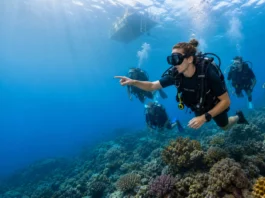
Another day might involve guiding visitors around a coral reef, introducing children to scuba diving or helping someone return to the water after years away.
There are also days spent servicing equipment, preparing training materials, completing paperwork and washing wetsuits.
It’s not all glamorous, but the variety is part of what makes the job interesting.
The Moment You Realise Why You Became a Diving Instructor
Ask experienced instructors about their most memorable dives, and you might be surprised by their answers.
It isn’t always the dive with the biggest shark, the most spectacular wreck or the best visibility.
Sometimes, it’s a swimming pool.
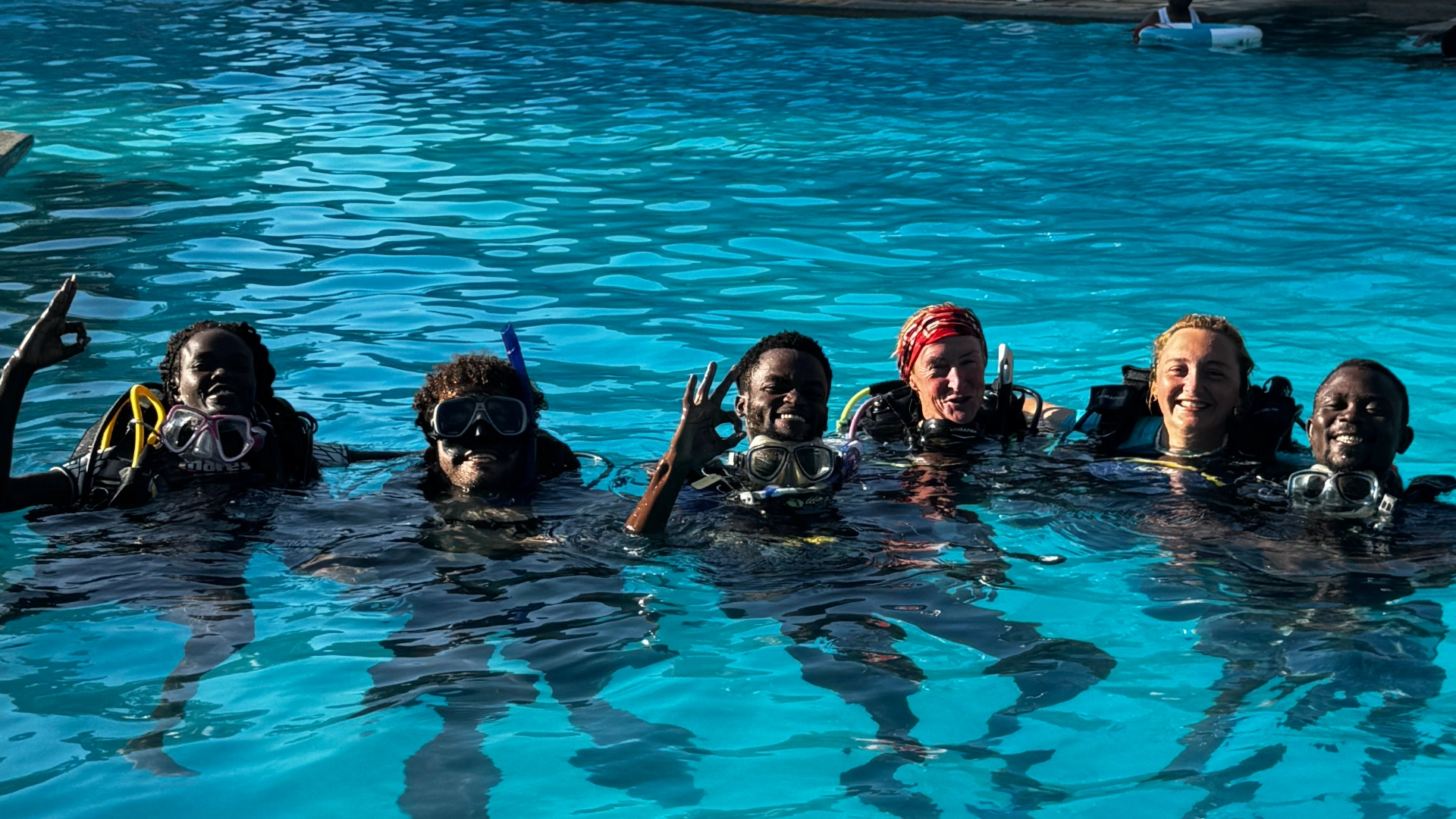
Picture a student who arrives for their first scuba diving lesson feeling genuinely frightened. They want to learn, but the idea of breathing underwater makes them uncomfortable.
Perhaps they struggle with clearing their mask. Maybe they find it difficult to relax or control their breathing.
As their instructor, your job isn’t simply to demonstrate a skill and expect them to copy it.
You need to understand what’s making them uncomfortable, communicate clearly and find a way to help them succeed.
Then something changes.
The student begins to relax. Their breathing settles. They realise they can control their equipment and move comfortably underwater.
A day or two later, they’re exploring a coral reef, pointing excitedly at fish and wondering why they were ever nervous.
That transformation is something special.
And you helped make it happen.
Teaching People, Not Just Diving Skills
The best diving instructors understand that teaching scuba diving is fundamentally about working with people.
Every student brings different experiences, expectations and challenges.
Some are confident swimmers who immediately feel comfortable underwater. Others need additional time, reassurance or a different teaching approach.
An effective instructor recognises these differences and adapts accordingly.
This becomes particularly apparent when teaching adaptive diving, where instructors may need to modify their techniques to accommodate individual physical or cognitive requirements.
The objective remains the same: helping someone discover what they can achieve underwater.
At Ocean Tribe, we believe the ability to communicate, adapt and understand individual students is every bit as important as demonstrating excellent diving skills.
After all, students rarely remember how perfectly their instructor performed a regulator recovery.
They remember how their instructor made them feel.
Becoming a Diving Instructor Can Take You Around the World
A professional diving qualification can be the beginning of a surprisingly varied career.
Many newly qualified instructors start by teaching recreational diving courses at resort dive centres.
However, the opportunities don’t necessarily stop there.
As instructors gain experience, they can develop specialist interests, take on additional responsibilities or move into different areas of the diving industry.
Where Could Your Diving Career Take You?
Professional diving opportunities include working in:
- Tropical resort dive centres and independent diving schools.
- Liveaboard diving operations.
- Marine conservation and environmental education programmes.
- Professional diver training centres.
- Seasonal diving destinations.
- Dive centre management and operations.
- Equipment sales, distribution and training.
Some instructors develop expertise in marine ecology, underwater photography, adaptive diving or more advanced forms of scuba training.
Others progress into instructor development, helping train the next generation of diving professionals.
There are also opportunities to become involved in dive centre ownership and management.
The important point is that becoming an instructor doesn’t have to represent the final destination of your professional development.
For many people, it’s where their diving career really begins.
Is Being a Diving Instructor Really the Best Job in the World?
Let’s address something that doesn’t always appear in the promotional photographs.
Working as a diving instructor isn’t the same as being on holiday.
Those pictures of smiling instructors standing on tropical beaches rarely show the equipment preparation that happened beforehand or the cleaning and maintenance that follows.
The Reality Behind the Instagram Photos
Professional diving can involve long working days, physically demanding tasks and considerable responsibility.
You’ll need to prepare equipment, assess conditions, manage student expectations and maintain high safety standards.
You may find yourself dealing with nervous customers, equipment problems, unexpected weather changes or students who require considerably more attention than anticipated.
You’ll also discover that diving instructors spend a surprising amount of time doing things that have absolutely nothing to do with being underwater.
And while some experienced professionals build successful careers, entry-level instructor salaries can be modest, particularly in popular tropical destinations.
If your primary ambition is to earn a large salary while doing as little work as possible, professional diving probably isn’t the career for you.
Loving Diving Isn’t the Same as Loving Teaching
This is perhaps the most important distinction.
Being an excellent recreational diver doesn’t automatically make someone a good diving instructor.
Teaching requires patience, communication, empathy and the ability to put another person’s needs ahead of your own.
You might love exploring deep wrecks or photographing marine life, but your working day could involve spending several hours helping a beginner master basic scuba skills in shallow water.
For some people, that becomes frustrating.
For others, it becomes the most rewarding part of their career.
The instructors who thrive are generally those who enjoy teaching people as much as they enjoy diving.
And that’s what makes the profession special.
What Does It Take to Become a Scuba Diving Instructor?
If the lifestyle and responsibilities appeal to you, the next question is how to get started.
Becoming a diving instructor involves progressing through recreational and professional training while developing the experience and knowledge needed to teach safely.
It’s not simply a matter of completing a certain number of dives.
Developing the Right Foundations
Successful instructor candidates need strong foundational diving skills and a sound understanding of diving theory.
They must understand subjects such as diving physics, physiology, equipment, decompression theory and the underwater environment.
They also need effective buoyancy control, situational awareness and the ability to demonstrate scuba skills clearly.
However, technical diving ability is only part of the equation.
Instructor candidates must learn how to explain information, structure lessons, assess student performance and provide constructive feedback.
They must also develop the judgement needed to manage training activities and recognise potential problems before they become serious.
The SSI Professional Training Pathway
For most divers, the journey begins with recreational certifications and experience.
As they develop their skills, they can progress through rescue training and professional-level qualifications such as SSI Dive Guide and Divemaster.
Once they meet the applicable SSI prerequisites, candidates can enrol in an Instructor Training Course.
The ITC develops the knowledge, teaching techniques and professional skills required to become an SSI Open Water Instructor.
Candidates then complete an SSI Instructor Evaluation, where they demonstrate their ability to meet the required standards.
The exact entry requirements depend on existing qualifications, experience and current SSI training standards.
What Happens During an SSI Instructor Training Course?
An SSI Instructor Training Course is designed to transform experienced divers into capable diving educators.
Rather than simply learning how to demonstrate skills, candidates develop the ability to teach other people effectively.
Training includes academic presentations, confined-water teaching, open-water instruction and workshops covering the responsibilities of an SSI professional.
Learning to Teach in the Classroom
Instructor candidates practise delivering structured academic presentations.
They learn how to explain complex diving concepts clearly, use appropriate teaching materials and maintain student engagement.
They also develop techniques for checking understanding and providing useful feedback.
Developing Confined-Water Teaching Skills
In confined water, candidates practise teaching scuba skills to simulated students.
This involves organising training activities, demonstrating techniques, recognising student difficulties and correcting problems appropriately.
The objective isn’t simply to perform a perfect mask clear.
It’s to teach someone else how to perform that skill confidently and safely.
Teaching in Open Water
Open-water training introduces additional considerations.
Candidates must learn to organise students, manage the training environment, supervise activities and maintain awareness of changing conditions.
They also develop their ability to make decisions and respond appropriately when things don’t go according to plan.
Preparing for the Instructor Evaluation
The SSI Instructor Evaluation assesses whether candidates meet the required knowledge, skills and teaching standards.
However, a good instructor training programme should aim for something beyond examination success.
It should prepare candidates to become effective instructors in a real working environment.
After all, passing an evaluation is one thing.
Standing in front of your first group of paying students is another.
Why Your Choice of Instructor Training Centre Matters
Not every instructor training experience is identical.
Although SSI programmes follow established training standards, the learning environment, experience of the Instructor Trainer and level of individual attention can influence how candidates develop.
Experience Makes a Difference
An experienced Instructor Trainer understands that different candidates have different strengths.
Some arrive with excellent practical skills but little experience speaking in front of groups.
Others are confident communicators who need to refine their diving demonstrations.
Effective instructor development involves identifying these differences and helping each candidate improve.
Small Groups Create Better Learning Opportunities
Instructor candidates benefit from regular practice and constructive feedback.
Smaller training groups can provide more opportunities to ask questions, practise presentations and receive individual guidance.
This is particularly valuable when developing teaching techniques that may initially feel unfamiliar.
Preparing for the Real World
Professional diving involves much more than conducting training sessions.
Instructors work with customers, equipment, boats, schedules and other members of the dive centre team.
Understanding these operational responsibilities helps newly qualified instructors become valuable members of a professional diving operation.
At Ocean Tribe, we believe instructor training should prepare candidates for the realities of working in the industry, not simply the requirements of an examination.
Become a Diving Instructor in Kenya With Ocean Tribe
If you’ve been considering a professional diving career, Ocean Tribe’s upcoming SSI Instructor Training Course provides an opportunity to take the next step.
Based in Diani Beach on Kenya’s south coast, Ocean Tribe operates as an SSI Diamond Instructor Training Centre.
Our instructor development programmes combine professional training with practical experience in a working dive centre.
Train in the Tropical Waters of Diani Beach
Diani Beach offers an excellent setting for professional diving education.
Warm Indian Ocean waters, varied coral reefs and a range of dive sites provide opportunities to develop practical experience in a tropical marine environment.
Ocean Tribe operates from The 41 Beach Club, with dedicated dive centre facilities, confined-water training and access to offshore training sites.
Candidates train in an environment where recreational courses, guided diving and professional development form part of everyday operations.
This provides valuable exposure to the practical realities of working as a diving instructor.
Learn From an Experienced SSI Instructor Trainer
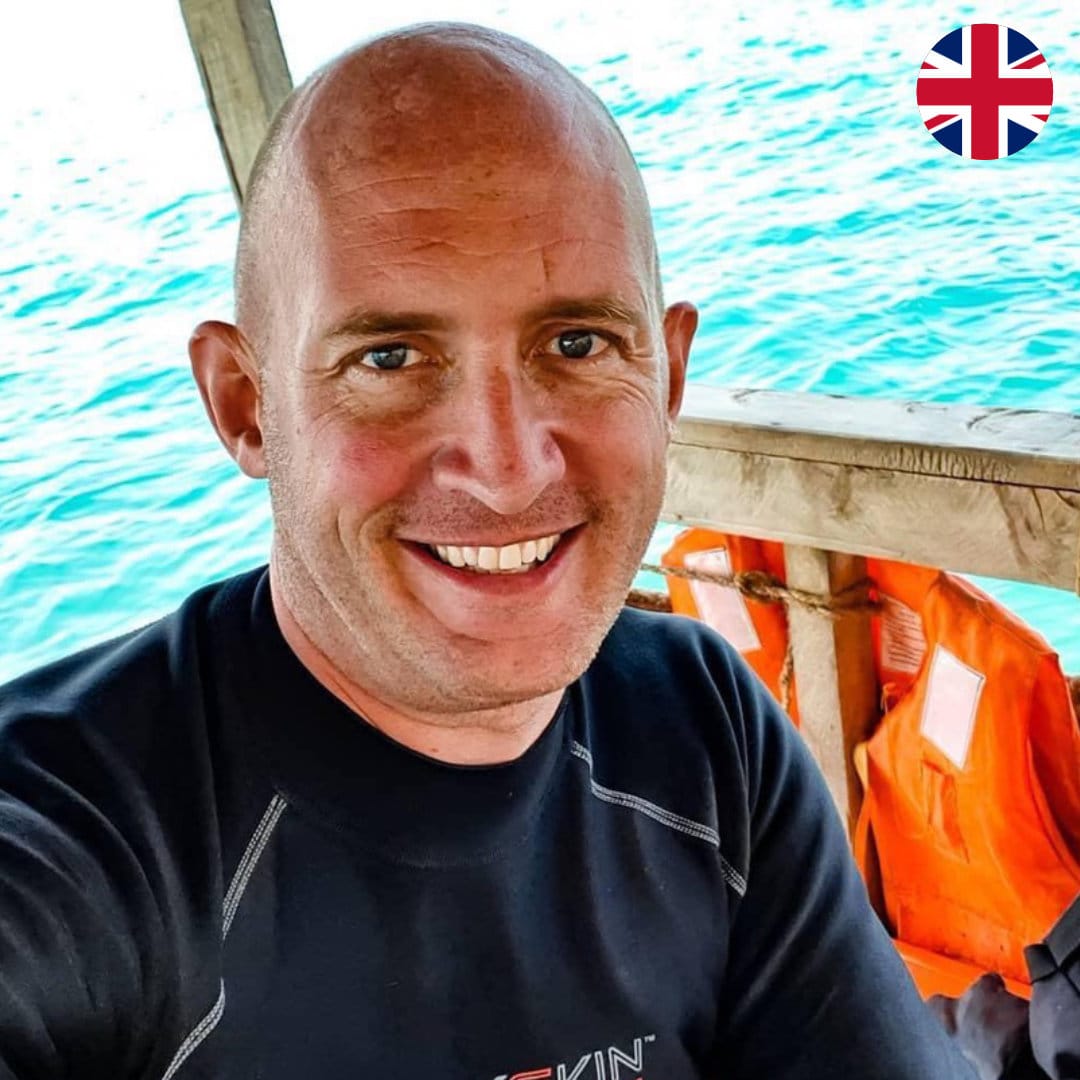
Ocean Tribe’s instructor development programmes are led by Mark Slingo, SSI Instructor Trainer #76419 and former PADI Course Director.
With extensive experience in recreational and professional diving education, Mark brings a practical approach to instructor development.
His background also includes adaptive diving instruction, providing an additional perspective on the importance of communication, patience and adapting teaching techniques to individual students.
The emphasis is on developing confident, knowledgeable and professional instructors who understand how to work effectively with a wide range of divers.
November 2026 SSI Instructor Training Course
Our next SSI Instructor Training Course begins on 28 November 2026, with the Instructor Evaluation taking place immediately afterwards.
| Programme | Dates |
|---|---|
| Full SSI Instructor Training Course | 28 November – 7 December 2026 |
| SSI Instructor Evaluation | 8–9 December 2026 |
| Specialty Instructor Training | 12–13 December 2026 |
The programme provides a structured pathway from instructor candidate to qualified SSI professional, subject to successfully completing the required training and evaluation.
Candidates can also continue their professional development through the scheduled Specialty Instructor training.
Whether you’re already an SSI Divemaster or hold professional qualifications from another recognised training agency, we can help you understand the appropriate pathway and entry requirements.
For full programme information, visit our SSI Instructor Training Course overview.
Become the Instructor Everyone Remembers
Our philosophy is straightforward.
We don’t just want candidates to pass their Instructor Evaluation.
We want them to develop the knowledge, confidence and teaching skills that make students feel comfortable, capable and excited about diving.
Because the instructors who make the greatest impression aren’t necessarily the ones with the most certifications or the most dives.
They’re the ones who make a difference to the people they teach.
Ready to start your professional diving career?
Explore Ocean Tribe’s November SSI Instructor Training Course
Could Becoming a Diving Instructor Change Your Life?
Becoming a diving instructor won’t necessarily make you wealthy. It won’t guarantee endless sunshine, perfect diving conditions or a stress-free existence.
There will be challenging days, difficult decisions and moments when the responsibility feels considerable.
But there will also be experiences that make it all worthwhile.
You’ll meet people from different countries and backgrounds. You will have opportunities to explore remarkable underwater environments. You’ll develop skills that extend far beyond scuba diving.
Most importantly, you’ll have the opportunity to introduce people to an entirely new world.
You’ll see nervous beginners become confident divers. You’ll help students achieve goals they once thought impossible. And occasionally, you’ll realise that something you taught someone has genuinely changed their life.
That’s a remarkable thing to be able to say about your job.
Perhaps the best part of becoming a diving instructor isn’t simply where the profession takes you.
It’s the difference you can make along the way.
Your next adventure could become your career.
Ocean Tribe’s next SSI Instructor Training Course begins on 28 November 2026 in Diani Beach, Kenya.
Start Your Journey: November 2026 SSI Instructor Training Course