If you’re wondering how to apply for a job as a scuba professional, you’re already taking the first step towards building a successful diving career. Whether you’re a newly qualified Divemaster, an instructor looking for your first teaching position, or an experienced professional seeking a new challenge, the way you approach the application process can make a significant difference.
Many dive centre managers receive dozens, sometimes hundreds, of applications every year. While qualifications are important, employers are also looking for professionalism, strong communication skills, reliability, and people who will fit well within their team.
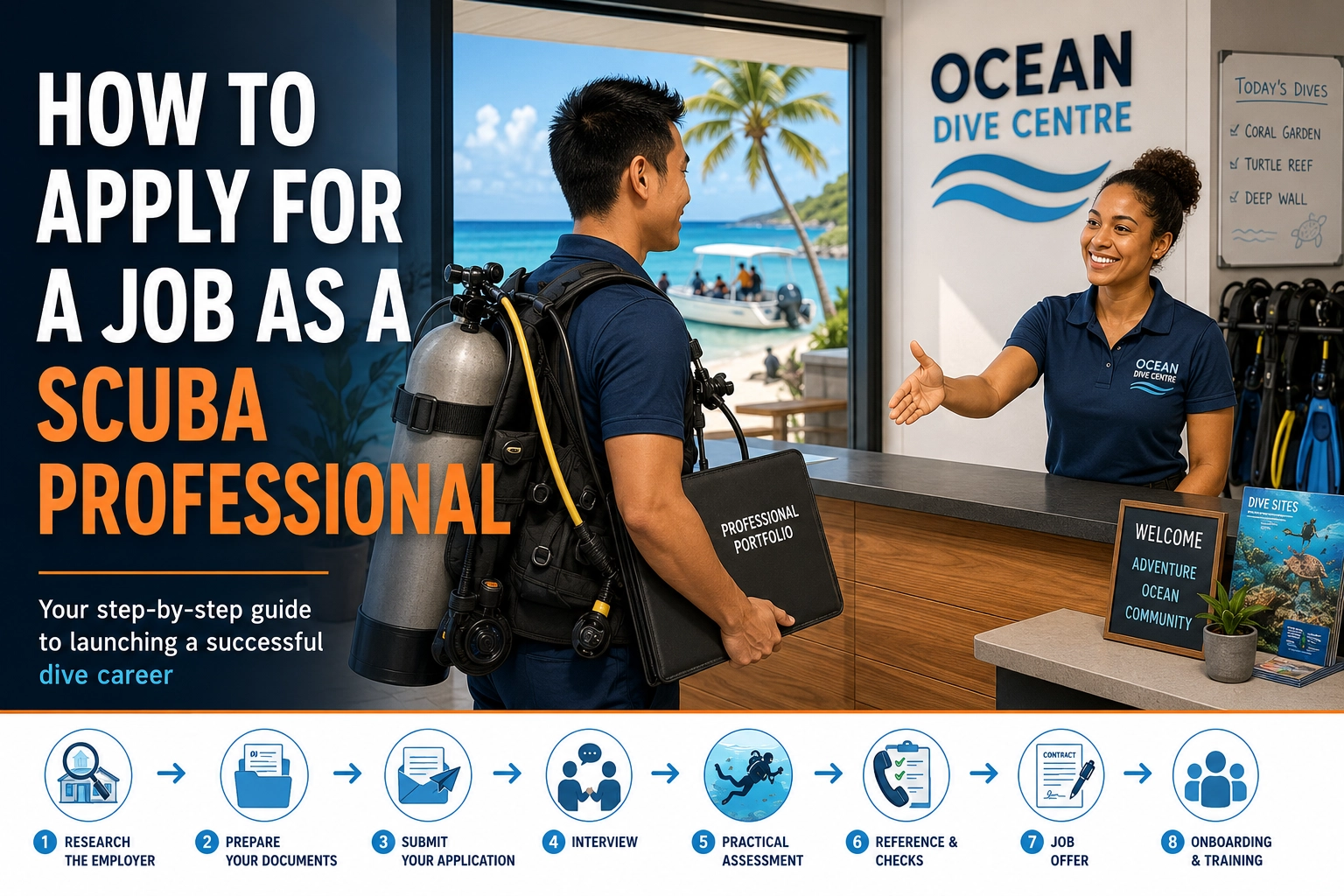
In this guide, we’ll explain how to apply for a job as a scuba professional, from researching potential employers to making a great impression during your first days at a new dive centre.
Research the Dive Centre Before You Apply
One of the biggest mistakes applicants make is sending the same CV and cover letter to every dive centre they can find.
Instead, spend time researching each employer before applying.
Visit the dive centre’s website and social media pages to understand:
- The type of diving they offer
- Their training agency affiliations
- The courses they teach
- Their customer reviews
- The size of their operation
- The local diving conditions
- Their company values and culture
This research allows you to tailor your application and demonstrate genuine interest in the business.
For example, a small family-run dive centre may prioritise personalised customer service, while a busy resort operation may be looking for instructors who can efficiently manage larger groups.
Employers appreciate applicants who have taken the time to understand their business.
Prepare a Professional Application
Your application creates the employer’s first impression of you, so make it count.
Create a Professional CV
Your CV should be clear, concise and easy to read.
Include:
- Contact information
- Professional profile
- Diving qualifications
- Instructor certifications
- Emergency first aid qualifications
- Employment history
- Teaching experience
- Number of logged dives
- Language skills
- Boat handling or skipper qualifications
- Equipment servicing experience
- Professional references
Avoid unnecessary graphics or complicated layouts. A clean, professional document is much easier for employers to review.
Write a Personalised Cover Letter
Your cover letter explains why you are applying for that specific position.
It should briefly describe:
- Why you want to work for that dive centre
- What experience you can bring
- Why you would be a valuable member of their team
- Your availability
- Whether you are willing to relocate
A personalised cover letter demonstrates genuine enthusiasm and professionalism.
Organise Your Supporting Documents
Have digital copies ready of:
- Diving certifications
- Instructor credentials
- CPR and first aid qualifications
- Oxygen provider certification
- Passport identification page
- Work permits or visas where required
- Professional liability insurance
- References
Save documents as clearly named PDF files to make them easy for employers to review.
Submit Your Application Professionally
Knowing how to apply for a job as a scuba professional also means understanding how to communicate professionally.
When emailing your application:
- Use a clear subject line.
- Write a polite introduction.
- Briefly summarise your experience.
- Mention the attached documents.
- Thank the employer for their time.
Before pressing send, double-check:
- Grammar
- Spelling
- Contact details
- File attachments
- Email addresses
Small mistakes can leave a poor first impression.
Prepare for the Interview
If your application is shortlisted, you’ll usually be invited to an interview.
This may take place:
- Online
- By telephone
- In person
The interview helps both you and the employer determine whether you’re a good fit.
Common discussion topics include:
Your Teaching Experience
Employers may ask about:
- Courses you’ve taught
- Student numbers
- Difficult teaching situations
- Professional development
- Experience with different customer groups
Safety
Safety is one of the most important responsibilities of every scuba professional.
Be prepared to discuss:
- Emergency procedures
- Rescue experience
- Risk management
- Incident reporting
- Oxygen administration
Customer Service
Successful dive professionals spend as much time working with people as they do underwater.
Expect questions about:
- Handling nervous students
- Managing complaints
- Upselling courses
- Building customer relationships
- Providing excellent guest experiences
Teamwork
Managers are looking for people who work well with others.
Be ready to explain how you’ve:
- Supported colleagues
- Managed conflict professionally
- Communicated effectively
- Adapted to busy operations
A positive attitude is often just as important as technical ability.
Complete the Practical Assessment
Many dive centres include a practical assessment before making a final job offer.
This allows employers to confirm your skills in a real working environment.
You may be asked to demonstrate:
- Classroom teaching
- Pool instruction
- Open water teaching
- Rescue skills
- Dive guiding
- Student supervision
- Briefings and debriefings
During the assessment, employers will evaluate:
- Communication
- Confidence
- Organisation
- Safety awareness
- Leadership
- Customer interaction
Stay calm and remember that professionalism is just as important as perfect skills.
Expect Reference and Qualification Checks
Before offering employment, many employers verify the information you’ve provided.
They may contact:
- Previous employers
- Professional references
- Training agencies
- Instructors you’ve worked with
They may also confirm:
- Instructor status
- Current certifications
- Medical fitness where applicable
- Work eligibility
Always notify your referees before listing them on your application.
Review the Job Offer Carefully
Receiving a job offer is exciting, but don’t rush into accepting it.
Read the employment contract carefully and check:
- Salary
- Commission arrangements
- Accommodation
- Working hours
- Days off
- Annual leave
- Insurance
- Uniforms
- Visa support
- Contract length
- Probation period
If anything is unclear, ask questions before signing.
A professional employer will be happy to explain the details.
Make the Most of Your Onboarding
Starting a new job is about more than receiving a uniform.
A good onboarding process helps you understand how the dive centre operates.
You’ll usually be introduced to:
- Your new colleagues
- The dive centre facilities
- Emergency procedures
- Standard operating procedures
- Equipment systems
- Boat operations
- Customer service standards
- Administrative procedures
Take notes, ask questions and be willing to learn.
Every dive centre has its own way of doing things.
Common Mistakes to Avoid
Even experienced instructors sometimes make avoidable errors during the recruitment process.
Avoid:
- Sending generic applications.
- Failing to research the employer.
- Using an outdated CV.
- Submitting incomplete documents.
- Arriving late for interviews.
- Speaking negatively about previous employers.
- Exaggerating your experience.
- Ignoring visa or work permit requirements.
- Forgetting to follow up after the interview.
Professionalism begins long before your first day at work.
Tips to Improve Your Chances
If you’re serious about learning how to apply for a job as a scuba professional, these simple habits can make a big difference:
- Tailor every application to the employer.
- Keep your certifications current.
- Maintain an organised digital portfolio.
- Dress professionally for interviews.
- Communicate clearly and respectfully.
- Continue expanding your qualifications.
- Build strong professional relationships.
- Demonstrate enthusiasm for customer service.
- Prioritise safety in every discussion.
- Follow up politely after interviews.
Final Thoughts
Understanding how to apply for a job as a scuba professional is about much more than sending a CV. Employers are looking for qualified professionals who communicate well, work safely, provide outstanding customer service and contribute positively to the team.
By researching each dive centre, preparing a professional application, performing confidently during interviews and practical assessments, and embracing the onboarding process, you’ll give yourself the best possible chance of securing your next role.
Every interaction with a potential employer reflects your professionalism. Make each one count, and you’ll be well on your way to building a rewarding career in the diving industry.