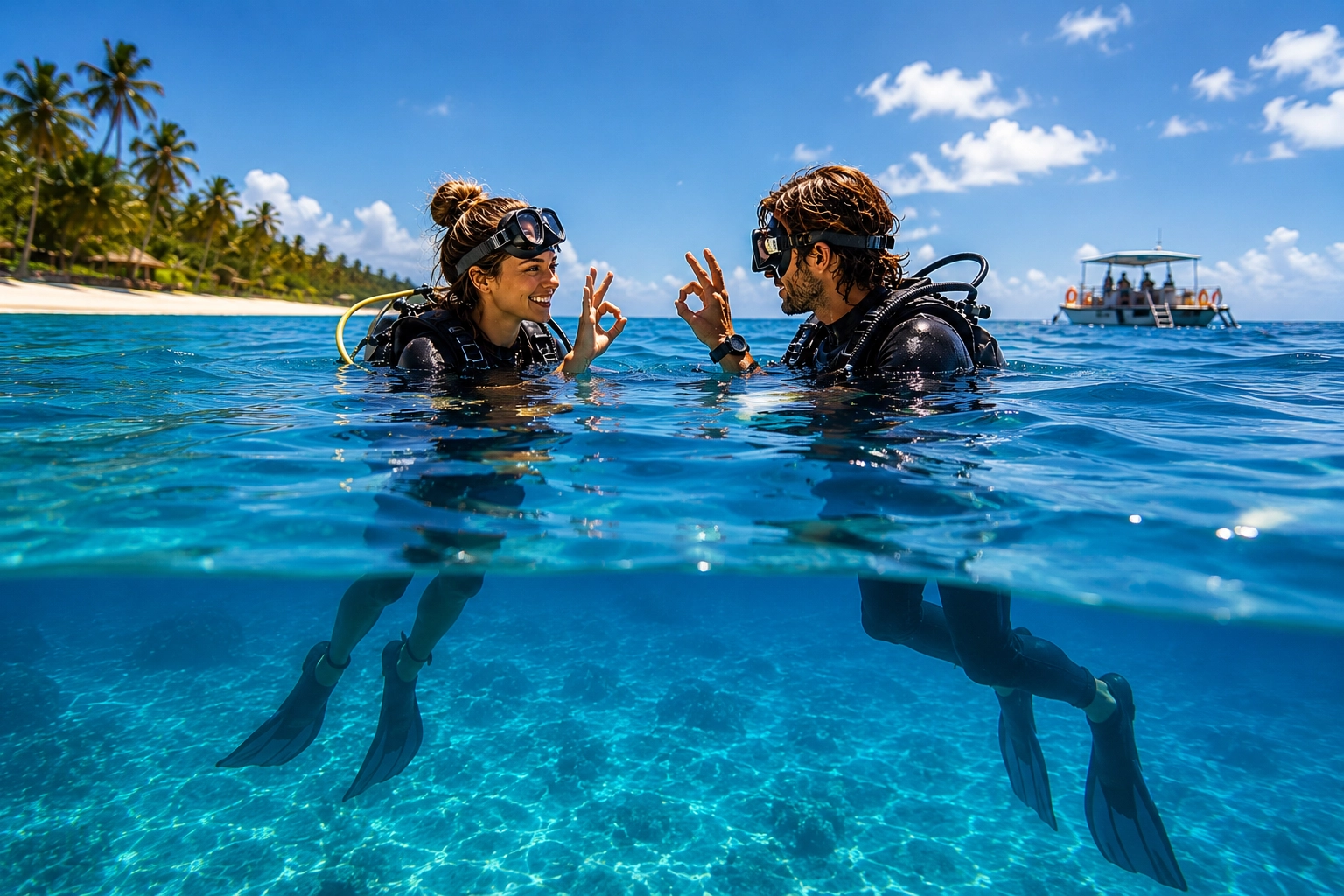

Learn to scuba dive on holiday.
Become an internationally recognised SSI Open Water Diver in three days, then stay for an optional fourth day and enjoy two additional recreational dives completely free.
Can you really learn to scuba dive during a holiday?
Yes. You can learn to scuba dive on holiday and earn an internationally recognised certification without giving up your entire trip.
At Ocean Tribe in Diani Beach, Kenya, our SSI Open Water Diver course in Diani Beach normally takes three days. Day one develops your skills in the swimming pool. Days two and three take you into the Indian Ocean for four open-water training dives.
We also believe your diving adventure should not end the moment you receive your certification. Newly certified Ocean Tribe divers can stay for an optional fourth day and complete two guided recreational dives completely free of charge. You can therefore certify in three days or enjoy six ocean dives over four days, all included in the course price.
Three days is Ocean Tribe’s normal schedule, not an automatic promise of certification. Every student must successfully complete the academic, watermanship and practical requirements. People learn at different speeds, and sea conditions can affect the timetable. Safe, confident progress always matters more than rushing to finish.
How long does it take to learn to scuba dive on holiday?
The answer depends on whether you want to try breathing underwater or become a certified recreational diver.
Try scuba diving
The SSI Basic Diver programme introduces equipment, basic skills and supervised ocean diving when conditions allow. It is an introductory experience, not a full diving certification.
Become certified
SSI Open Water Diver includes digital academic learning, confined-water training, four open-water dives, final assessments and certification after you meet every required performance standard.
| Course element | SSI Open Water Diver | Ocean Tribe extra diving day |
|---|---|---|
| Duration | 3 days | Optional 4th day |
| Pool training | Included | Already completed |
| Ocean dives | 4 training dives | 2 additional recreational dives |
| Certification | SSI Open Water Diver after meeting all requirements | Already certified |
| Dive experience | Supervised training | Guided recreational diving |
| Additional cost | Standard course price | FREE |
| Total ocean dives | 4 after three days | 6 after four days |
What happens during the three-day SSI Open Water Diver course?
Learning to dive is progressive. Every session builds on the knowledge and skills developed before it, with a fourth day available to enjoy your first dives after certification.
Pool foundations
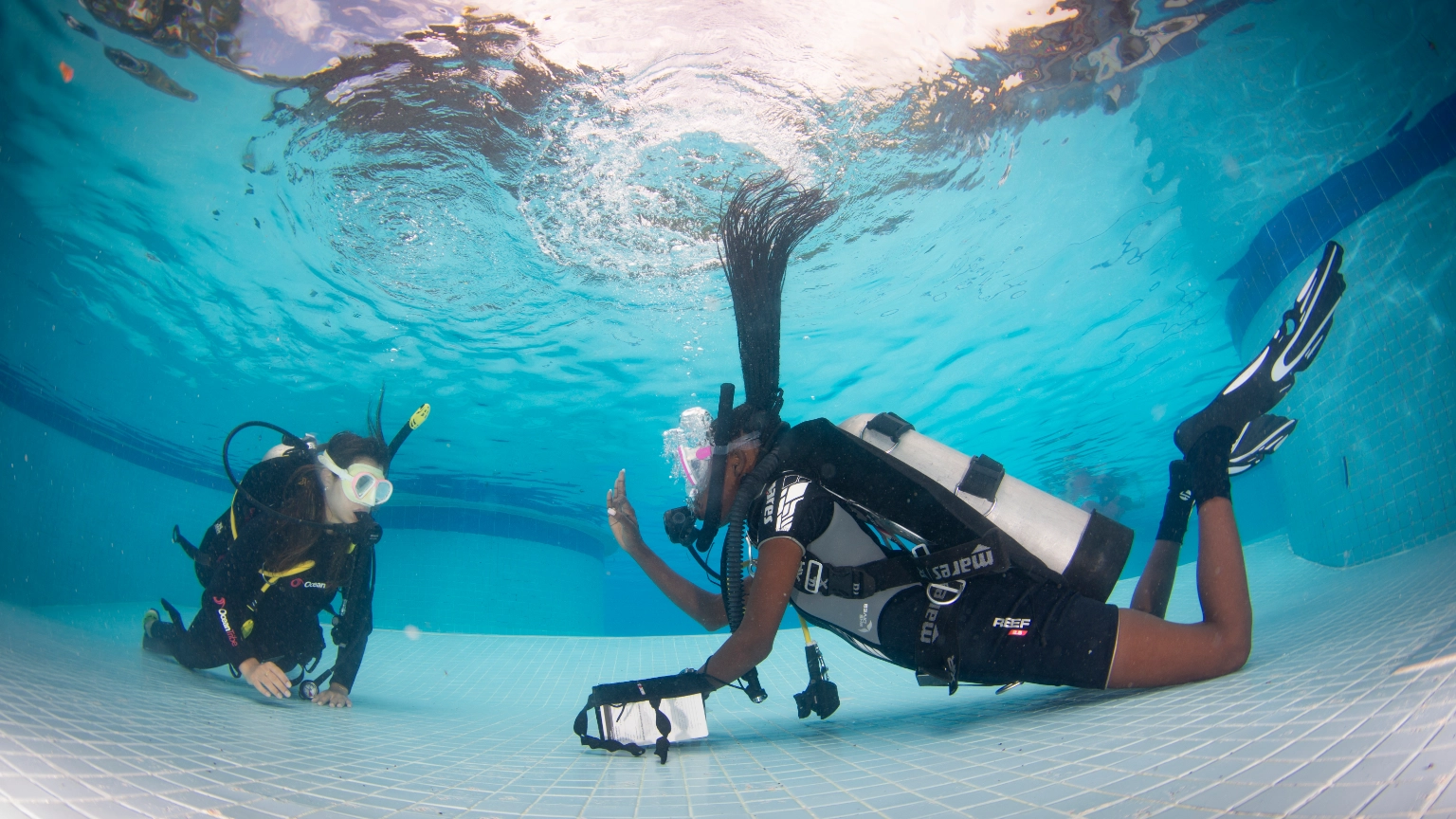
Meet your instructor, learn to assemble and check your equipment, take your first breaths underwater and practise mask clearing, regulator recovery, buoyancy, communication, gas monitoring and essential safety procedures.
First two ocean dives
Travel by boat to a suitable site, review the dive plan and transfer your pool skills to the Indian Ocean. You will practise required skills while experiencing tropical marine life and real reef diving.
Final dives and certification
Complete two more training dives, demonstrate greater independence and finish the remaining academic and practical requirements. Certification follows only after every SSI performance standard has been met.
Two recreational dives
Join our experienced team for two guided ocean dives. With no course exercises to complete, you can enjoy the reef, practise your new skills and start building your logbook.
Optional and free
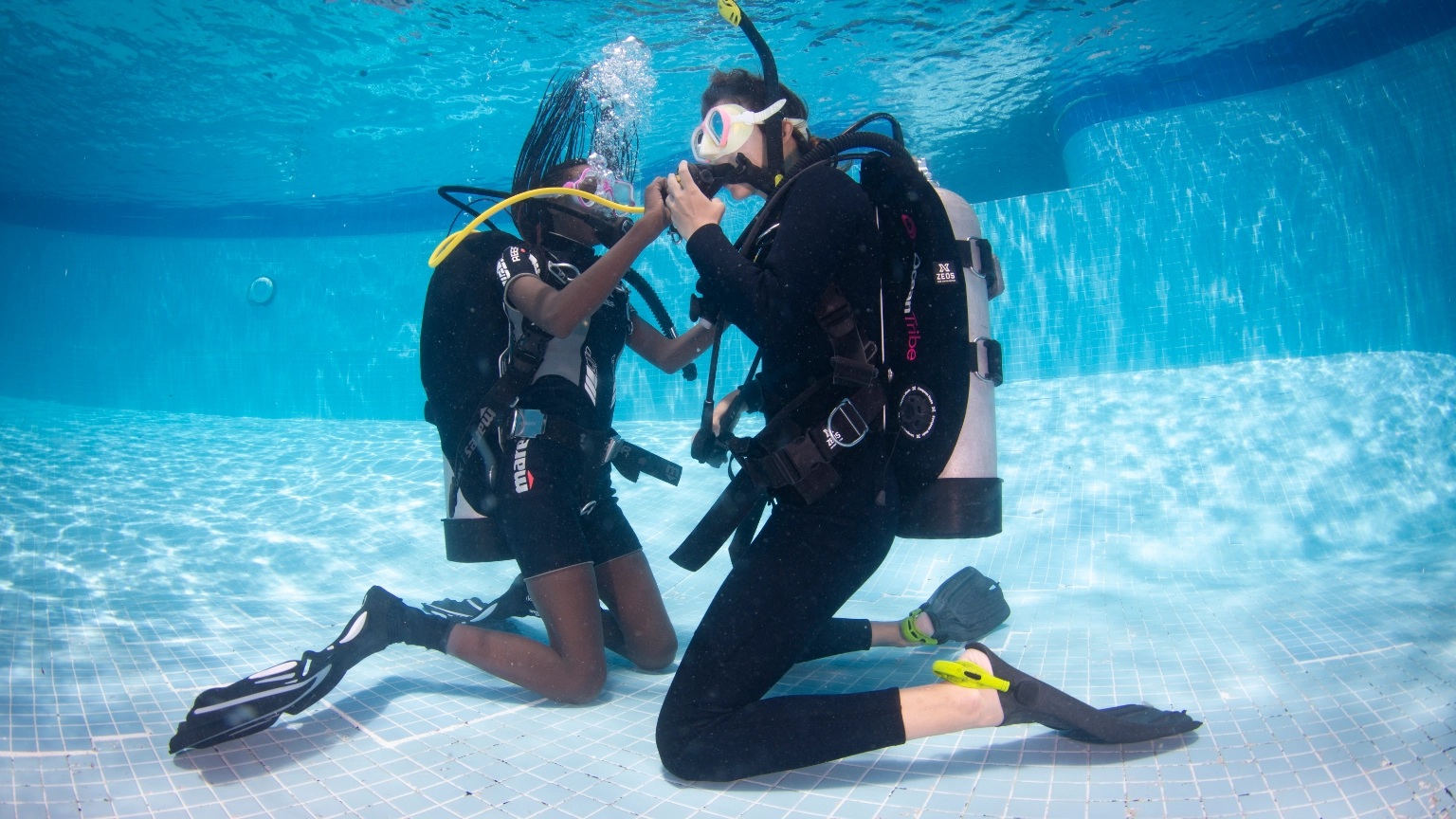
Build the foundations in the swimming pool
The pool gives you a controlled environment in which to become comfortable with scuba equipment before adding the challenges of open water. Your instructor demonstrates each exercise and gives you time to practise it correctly.
- Equipment assembly and safety checks
- Breathing comfortably underwater
- Mask clearing and regulator recovery
- Buoyancy control and underwater movement
- Buddy communication and gas monitoring
- Responses to common underwater situations
Students progress at a pace appropriate to their ability. By the end of the session, you will have the foundations needed for your first ocean dives.
Discover learning to dive with Ocean Tribe

Video: Ocean Tribe scuba diving in Diani Beach, Kenya.

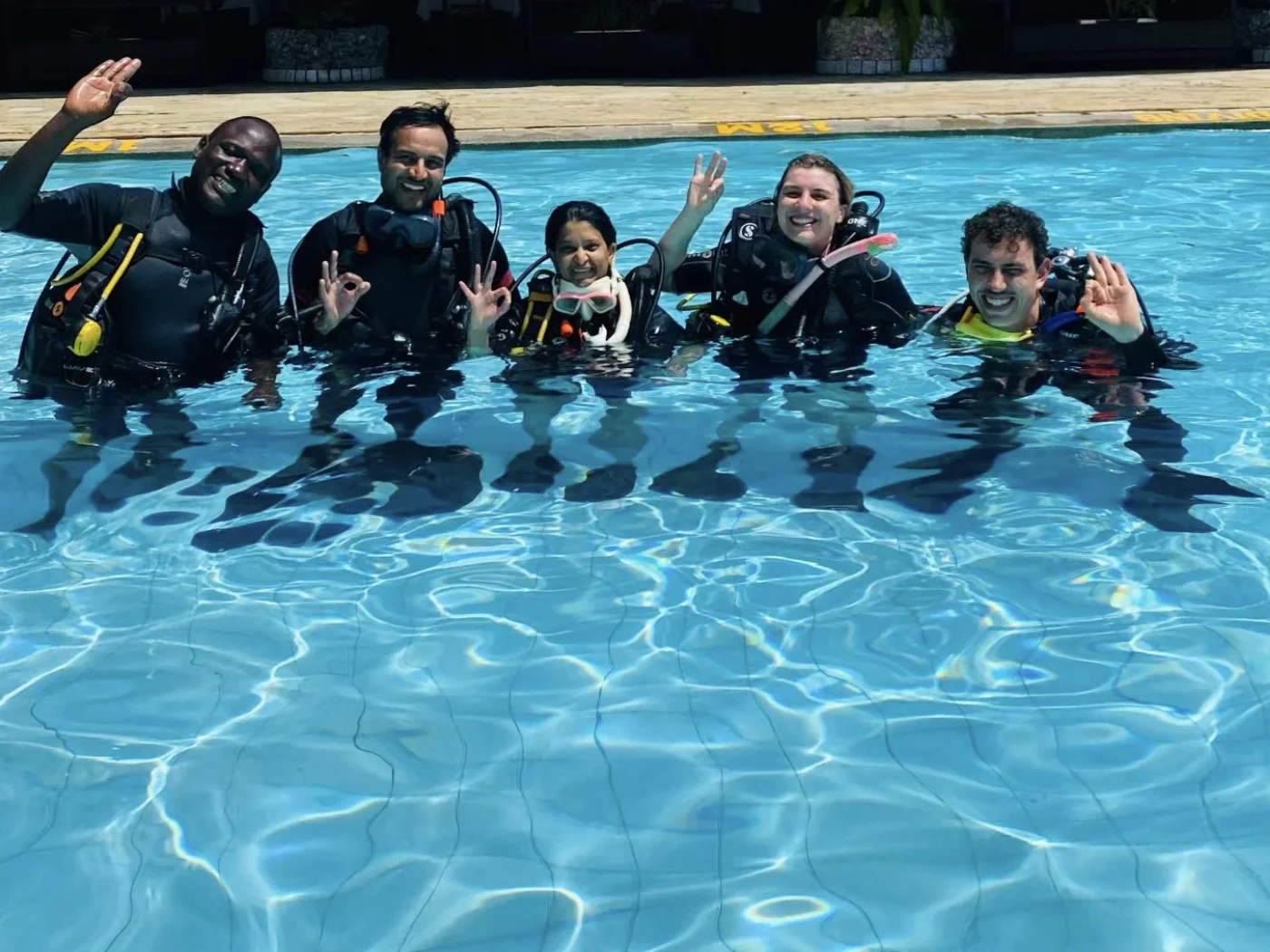
4 days to dive six times.
Why Ocean Tribe gives you two extra ocean dives for free
Four open-water training dives provide the practical experience required for SSI Open Water Diver certification. However, there is a real difference between completing training and enjoying your first dive as a certified recreational diver.
During the course, much of your attention is on learning skills, following instructions and demonstrating competence. Once certified, you can focus more fully on breathing, buoyancy, your buddy and the underwater world around you.
Your first recreational dives matter
The optional fourth day contains no additional course exercises or compulsory training requirements. You dive with our experienced team, explore Diani’s reefs and put your new skills into practice. You may find that confidence improves when you are no longer concentrating on a sequence of assessments.
Two dives will not make anyone experienced overnight, but they offer valuable opportunities to consolidate buoyancy, trim, movement, gas monitoring, buddy communication and normal recreational diving routines while everything you learned remains fresh.
Start building your logbook
Your four course dives form the foundation of your experience. The two additional dives allow you to start logging recreational dives immediately. Your logbook records locations, conditions, depths and useful observations that support future planning and continued training.
Why does the SSI Open Water Diver course include four ocean dives?
The purpose is not simply to accumulate underwater time. Students need repeated opportunities to apply their knowledge and skills in a genuine open-water environment.
Pool sessions establish the foundations. The ocean then asks you to manage your position, remain aware of your surroundings, communicate with a buddy, follow a dive plan, monitor your breathing gas and respond appropriately to changing situations.
The four dives allow the instructor to develop these elements progressively. Each one reinforces previous learning while introducing new experiences, moving from close instructor support towards greater confidence and independence.
- Maintain suitable buoyancy
- Monitor breathing gas
- Communicate with a buddy
- Manage equipment
- Follow dive procedures
- Respond to common situations
Successful completion means demonstrating the abilities required for recreational diving within the limits of your certification, training and experience.
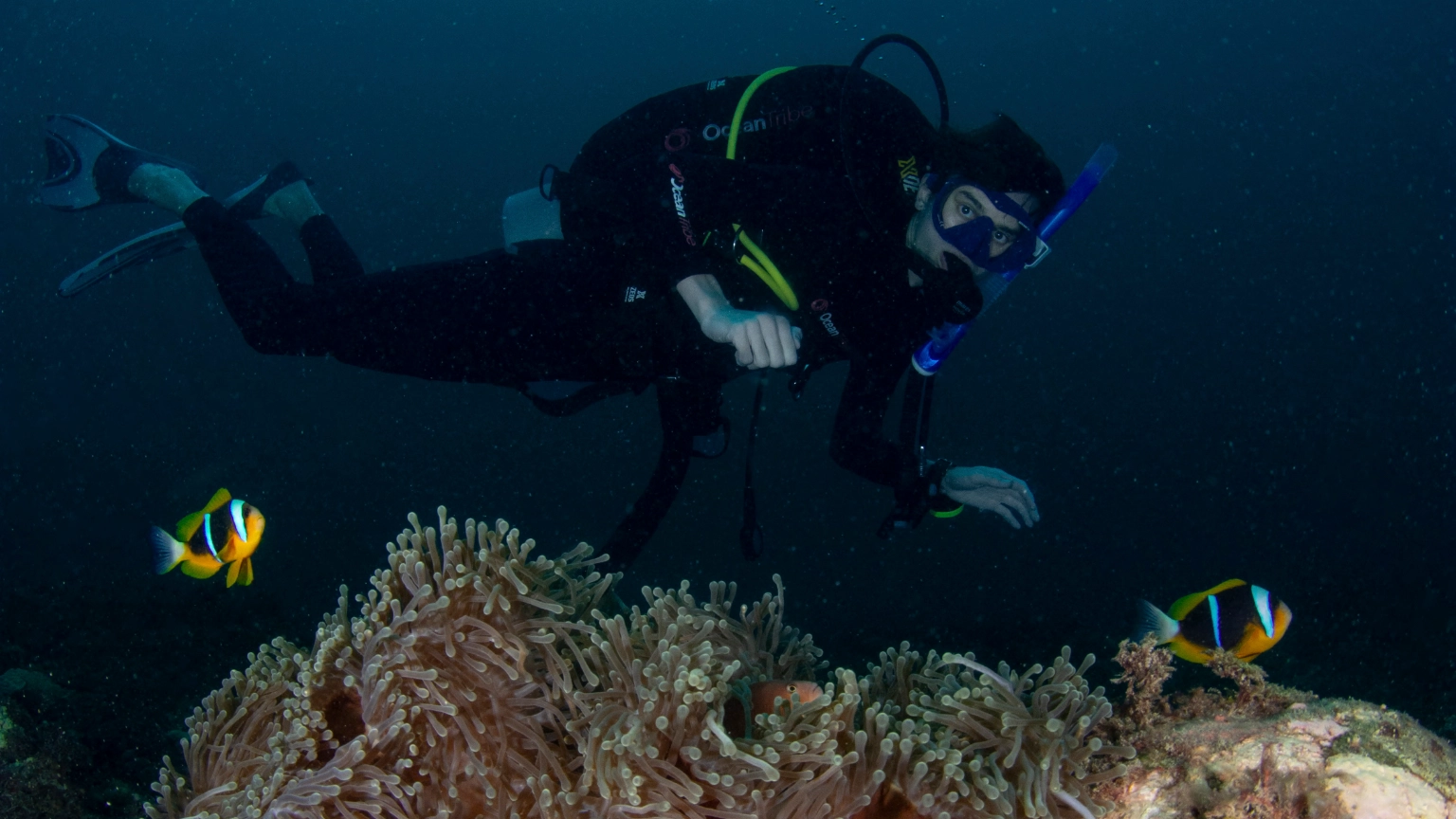
Can you complete your diving theory before your holiday?
Yes. SSI digital learning allows you to begin the academic programme before you arrive in Kenya. Study at home, while travelling or whenever you have time, then review anything that needs clarification with your instructor.
The programme covers pressure, equipment, diving physics and physiology, safe procedures, dive planning, breathing-gas management and the underwater environment. You must still complete the required knowledge reviews and assessments and demonstrate understanding.
Why begin early?
You can work at a comfortable pace, arrive familiar with scuba terminology and devote more of your holiday to practical training. We recommend beginning at least a week before travelling where practical, although this is advice rather than a formal SSI requirement.
Book before travelling so Ocean Tribe can organise registration and access to your digital learning.
Is three days enough to become a confident diver?
Three days is sufficient for many students to meet the SSI entry-level requirements. It does not mean you have mastered every aspect of diving. Certification confirms that you demonstrated the required knowledge and practical skills. Confidence, efficiency and judgement continue to develop with experience.
Why small groups make a difference
Ocean Tribe normally limits instruction to four students per instructor and often teaches even smaller groups. This provides more individual attention, more opportunities to ask questions and more time to practise challenging skills.
Some students become comfortable quickly. Others need extra time with mask skills or neutral buoyancy. Both are normal. Small groups help the instructor adapt the training to each person’s progress without creating a rushed environment.
Why learn to scuba dive in warm tropical water?
Diani Beach combines a memorable holiday setting with genuine Indian Ocean training dives on natural reefs.
Warm tropical water
Water temperatures around Diani are generally about 25°C to 29°C, depending on the season. For many beginners, warm water feels more comfortable than environments that demand heavier exposure protection.
Warm water does not automatically make diving easier or safer. Conditions vary through the year, so our instructors select suitable training sites according to weather, visibility and the needs of the students.
Learn on real coral reefs
Your ocean training takes place in a natural marine environment. Depending on the site and conditions, you may encounter tropical reef fish, moray eels, rays and occasionally turtles. Training dives still contain required skills, but there is also time to experience the underwater world when the programme and conditions allow.
Combine diving, beach and safari
Diani offers beaches, restaurants and coastal activities alongside scuba diving in Diani Beach. Kenya also makes it possible to combine an Indian Ocean course with a wildlife safari.
Through Tribe Safaris, visitors can complete their Open Water Diver course, enjoy the free recreational dives and continue to destinations such as Tsavo East. It is an exceptional way to experience two sides of Kenya in one holiday.

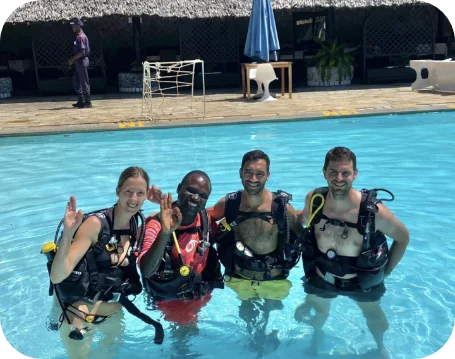
How can you fit a scuba diving course into your holiday?
A seven-day stay can include certification, your first recreational dives and time to enjoy Diani Beach.
| Holiday day | Suggested activity |
|---|---|
| Day 1 | Arrive in Diani Beach and settle into your accommodation. |
| Day 2 | SSI Open Water Diver: swimming-pool training. |
| Day 3 | SSI Open Water Diver: first two ocean training dives. |
| Day 4 | SSI Open Water Diver: final two training dives and certification after successful completion. |
| Day 5 | Optional: two additional recreational ocean dives, completely free. |
| Day 6 | Relax on Diani Beach or explore the coast. |
| Day 7 | Relax or depart, subject to an appropriate post-dive flying interval. |
Can couples and families learn to scuba dive together?
Learning to dive can become a shared holiday experience. Couples can train together, while families with children aged 10 and above may be eligible for SSI Junior Open Water Diver training, subject to medical suitability and the applicable SSI requirements.
Depth limits and supervision requirements vary with age. Family members do not need identical experience levels to enjoy diving during the same holiday.
Ocean Tribe’s small groups make it easier to accommodate different learning speeds. Private courses are also available for guests who prefer a more personal schedule and learning environment.
What happens after certification?
Successful adult students earn an internationally recognised SSI Open Water Diver certification. It permits diving with an appropriately qualified buddy to a maximum depth of 18 metres, provided the dive remains within the limits of your training and experience. Junior divers have additional restrictions.
The certification has no fixed expiry date. If you stop diving for an extended period, a skills refresher is a sensible way to rebuild confidence.
The best next step is usually to keep diving. Once you have gained experience, you may consider SSI Perfect Buoyancy, SSI Enriched Air Nitrox or SSI Advanced Open Water Diver. There is no need to rush. Choose further training when it supports your goals.

Training designed to give you the right start
Ocean Tribe is an SSI Diamond Instructor Training Centre and SSI Classified Diving Centre based at The 41 Beach Club in Diani Beach, Kenya.
- Three-day SSI certification programme
- Four Indian Ocean training dives
- Two free recreational dives on day four
- Maximum 4:1 instructional groups
- Experienced SSI diving professionals
- All required scuba equipment included
- SSI digital learning before your holiday
- Purpose-built facilities at The 41
- Dedicated boats with O₂, first aid and AEDs
- Transfers within Diani Beach
Our goal is not simply to help you pass. We want you to finish feeling confident, enthusiastic and ready to keep exploring.
Frequently asked questions about learning to scuba dive on holiday
Can you really learn to scuba dive in three days?
Yes. Ocean Tribe’s SSI Open Water Diver course normally takes three days. It includes pool training, four ocean training dives and the required academic assessments. Certification depends on successfully completing every SSI training requirement.
How many dives are included in Ocean Tribe’s Open Water Diver course?
The three-day course includes four ocean training dives. Once certified, students can complete two additional recreational dives on an optional fourth day, completely free of charge. That makes a total of six ocean dives during the holiday.
Do I need previous scuba diving experience?
No. SSI Open Water Diver is designed for complete beginners. Your instructor introduces the equipment, knowledge and skills required to become a certified recreational diver.
Do I need to know how to swim?
Yes. Students must complete SSI’s required swimming and watermanship skills. You do not need to be a competitive swimmer, but you must be comfortable in the water and meet the programme requirements.
Can I complete my scuba diving theory before arriving in Kenya?
Yes. SSI digital learning lets you begin studying before the holiday. Book in advance so Ocean Tribe can arrange registration and give you access to the learning materials.
Is scuba diving difficult to learn?
Most people can learn the basic skills with suitable instruction and practice. Some skills take longer than others, and nobody should be rushed. Ocean Tribe instructors work at a pace suited to each student’s progress.
How old do you need to be to learn scuba diving?
Children can begin SSI Junior Open Water Diver training from age 10, subject to medical suitability and SSI requirements. Junior divers have specific depth and supervision restrictions based on age.
Can I scuba dive anywhere after completing my certification?
SSI Open Water Diver is internationally recognised. Adult divers may dive with an appropriately qualified buddy to a maximum depth of 18 metres within the limits of their training and experience. Conditions, regulations and operator requirements can add further restrictions.
Do I have to complete the two additional recreational dives?
No. They are entirely optional. You can complete the SSI course in three days. If your schedule allows, the fourth day is a valuable way to gain experience and enjoy diving without course exercises.
Can I fly immediately after completing the course?
No. Common recreational guidance recommends at least 12 hours after a single no-decompression dive and at least 18 hours after multiple dives or multiple days of diving. Longer intervals can be advisable. Follow current SSI guidance, your dive computer, actual dive profiles and professional advice.