Do you need to swimto scuba dive?
Why water confidence matters.
Do you need to swim to scuba dive? For standard Open Water Diver certification, you need basic swimming ability and the capacity to maintain yourself comfortably in the water. You do not need to be a competitive swimmer, but you should be able to do more than rely entirely on equipment or another person to keep you afloat.
At Ocean Tribe, we believe this deserves an honest explanation. Swimming skills support your safety, your confidence and your ability to enjoy the experience.
There are controlled introductory programmes with different requirements, and specialist pathways for people whose disabilities prevent independent swimming. Those distinctions matter. However, for anyone who can develop swimming skills, learning to swim is one of the best preparations for learning to dive.
What Does Being Able to Swim Actually Mean?
Being able to swim does not mean having a perfect front crawl or completing lengths at speed.
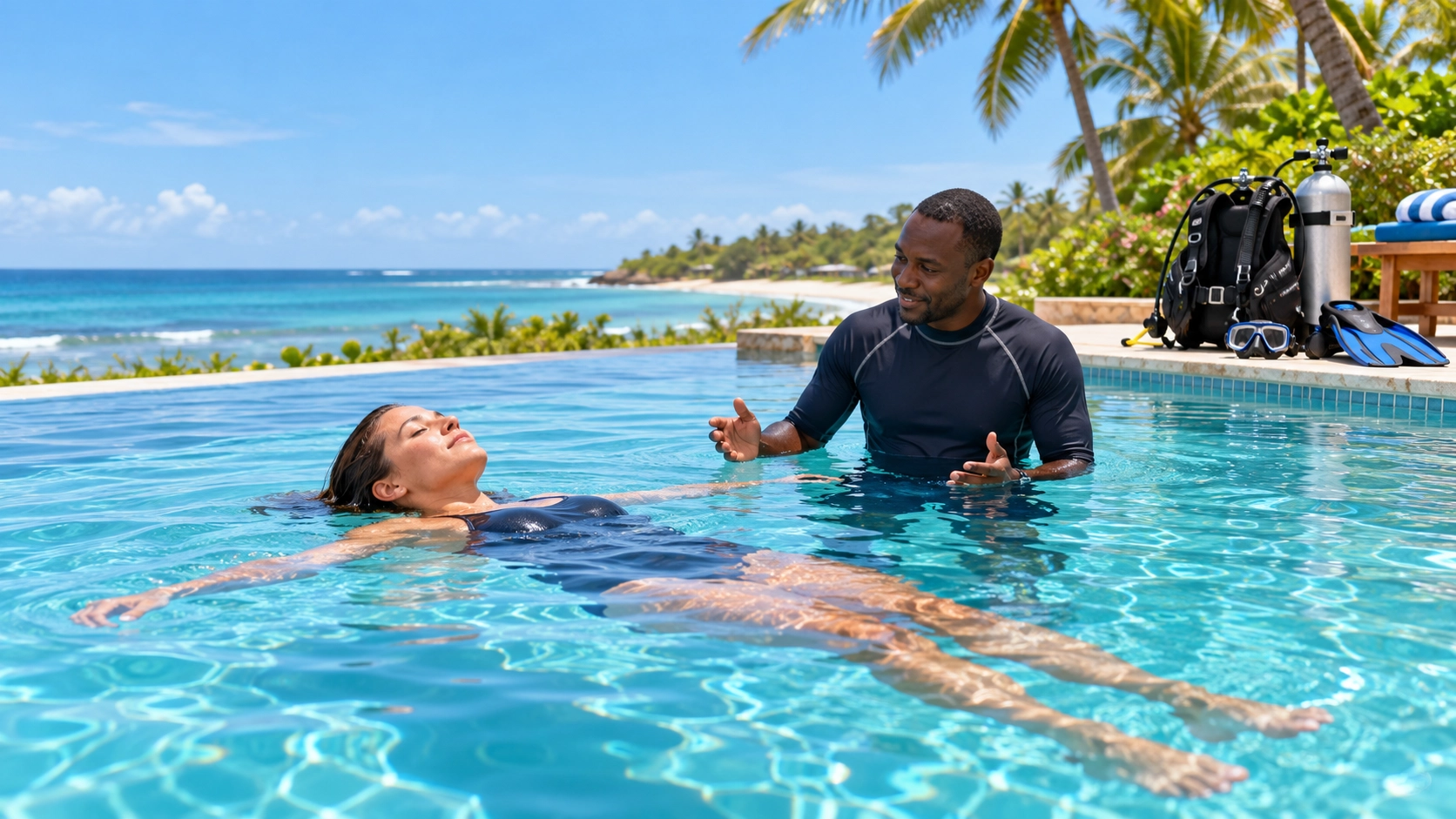
For diving, the important foundation is practical water competence: being able to move through the water, remain at the surface and feel reasonably comfortable when you cannot stand.
Ask yourself:
- Can I float or tread water without holding onto the side?
- Can I move towards an exit or another person?
- Can I remain reasonably calm in water beyond standing depth?
- Can I follow instructions while maintaining myself at the surface?
These abilities give you a starting point for scuba training. If they are difficult, swimming lessons and supervised water practice can help you prepare.
Do You Need to Swim to Scuba Dive with SSI?
SSI Open Water Diver students must complete a water fitness evaluation before participating in open-water training.
The assessment includes:
Swim assessment
A 200-metre swim without swimming or buoyancy aids, or a 300-metre swim using a mask, snorkel and fins. There is no time limit, but it must be completed without stopping or standing.
Float or tread
A ten-minute float or tread without swimming or buoyancy aids, in water too deep to stand, with the face remaining clear of the water.
SSI allows students to practise and repeat the assessment until successful. Needing more practice does not mean you have failed the entire course. It identifies a skill that needs developing before progressing. SSI Student Water Fitness Evaluation.
PADI has comparable swimming and floating requirements for its Open Water Diver qualification. These are established training expectations, rather than an unusual extra imposed by an individual dive centre. PADI certification requirements.
Why Swimming Matters When You Have Scuba Equipment
A common question is: “If the equipment helps me float and lets me breathe underwater, why do I need to swim?”
Because a diving experience includes more than the time spent looking at the reef.
You may need to move at the surface, reach an entry or exit point, or remain comfortable while waiting for the boat. Conditions and equipment arrangements can also feel different from those in a swimming pool.
Your buoyancy compensator is an essential part of your diving equipment. Learning to use it properly is part of training. However, it should not become a reason to dismiss the importance of basic water skills.
The stronger your foundation, the more you bring to the experience yourself.
Enjoy the Dive Instead of Worrying About Sinking
Swimming ability matters for enjoyment as well as safety.
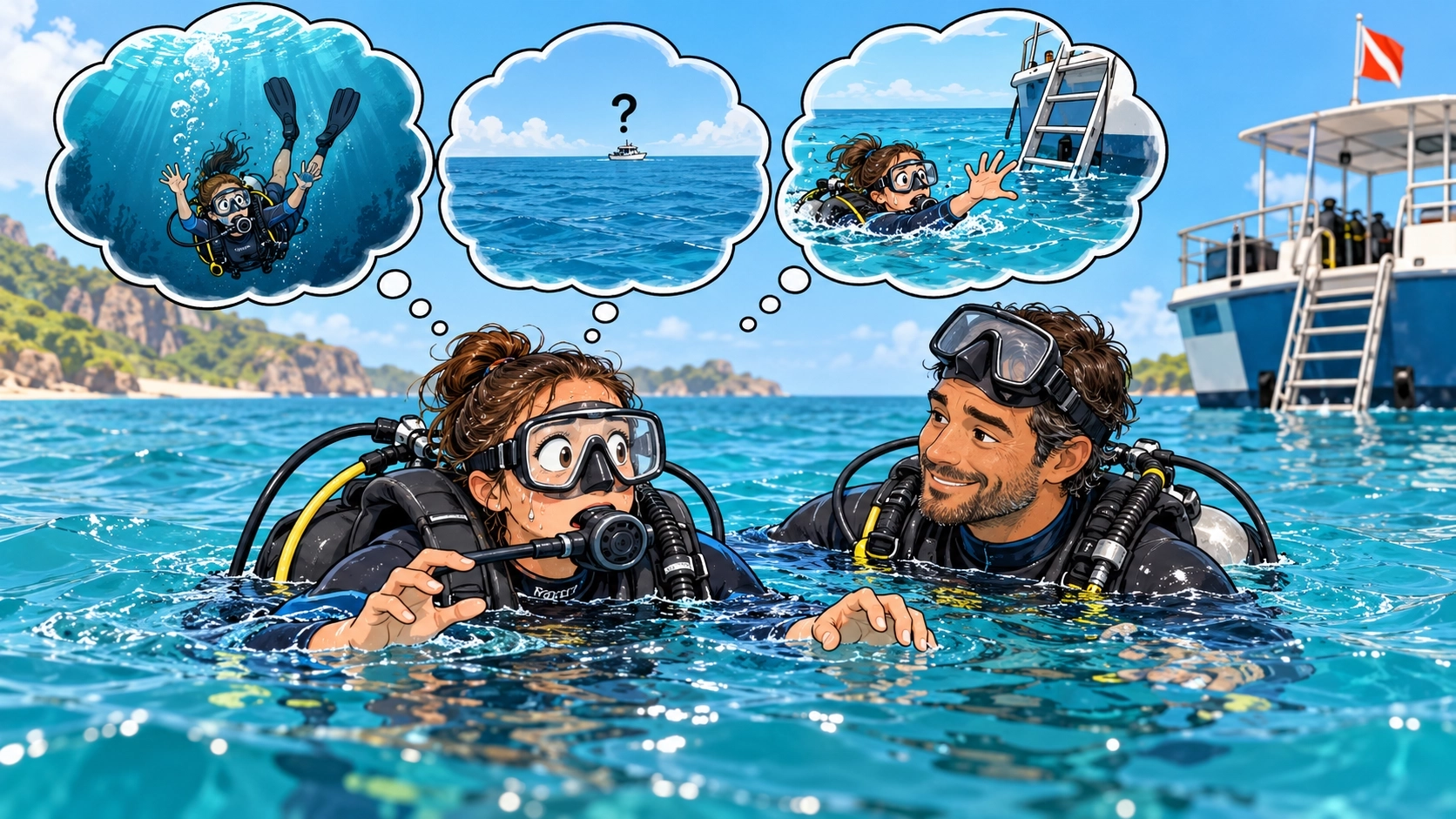
If being out of your depth immediately makes you afraid of sinking, it can be difficult to focus on anything else. Rather than watching marine life or listening to your instructor, you may concentrate entirely on finding something, or someone, to hold onto.
That is an uncomfortable starting point for an activity intended to be enjoyable.
Learning to float, move and maintain yourself in the water can help replace that fear with familiarity. Scuba training then builds on those foundations by teaching you about equipment, underwater breathing and buoyancy.
Instead of treating the water as somewhere you must constantly fight to stay afloat, you can begin learning how to move comfortably within it.
Swimming does not eliminate all nerves. Confident swimmers still need proper instruction, and beginners should tell their instructor when they feel uncertain. However, developing water confidence before diving gives you more room to concentrate on learning and enjoying the experience.
Why “We’ll Hold You” Is Not Enough
When someone asks, “Do you need to swim to scuba dive?”, the answer should explain the programme requirements and assess the person’s readiness.
A casual promise that an instructor will hold onto you is not a substitute for that process.
Dive centres should take water confidence seriously, follow the relevant standards and allow people time to develop essential skills. Skipping a required assessment or progressing someone who is clearly unable to cope is not a responsible approach.
The concern is not whether a professional ever provides physical assistance. Appropriate assistance is part of many diving situations. The concern is treating that assistance as a replacement for assessment, preparation and a suitable training plan.
A responsible centre should be willing to explain why a pool introduction, swimming practice or a different programme would be a better starting point.
What About Pool Experiences for Non-Swimmers?
A supervised pool introduction is different from an Open Water certification course.
Some introductory programmes allow people to experience underwater breathing without completing the swimming assessments required for certification. For example, Ocean Tribe’s pool-only SSI Try Scuba programme does not require a formal swimming test.
That does not make water confidence irrelevant. Participants should discuss their comfort level honestly so the professional can manage the experience appropriately.
A suitable pool session can introduce the equipment and help someone decide whether they want to continue. It does not demonstrate that they have met the requirements for ocean training or independent recreational diving.
What If a Disability Prevents Independent Swimming?
An inability to swim because of a disability requires an individual assessment and an appropriate pathway.
Some disabled divers can meet mainstream certification requirements using permitted adaptive techniques. Others require assistance with propulsion, positioning or additional skills and may be better served by a supported-diver programme.
The starting point should be the person’s abilities and needs, alongside the applicable medical and training requirements.
Where independent swimming is achievable, including through adapted swimming instruction, developing that ability is valuable. Where it is not achievable, properly planned support can provide another route into diving.
The aim should be the greatest practical independence available to that individual, supported by trained people and appropriate arrangements.

Learn to Swim Before You Learn to Dive
If you cannot yet maintain yourself comfortably in the water and swimming is achievable for you, start there.
Tell a swimming instructor that your goal is scuba diving. Work towards comfortable floating, basic swimming ability and confidence beyond standing depth.
You do not need to become fast or stylish. You need a practical foundation on which diving instruction can build.
Take the same approach if you have learned to swim but still feel very anxious in deep water. Be honest about that anxiety and allow time to develop confidence before adding more tasks.
There is no benefit in rushing past the part of preparation that could make the rest of your experience more comfortable.
Plan Your Diving with Ocean Tribe
Do you need to swim to scuba dive? For standard Open Water certification, basic swimming ability and water confidence are essential requirements. For introductory or supported diving, the appropriate programme and assessment determine what is possible.
At Ocean Tribe, we encourage you to discuss your abilities, confidence and support needs before booking. That helps us identify a suitable starting point rather than make assumptions.
If you are ready to learn, explore our SSI Open Water Diver course. If you need an adapted approach, contact us to discuss your circumstances and the available options.
Call: +254 700 934854
Ocean Tribe · Diani Beach · Kenya
Build your water confidence, prepare properly and give yourself the best opportunity to enjoy the underwater world.