
Know your gear. Trust your setup.
Understand how your scuba equipment works, how to choose the right setup and how proper inspection, cleaning and storage can keep it performing dive after dive.
Equipment makes the dive possible.
Scuba equipment is more than a collection of accessories. Your regulator delivers breathing gas, your buoyancy system helps control your position and your exposure protection helps manage temperature and comfort.
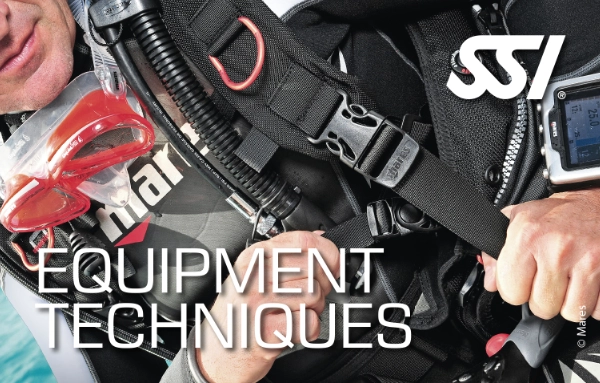
The SSI Equipment Techniques program explains how the main components work together, what to consider when selecting gear and how good care can improve reliability and equipment life.
Meet the equipment that supports every dive
Examine the purpose, configuration and care requirements of the equipment you use underwater.
Regulators
Understand first and second stages, alternate air sources, hoses, mouthpieces and pre-dive inspection.
Buoyancy Systems
Explore BCD styles, inflators, dump valves, weight integration, fit and basic care.
Cylinders & Valves
Learn about cylinder markings, valve types, inspection awareness, handling and safe storage.
Exposure Protection
Compare wetsuits, boots, gloves and other options for warmth, fit and environmental protection.
Instruments
Review gauges, dive computers, compasses, transmitters, batteries and sensible pre-dive checks.
Personal Equipment
Improve your choice and care of masks, snorkels, fins, cutting tools, lights and surface markers.
How does a regulator deliver each breath?
A regulator reduces high-pressure gas from the cylinder in stages, delivering breathing gas when the diver inhales.
First Stage
Attaches to the cylinder valve and reduces cylinder pressure to an intermediate pressure.
Hose System
Routes gas or pressure information to second stages, inflators and instruments.
Second Stage
Reduces intermediate pressure to ambient pressure and supplies gas when you inhale.
Alternate Air Source
Provides a second gas-delivery option for assisting another diver when required.
The rinse, inspect, dry and store routine
Salt, sand, sunlight and poor storage can shorten equipment life. A consistent post-dive routine helps protect your investment.
Rinse
Rinse equipment thoroughly in clean fresh water, following manufacturer guidance for each item.
Inspect
Look for damaged hoses, worn straps, corrosion, leaks, loose parts and other signs of deterioration.
Dry
Allow equipment to dry properly away from excessive heat and prolonged direct sunlight.
Store
Store equipment clean, dry and protected from crushing, chemicals, pests and unnecessary stress.
Routine care or technician job?
A knowledgeable diver should recognise problems and perform appropriate user-level care—but specialised servicing belongs with trained technicians.
Normal Diver Care
- Visual pre-dive equipment checks
- Correct assembly and disassembly
- Fresh-water rinsing and suitable drying
- Cleaning and checking mask or fin straps
- Checking hoses for visible wear or damage
- Replacing simple user-replaceable items when permitted
- Following the manufacturer’s storage instructions
Use a Qualified Technician
- Opening regulator first or second stages
- Adjusting regulator intermediate pressure
- Servicing cylinder valves
- Internal BCD inflator or valve repairs
- Repairs involving life-support components
- Scheduled manufacturer servicing
- Any fault you are not trained or authorised to repair
From digital learning to the workbench
The program combines flexible learning through MySSI with an instructor-led equipment workshop.
Activate Your Digital Learning
Begin the SSI Equipment Techniques materials through the MySSI app before your workshop.
Learn How the Components Work
Review regulators, buoyancy systems, cylinders, exposure protection, instruments and personal equipment.
Join the Equipment Workshop
Examine real equipment with an SSI Instructor and connect the digital theory to the gear used on actual dives.
Practise Inspection & Care
Work through equipment checks, cleaning, storage, configuration and common troubleshooting scenarios.
Complete Your Certification
Finish the required knowledge review and receive your SSI Equipment Techniques specialty certification.
Your equipment knowledge package
Complete the knowledge development through the MySSI platform.
Explore equipment components, configuration, inspection and care.
Connect the theory to real scuba equipment and common situations.
Check your understanding and discuss any unclear subjects.
Local transfers within Diani for the scheduled course session.
Your digital SSI specialty card after successful completion.
Entry requirements
Who Can Join?
- Minimum age of 10 years
- Open Water Diver certification or equivalent
- New and experienced divers are welcome
- You do not need to own a complete equipment set
- No training dives are required
Want to Test What You Learned?
The Equipment Techniques course does not include ocean dives. Add a certified-diver trip and apply your improved equipment checks, setup and configuration before entering the water.
Explore Diani Dive TripsEquipment Techniques FAQs
Do I need to own my own equipment?
Will I learn to service a regulator?
Are there any dives during the course?
Can the course help me choose new dive equipment?
Is this useful for future dive professionals?
Ready to open the gear workshop?
Contact Ocean Tribe for upcoming SSI Equipment Techniques course availability in Diani Beach.