Know who you’re diving with.
Turn every reef dive into a discovery. Learn how to identify common Indo-Pacific reef-fish families by their shape, colour, behaviour and habitat.
Move beyond “I saw a colourful fish”
The world’s oceans contain thousands of fish species. Learning every individual species at once would be overwhelming, so this course teaches you to begin with the most useful skill: recognising fish families.
You will learn how body shape, fin position, swimming style, feeding behaviour and habitat provide clues to a fish’s identity. Once you understand the families, identifying individual species becomes much easier.
The classroom course is open to anyone with an interest in marine life. Certified divers can also add a dive and use their new identification skills on Diani’s coral reefs.
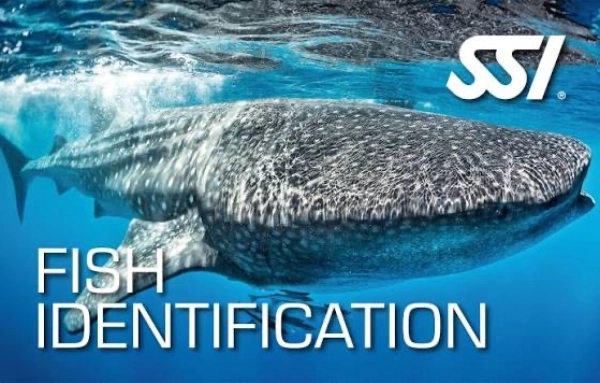
Learn from real marine life, not cartoons
Study how fish look, move, feed and interact with the reef, then use those clues to identify them underwater.

Shape, colour and movement
A fish’s silhouette and swimming style can often identify its family before you notice individual markings.
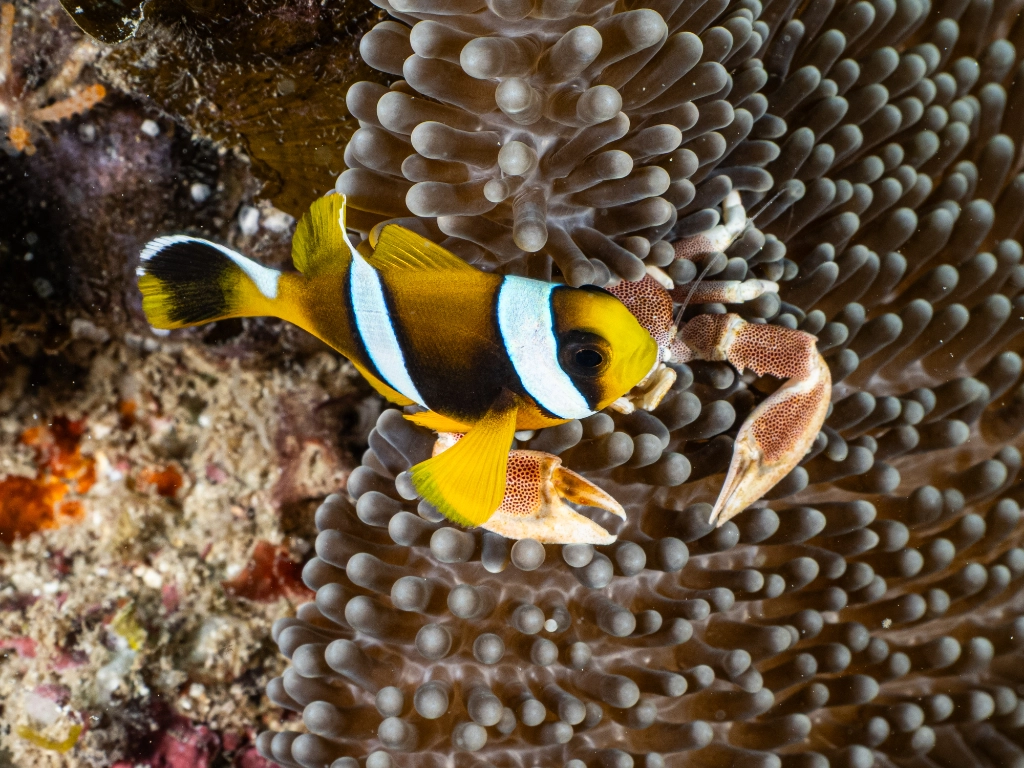
Clownfish and their anemone
Habitat and behaviour can be just as useful as colour when identifying marine life.
Build a practical underwater identification system
Rather than memorising a huge list, learn to group fish using recognisable features and behaviour.
Butterflyfish and angelfish
Compare body shape, markings, feeding behaviour and how these colourful reef families move around coral.
Parrotfish and wrasses
Recognise their distinctive swimming styles, changing colour patterns and important roles on the reef.
Surgeonfish
Learn the shared features that connect surgeonfish and how to observe them safely.
Groupers and snappers
Use body shape, mouth position, behaviour and habitat to distinguish common reef predators.
Triggerfish and filefish
Identify these strongly shaped fish and understand the behaviours that divers should recognise.
Damselfish and anemonefish
Explore territorial behaviour, reef habitat and the close relationship between anemonefish and their host anemones.
Do not rely on colour alone
Colour can change with age, sex, depth, lighting and life stage. Shape, behaviour and habitat often provide more reliable clues.
Six clues to watch underwater
- Body shape: round, elongated, flattened or box-shaped.
- Fin shape: look at the tail, dorsal fins and how they are used.
- Swimming style: steady cruising, hovering, darting or moving in groups.
- Mouth position: a clue to what and where the fish feeds.
- Habitat: open water, coral heads, sand, rubble, caves or anemones.
- Behaviour: feeding, cleaning, schooling, hiding or defending territory.
Learn it, recognise it, find it
SSI digital learning
Complete the Fish Identification digital learning through the MySSI app before meeting your instructor.
Classroom workshop
Work with an SSI Instructor to compare fish families, discuss identification clues and review local marine life.
Optional reef dive
Certified divers can add a Diani reef dive and practise observing, recording and identifying fish in their natural habitat.
Your marine-life learning package
SSI digital learning
Access your Fish Identification Specialty learning materials through the MySSI app.
Instructor workshop
Approximately three hours of guided learning with an SSI professional.
Training materials
Course materials to help you recognise common reef-fish families and their identifying features.
SSI certification
Earn the SSI Fish Identification Specialty certification after successfully completing the course.
Diani transfers
Local transfers within the Diani area are included for your scheduled training.
Diving equipment
Standard equipment, tanks, weights and professional guidance are included when you choose the diving option.
Course requirements
Build your marine-life knowledge
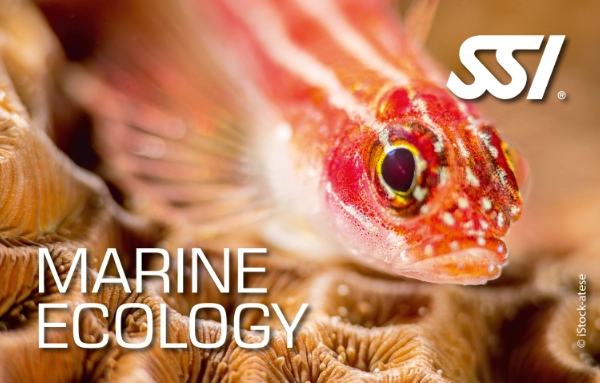
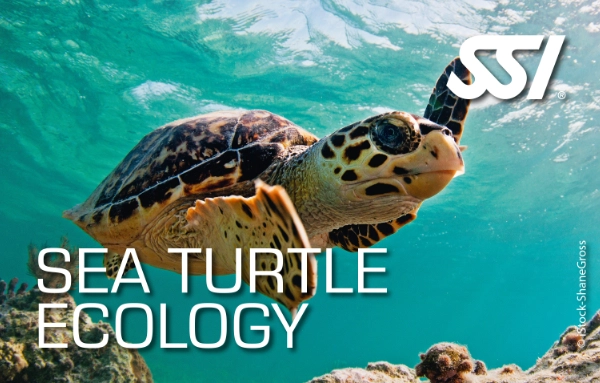
Fish Identification works brilliantly alongside Ocean Tribe’s other SSI ecology specialties.
Fish Identification FAQ
Do I need to be a certified diver?
No diving certification is needed for the classroom-only course. You need an Open Water Diver certification or equivalent if you wish to add the optional reef dive.
How long does the course take?
The instructor-led classroom workshop lasts approximately three hours. SSI digital learning should be completed before the session. Additional time is required if you choose the diving option.
Will I learn every individual fish species?
The course focuses on giving you a practical identification system. You will learn to recognise common fish families using shape, colour, movement, behaviour and habitat, making it easier to identify individual species later.
Which regions does the course cover?
The SSI course introduces common reef-fish families found across the Indo-Pacific, Red Sea and Caribbean. Your Ocean Tribe instructor can place extra focus on species commonly seen around Diani.
What happens on the optional dive?
You will observe fish on a suitable Diani reef and use body shape, markings, movement, feeding style and habitat to identify the families you encounter.
Does this count as an SSI specialty?
Yes. After successfully completing the course requirements, you receive the SSI Fish Identification Specialty certification.
Make your next dive feel like a guided wildlife expedition
Contact Ocean Tribe to arrange your Fish Identification Specialty with or without the optional reef dive.