
What Are the Best Courses to Take Before Becoming a Dive Pro?
Dreaming of swapping the office for the ocean? Start building the skills that make other divers feel comfortable following your lead.
Become the buddy everyone wants to dive with.
The best courses to take before becoming a dive pro develop three things: control of your own diving, awareness of the people around you, and an understanding of the environment you are entering. Those habits give you a much stronger foundation for Divemaster training.
Once you start leading, your attention needs to stretch beyond your own mask, buoyancy and air supply. You will be watching the group, assessing conditions, spotting stress and making decisions. Good preparation gives you more capacity to do that calmly.
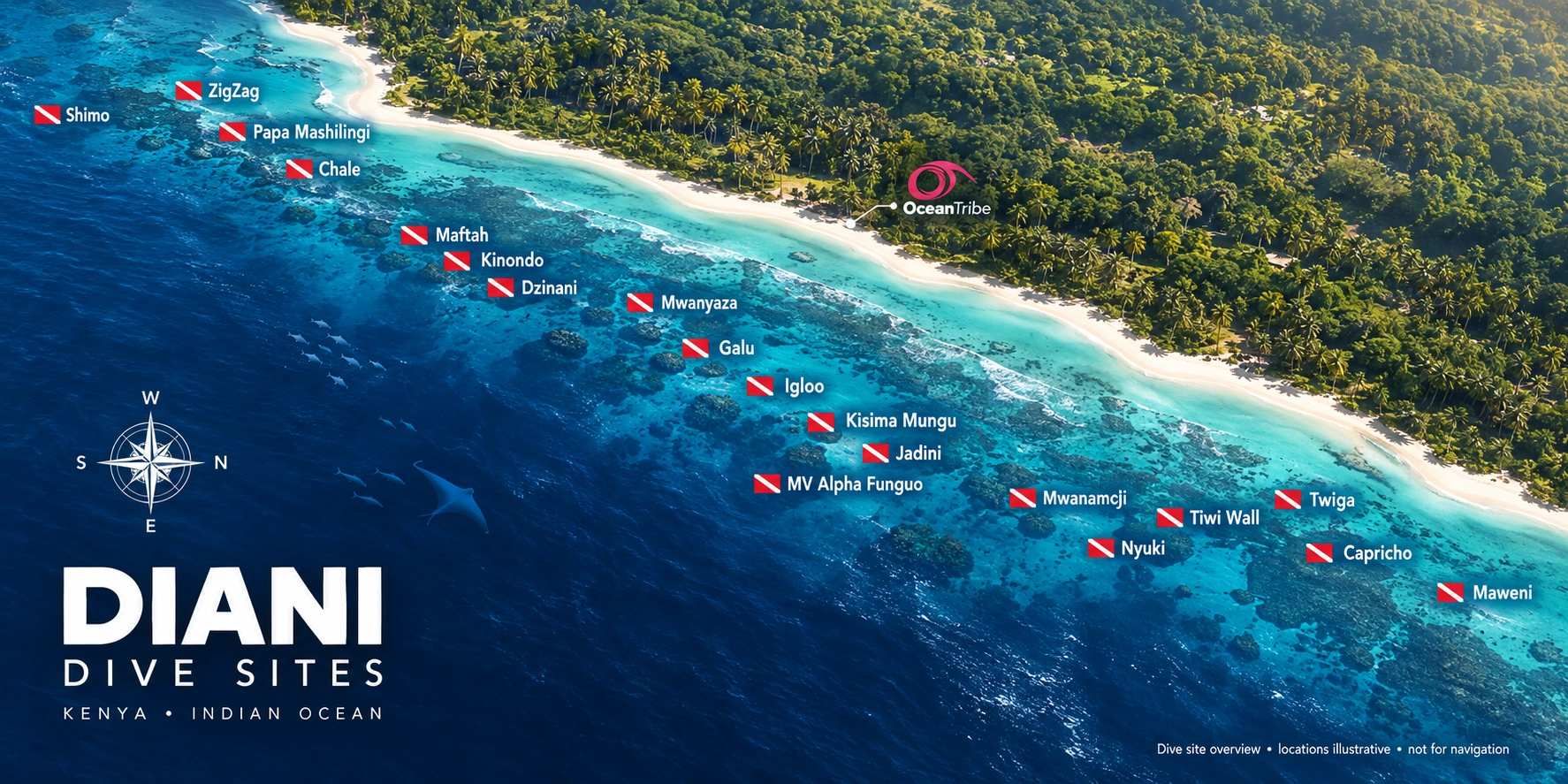
At Ocean Tribe in Diani Beach, we recommend building your training around the core courses, specialist skills and useful extras below. Take time to practise between them: a certification introduces and develops skills, while experience helps you use them consistently.
Core courses
Your foundation for confident diving and looking after others.
Open Water Diver
Your first full scuba certification introduces equipment, dive planning, buoyancy, buddy procedures and essential underwater skills. It is where the habits of a future professional begin.
Already qualified? Revisit the basics. Practise controlled movement, clear communication and unhurried equipment checks until they feel natural.
React Right
React Right develops practical emergency-response skills. For your dive-pro preparation, include first aid, CPR, AED use and emergency oxygen administration.
These skills support your rescue training and help you prepare for incidents on the boat, at the dive centre and beyond. Keep the relevant qualifications current as you progress.
Diver Stress & Rescue
This is a major step towards thinking like a leader. You learn to recognise stress, help prevent problems and respond to diving emergencies through practical training.
The real value starts before an emergency: noticing a struggling buddy, speaking up early and helping the team make better decisions. Build on this course with regular skills practice.
Specialties for required skills
Build capability in the environments and tasks that matter for dive leadership.
Deep Diving
Deep Diving develops your understanding of planning, gas management, narcosis awareness and the reduced margins that come with greater depth. For a future pro, it is valuable preparation for making conservative decisions.
Use the training to develop disciplined depth, time and gas awareness. Those habits matter when other divers are relying on your judgement.
Navigation Diving
A dive guide needs to keep track of the route while paying attention to the people on it. Navigation builds your use of a compass alongside natural clues such as reef features, depth and light.
Practise planning a route, recognising landmarks and returning to a chosen point without constant help. Reliable navigation also reduces unnecessary swimming and uncertainty.
Night & Limited Visibility
When visibility drops, communication and buddy awareness become even more important. This specialty develops your approach to planning, light use, orientation and staying in contact with your buddy.
For future professionals, it is a chance to understand how unfamiliar conditions affect confidence. Calm communication and a well-planned dive can make a significant difference to the experience.
Useful extra specialties
Broaden the skills you can bring to a dive team.
Search & Recovery Diving
Learn to approach underwater searches with a plan, communicate with your buddy and understand appropriate recovery techniques. It is useful preparation for tasks such as locating a dropped item.
The professional habit to develop is a measured response: assess the task, choose suitable methods and recognise when it is beyond your training or equipment.
Classified Dive Buddy
Develop the skills to dive with and assist Classified Divers within the limits of your training and their classification. It is valuable preparation for supporting divers with disabilities and individual assistance needs.
Start by listening to the diver. Discuss the support they want, agree communication and work together. Respectful, individual planning belongs at the heart of inclusive diving.
Equipment Techniques
Build your understanding of equipment selection, fit, care and storage. A future pro benefits from being comfortable around different configurations and recognising when equipment needs attention.
This knowledge supports better checks and clearer conversations with divers. Servicing and repairs still need the appropriate training and authorisation.
Computer Diving
A dive computer is only useful when you understand its displays, settings and warnings. Computer Diving helps you connect the information on your wrist with your dive plan.
Get familiar with your own model and its manual. When diving in a group, plan conservatively around each diver’s limits and monitor your own computer throughout the dive.
Know the ocean you want to work in.
Marine ecology turns a route around a reef into a more meaningful experience.
Identifying a turtle is a start. Understanding its behaviour, the habitat it depends on and how to observe it responsibly gives you much more to share. Ecology knowledge helps future guides explain what divers are seeing and encourage better underwater behaviour.
Start with SSI Marine Ecology, then broaden your knowledge with four additional SSI Ecology programmes. For Diani’s reef environment, a useful combination is Coral Identification, Fish Identification, Sea Turtle Ecology and Marine Invertebrate Ecology. Choose subjects that match the places you intend to dive and guide.
Build towards Marine Guide recognition
Your ecology learning can support SSI Marine Guide recognition once you hold the required Dive Guide qualification, including as you progress to Divemaster.
Marine Guide is a recognition rating. Teaching ecology programmes requires the appropriate instructor qualification; the recognition alone does not give teaching privileges.
Which are the best courses to take first?
Your starting point depends on your existing qualifications and experience. A sensible training sequence looks like this:
- Build your foundation. Complete Open Water Diver and spend time developing comfortable, controlled diving.
- Develop your range. Take Deep Diving, Navigation and Night & Limited Visibility as you meet their prerequisites.
- Prepare to help others. Complete the relevant React Right components and Diver Stress & Rescue.
- Add practical strengths. Choose useful extras, including Classified Dive Buddy after meeting its prerequisites, and start your ecology learning.
- Prepare for professional study. Get a head start on Science of Diving: its final exam forms part of SSI Divemaster completion.
- Review your readiness. Check your logbook, qualifications and practical skills with the Ocean Tribe pro-training team.
SSI’s Divemaster entry requirements include a minimum age of 18, at least 60 logged open-water dives totalling 40 hours, Diver Stress & Rescue and the specified specialist training or verified experience. Course cards alone do not establish readiness: your skills, experience and the remaining programme requirements matter too.
The best courses to take are the ones that address your gaps and help you become a capable, observant team member. Give yourself time to apply what you learn, ask for feedback and enjoy the diving along the way.
Training references: SSI Divemaster standards · SSI recognition cards. Requirements checked November 2026. Confirm your individual pathway with Ocean Tribe before booking.