Lost below? Know how to find it.
Turn an underwater search into a planned mission. Learn effective search patterns, accurate navigation, rigging and controlled lift-bag techniques with Ocean Tribe.
Search smarter. Recover safely.
Dropping straight down and hoping for the best is not an effective underwater search. Visibility, currents, depth, bottom composition and the size of the missing object all influence how a search should be planned.
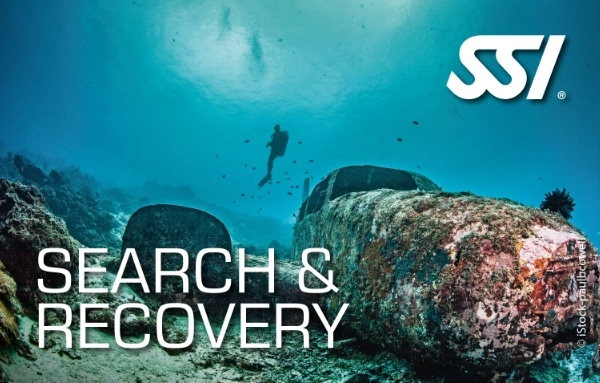
The SSI Search & Recovery program teaches you to assess the scene, select an appropriate search pattern, work accurately with a compass and recover objects without losing control of your buoyancy or the load.
Build a complete recovery toolkit
Finding an object is only half the challenge. You also need to plan, communicate, rig and lift it without creating a new problem.
Mission Planning
Assess the object, last known position, depth, conditions, team roles and possible hazards before entering the water.
Search Patterns
Choose and perform organised patterns designed for the search area, visibility and likely object location.
Compass Navigation
Maintain headings, measure distance and keep a search controlled when visual references are limited.
Knots & Rigging
Create secure attachment points and prepare an object so it remains stable during a controlled recovery.
Lift-Bag Control
Select, attach and manage a lifting device while controlling the ascent and remaining clear of the load.
Team Communication
Coordinate with your buddy, use clear signals and respond calmly when the plan or conditions change.
One missing object. Different ways to search.
No single pattern suits every mission. You will learn how the shape of the search area, available reference points and visibility affect the technique you choose.
Expanding Square
Useful when the approximate position is known and the search can begin close to a reliable central point.
Circular Search
A controlled radius search that can work well around an established central reference point.
Jackstay or U-Pattern
A systematic back-and-forth search suited to covering a defined area without leaving large gaps.
From the plan to the lift
The sequence may be adjusted for weather, sea conditions and student progress, but your training combines knowledge, confined-water practice and real ocean scenarios.
Complete Your Digital Learning
Work through the SSI learning materials before or during the course, then review the key concepts with your instructor.
Planning & Equipment Workshop
Examine search strategies, compass work, lines, knots, rigging options, lift bags and the hazards involved in a recovery.
Confined-Water Practice
Develop the essential techniques in controlled conditions before applying them during your ocean dives.
Ocean Search Missions
Plan and conduct search patterns, locate target objects, rig a load and practise controlled recovery techniques.
Fun Dive & Certification
Put your improved navigation and awareness to use on an additional fun dive before completing the course.
Lift it—without letting it take control.
A lifting device creates a powerful buoyant force. Correct rigging, positioning, air control and team awareness are essential throughout the recovery.
Stay clear of the load
Maintain a safe position and never attach a lifting device to yourself.
Add air progressively
Use controlled input and monitor the load as it becomes lighter.
Expect the unexpected
Be ready to release, vent or abort if the recovery stops being controlled.
We supply the training setup
Arrive ready to learn. Ocean Tribe provides the core course materials, equipment and local support needed for the program.
Course requirements
Entry Requirements
- Minimum age of 10 years
- Open Water Diver certification or equivalent
- Comfortable basic buoyancy and mask skills
- SSI paperwork completed before training
Medical Fitness
All participants must complete the required diver medical questionnaire. Some medical conditions or medications may require clearance from a doctor before diving.
Check Medical InformationRecovery should always be responsible.
Search and recovery training does not mean removing anything interesting from the ocean. Ownership, permission, local regulations, protected sites and environmental impact must all be considered.
Confirm that you are authorised to search for and recover the object before beginning the dive.
Plan lines, finning and lifting carefully to avoid damaging coral or disturbing marine life.
Do not remove archaeological, protected or culturally significant objects from a dive site.
Search & Recovery FAQs
Do I need to be an experienced diver?
Will I lift a very heavy object?
Where will the training dives take place?
Is equipment included?
Can this specialty count towards another recognition level?
Ready to find what others miss?
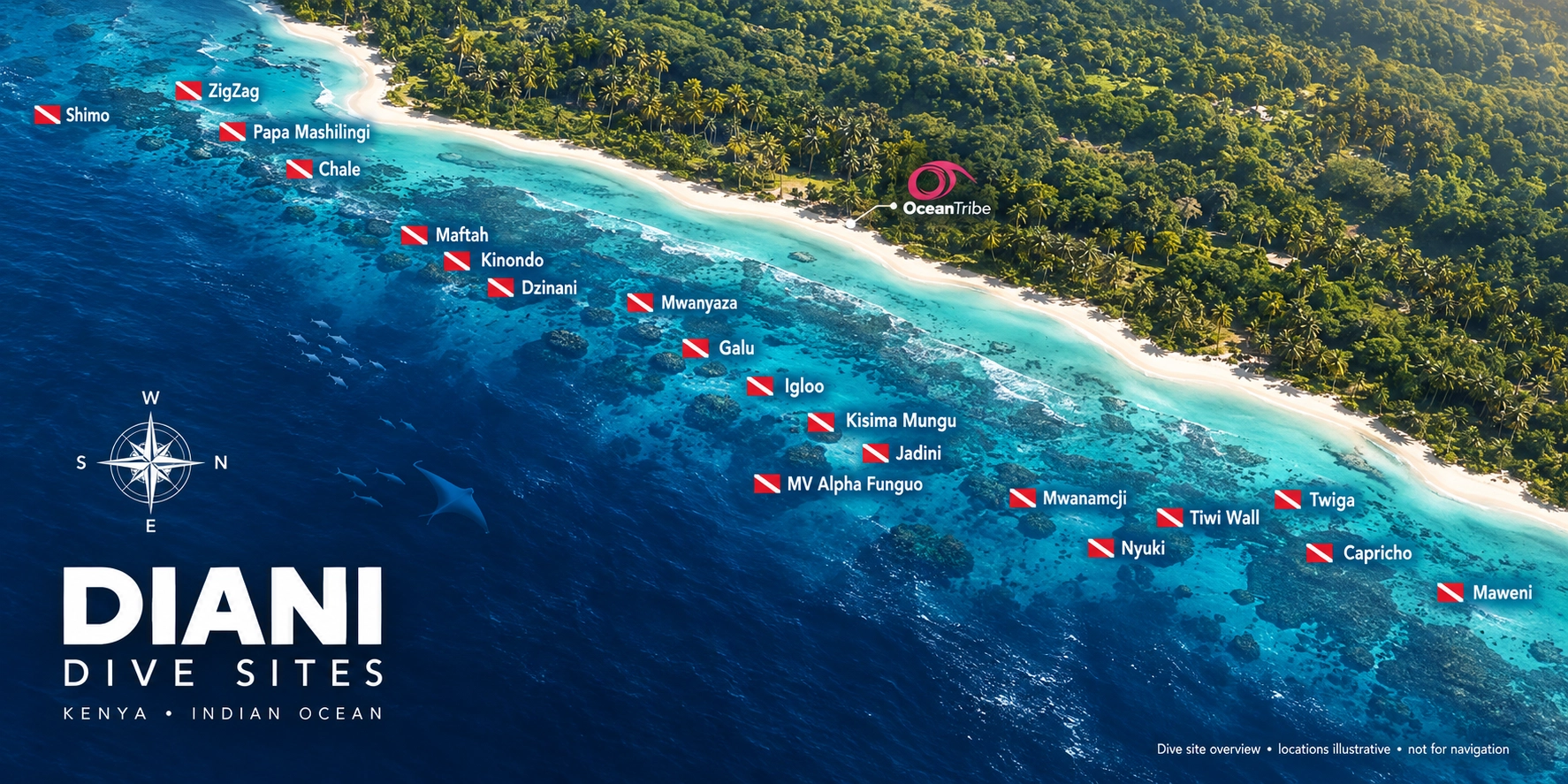
Contact Ocean Tribe for upcoming Search & Recovery course availability in Diani Beach.