Explore the edge of Kinondo
A peaceful southern pinnacle where colourful coral gardens lead towards an impressive eastern drop-off and deeper blue water.
A peaceful reef with a dramatic side
Kinondo lies south of Galu, away from the busiest sections of Diani Beach. Its more remote position creates a calm and intimate reef experience when conditions are suitable.
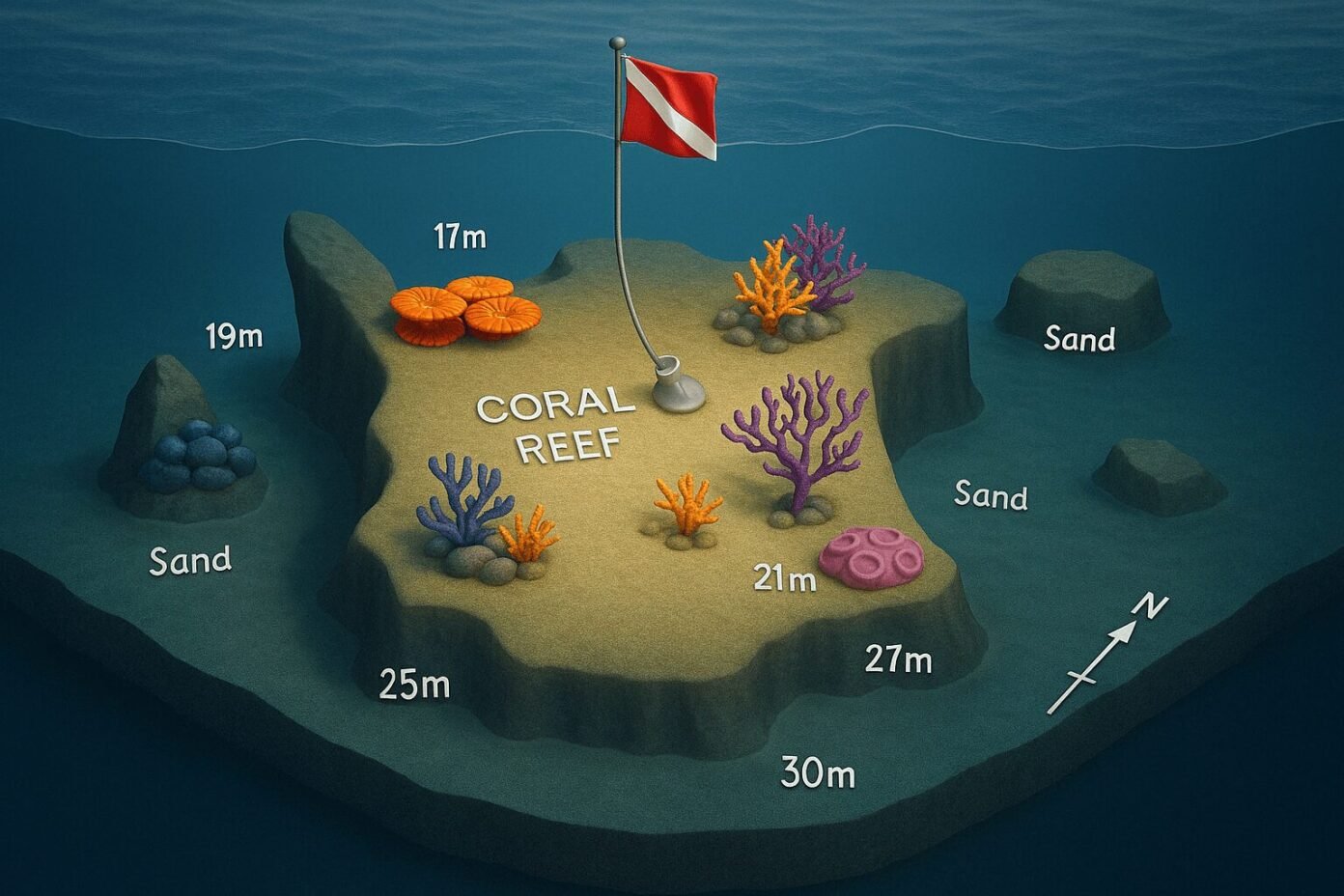
The reef begins at approximately eight metres and includes a broad coral plateau at around 12 metres. Gentler sections slope towards sand and coral bommies near 18 metres, while the eastern side drops into much deeper water.
From plateau to drop-off
Kinondo’s shallow moorings provide access to the coral plateau. The dive can then follow the reef’s gentler sections or move towards the deeper eastern edge when conditions, certification and experience allow.
Although the site reaches approximately 40 metres, this does not mean every dive goes to that depth. Your guide will set a maximum depth appropriate for the group.
Kinondo dive briefing
Watch the original Ocean Tribe briefing for an introduction to Kinondo’s pinnacle, plateau and eastern drop-off.
Remote, varied and full of contrast
Kinondo combines healthy coral habitat with deeper topography and opportunities to see both small reef life and larger passing fish.
Coral gardens
Staghorn coral, brain coral, soft corals and sea fans cover the shallower reef and plateau.
Changing topography
The route can move from shallow coral to sand, bommies and the dramatic eastern drop-off.
A quieter reef
Its southern location can mean fewer divers and a calmer, more intimate experience with the reef.
Life across the reef
Search the coral, watch the sand and remember to look into the blue around the reef edge.
Turtles and rays
Turtles may rest on sandy ledges while blue-spotted stingrays can hide partially beneath the sand.
Schooling fish
Snapper, goatfish, fusiliers, red-tooth triggerfish and barracuda may move around the pinnacle.
Reef hunters
Watch for groupers, moray eels, crocodile fish, octopus and Napoleon wrasse.
Macro discoveries
Nudibranchs, mantis shrimp and well-camouflaged scorpionfish reward patient searching.
Protect Kinondo’s coral gardens
Kinondo’s hard and soft coral provides food, shelter and hunting habitat for the reef’s marine life. Careful diving helps protect this environment for future visitors.

Log Kinondo in MySSI
Record the dive you actually completed rather than Kinondo’s maximum site depth. Use your dive computer for your personal depth, time and temperature information.
Prepare for the reef edge
Check your certification
The planned depth must remain within your certification, recent experience and the limits set by your dive professional.
Listen to the route briefing
The guide will explain the mooring, direction of travel, current, turning point and planned ascent procedure.
Monitor depth and gas
Deeper water can increase gas consumption and reduce no-decompression time, so check your instruments regularly.
Explore Diani’s southern reef edge
Tell Ocean Tribe your certification, recent diving experience and preferred depth. The final dive sites and routes are chosen for the conditions and experience of the group.