Igloo.
Rounded coral bommies.
An underwater observatory.
Discover Diani’s distinctive reef architecture.
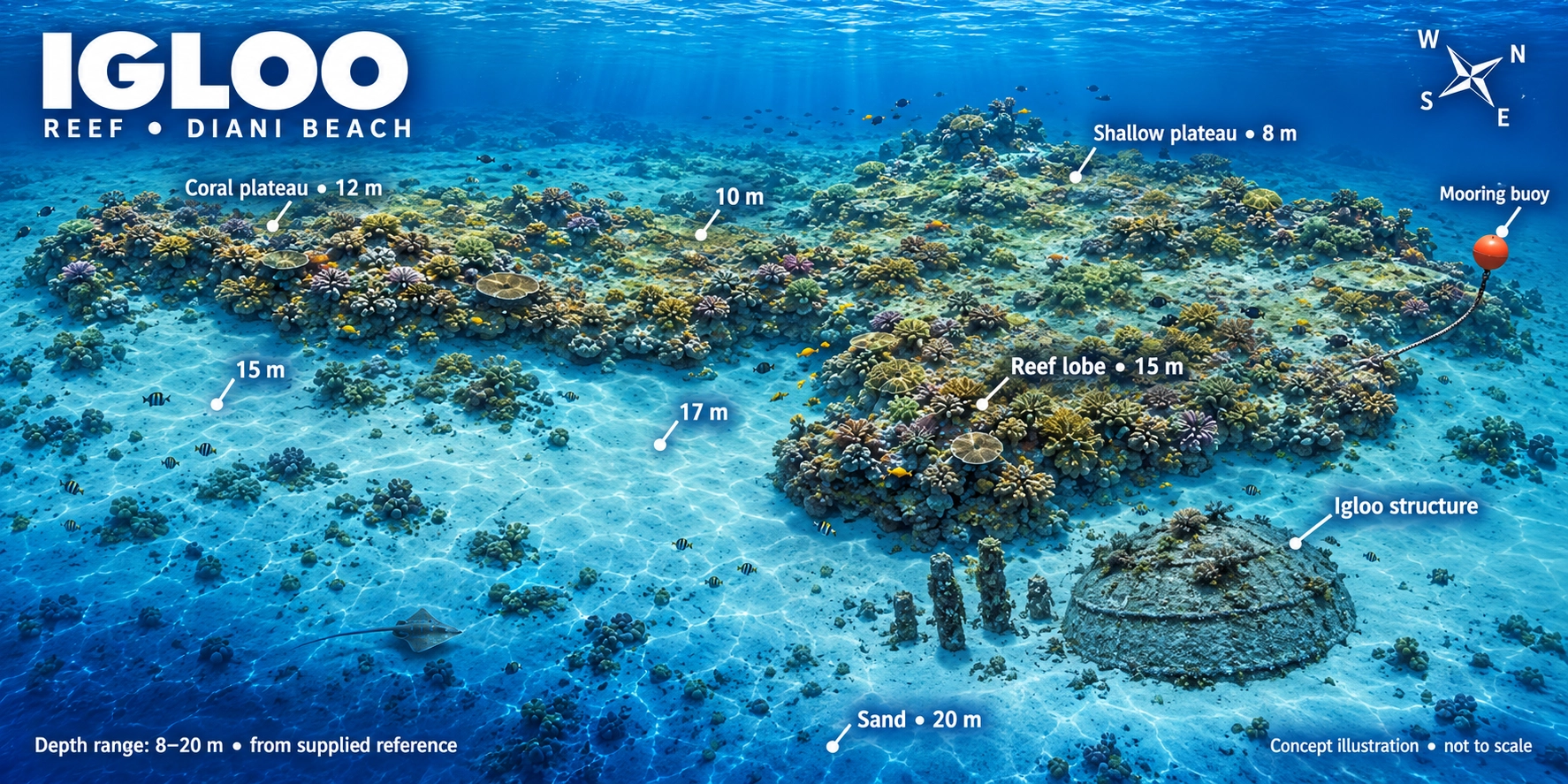
Concept illustration, not to scale. The map illustrates 8–20m; the supplied site profile includes deeper routes to approximately 25m. Your guide confirms the planned depth and route for your certification and the day’s conditions.

One of Diani’s most distinctive reefs
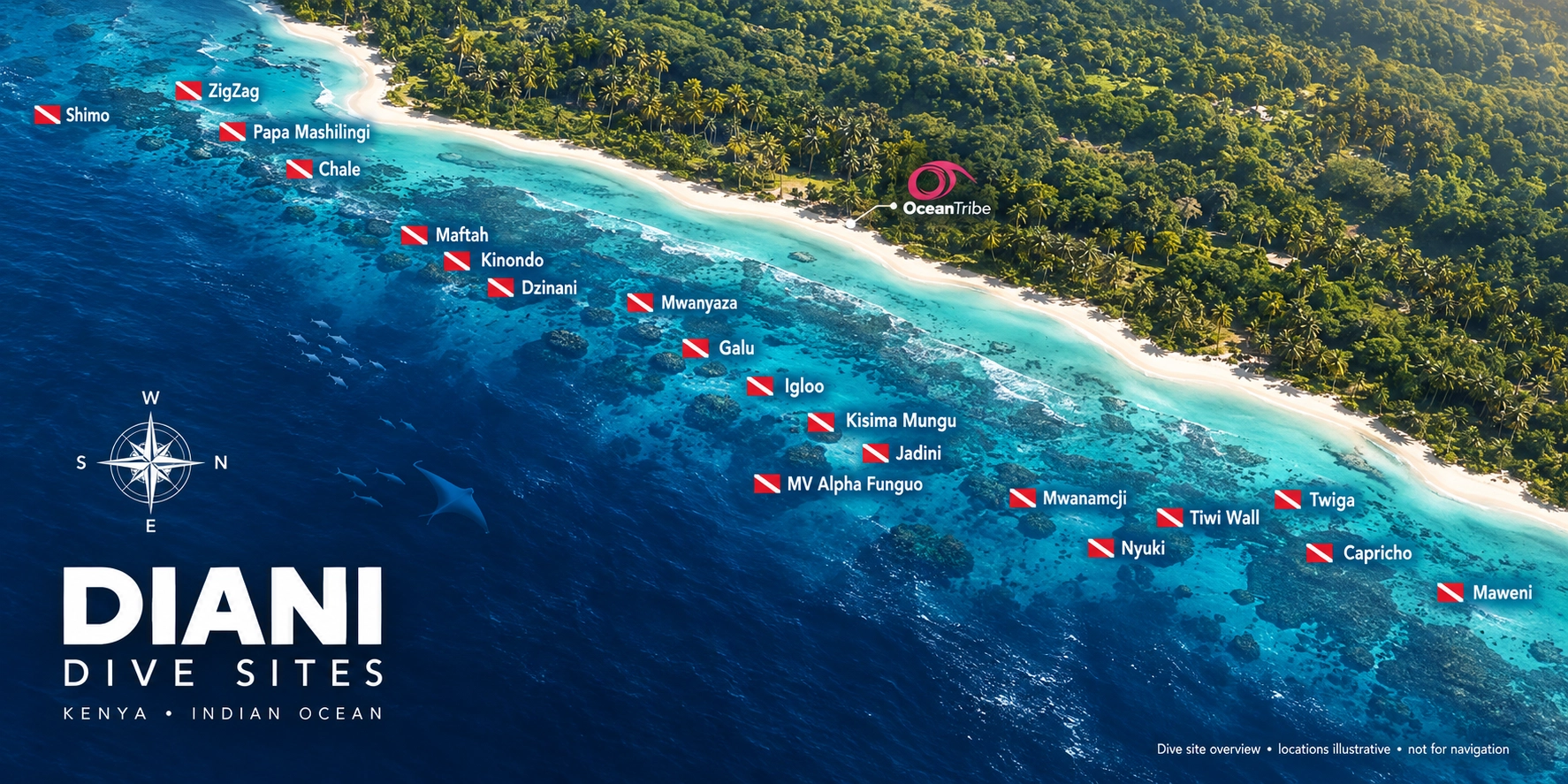
Igloo is located a short boat ride from central Diani, offshore from the Baobab and Papillon Lagoon area and bordered by Robinson Sand Island.
The reef slopes from a coral plateau towards a sandy base. Rounded coral bommies give the site its name and create sheltered spaces, swim-throughs and dramatic underwater photography angles.
The Igloo depth journey
Your actual route and depth will depend on certification, comfort, current and the conditions on the day.
Coral plateau
Begin around the upper reef, settle your buoyancy and explore the first coral structures.
Reef top
Rounded bommies, hard coral and sponges provide shelter for a busy reef community.
Observatory remains
The wreck of the former underwater observatory rests on the sand beside the reef.
Sandy edge
Appropriately certified divers may explore the deeper edge while watching the blue for passing marine life.
Igloo dive-site briefing
Preview the reef profile, underwater observatory and key features before heading out on the boat.
Igloo dive profile
Igloo is a sloping reef with a coral plateau, deeper moorings and a sandy base. The observatory remains provide an additional landmark at approximately 20 metres.
Your guide will select a suitable depth and route for the group. Open Water divers can remain within their certification limit while appropriately trained divers explore deeper sections.
Three dives rolled into one
Reef scenery, an unusual piece of underwater history and excellent marine-life searching all meet at one site.
Underwater observatory
Explore around the remains of a former underwater observatory lying on the sandy bottom at approximately 20 metres.
Swim-through scenery
The rounded coral formations create interesting spaces and dramatic angles for careful divers and photographers.
Wide-angle and macro
Photograph schooling fish and large structures, then slow down to search for tiny animals among the coral.
From schooling fish to hidden specialists
Marine-life encounters are always natural and cannot be guaranteed. The slower you explore, the more Igloo may reveal.
Schooling fish
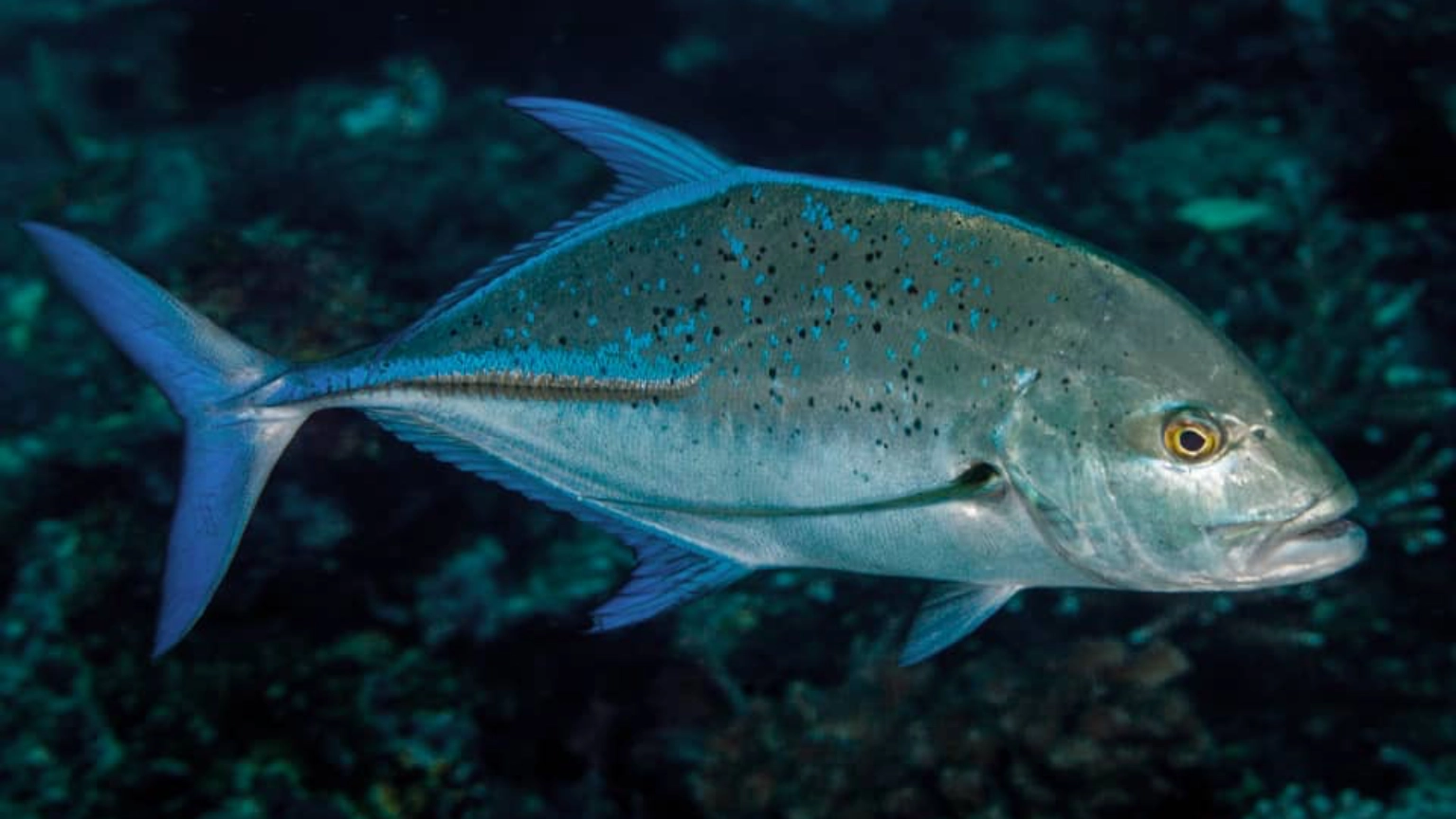
Yellow snapper, fusiliers and trevally may gather around the bommies or hunt in the blue.
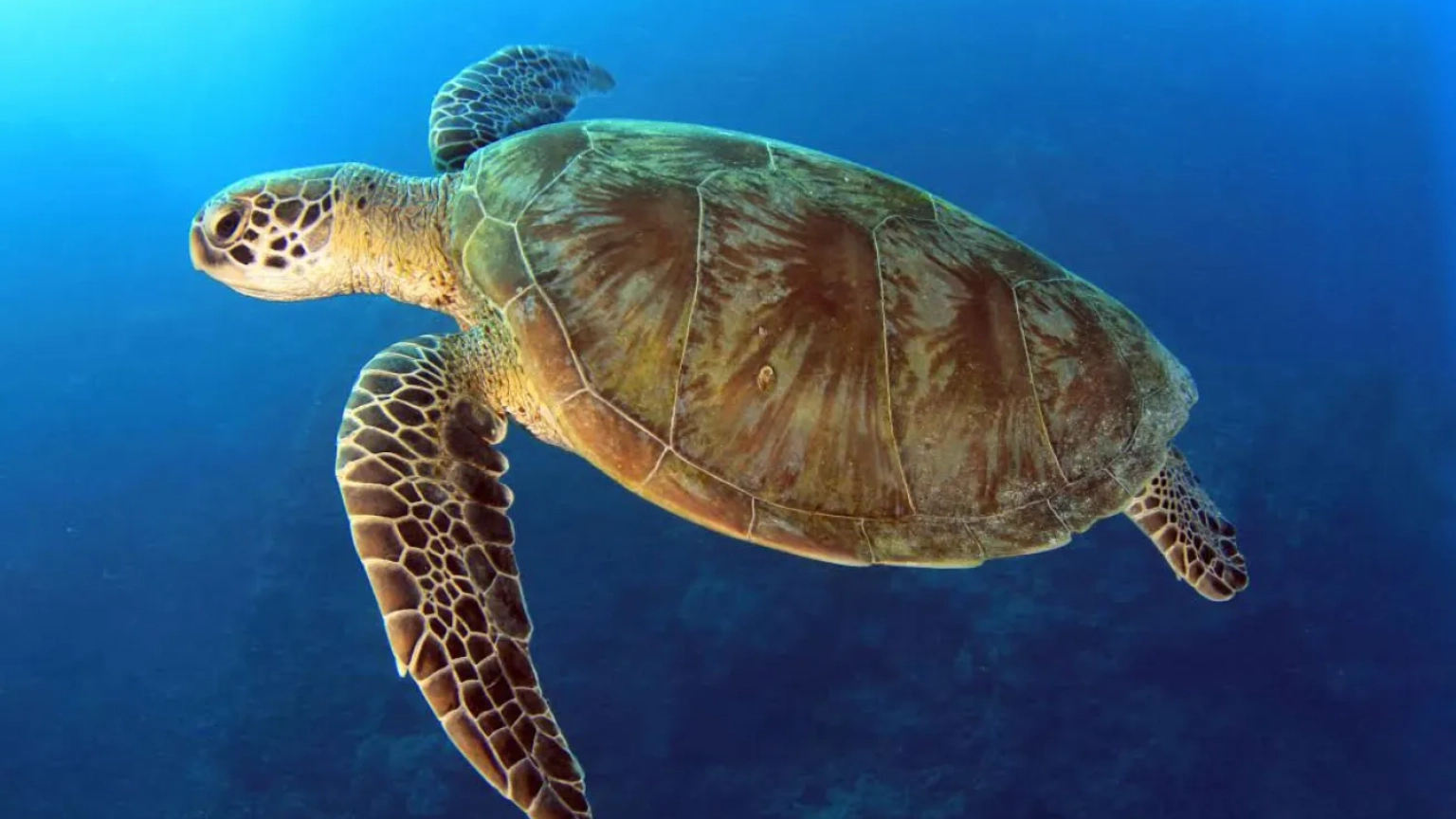
Turtles
Turtles regularly pass across the reef or cruise along the sandy edge.
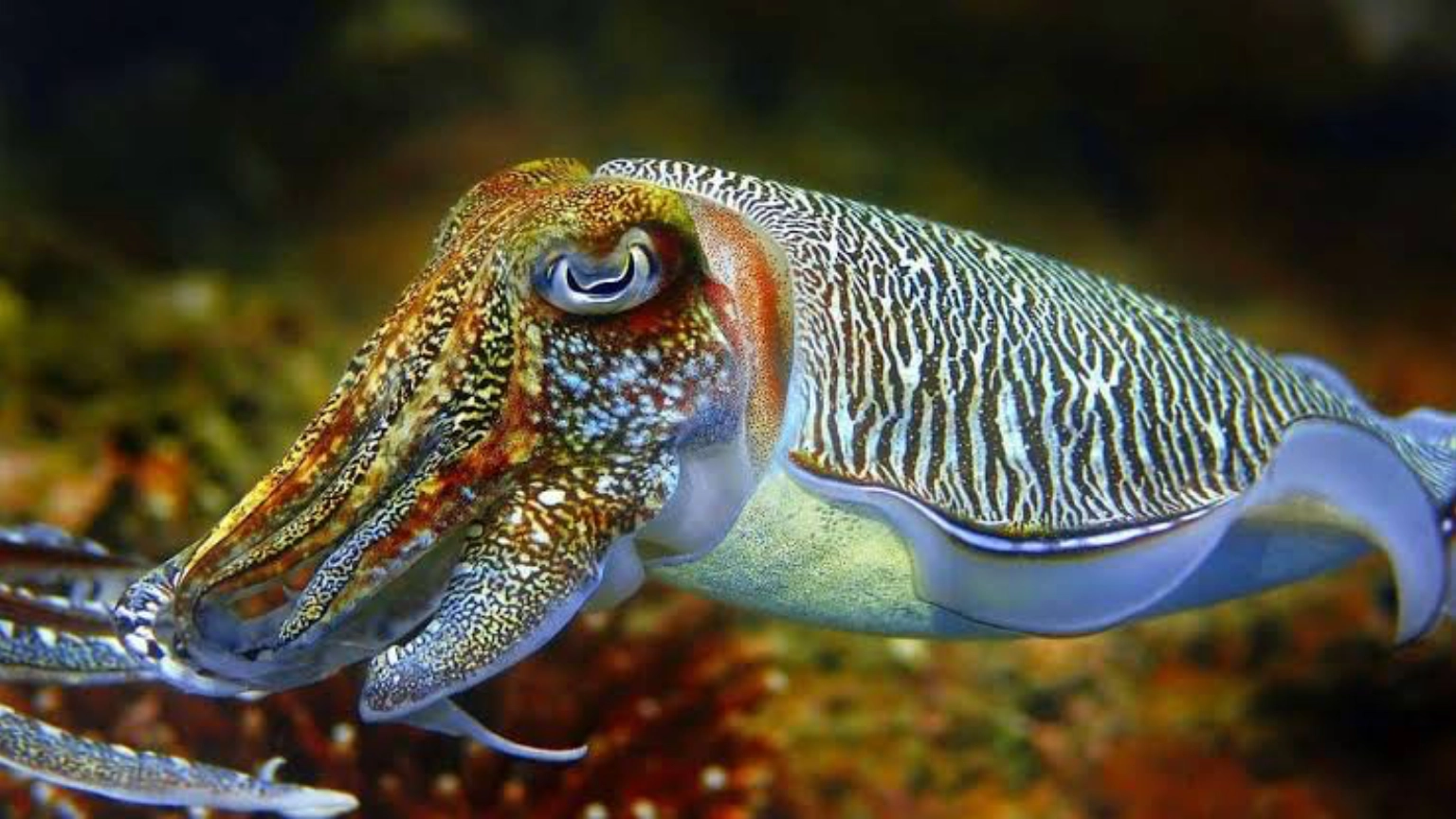
Reef characters
Mantis shrimp, moray eels, squid, cuttlefish and pufferfish may appear around the reef.
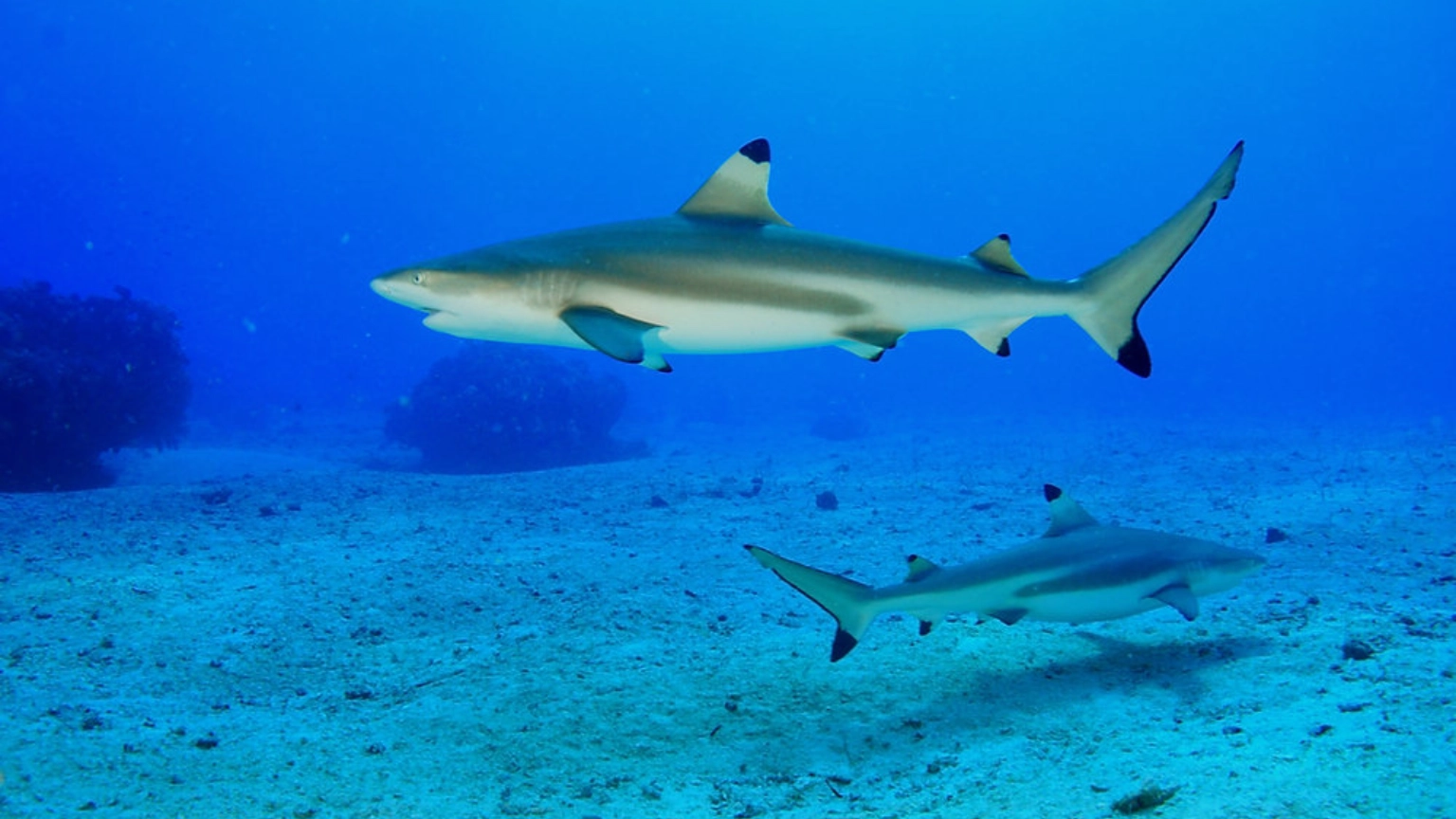
Passing visitors
Divers may occasionally see reef sharks cruising beyond the sandy reef edge.
Look closer: search for ghost pipefish, leaf fish, nudibranchs, ribbon eels and cleaner shrimp among the coral.
The habitat: hard coral, sponges, ledges and crevices provide shelter for Igloo’s diverse community.
Experience helps when the water moves
Igloo can be suitable for a range of certified divers, but currents may be moderate. The deeper sections, swim-throughs and 25-metre maximum depth require good buoyancy awareness and an appropriate certification.
Your Ocean Tribe guide will assess the conditions and adapt the route, depth and pace to the group.

Log Igloo in MySSI
After the dive, record your actual depth, bottom time and wildlife encounters in your MySSI digital logbook.
Find your next Diani dive
Explore our local reefs and wreck. Swipe through the maps or use the arrows to discover all 11 sites.
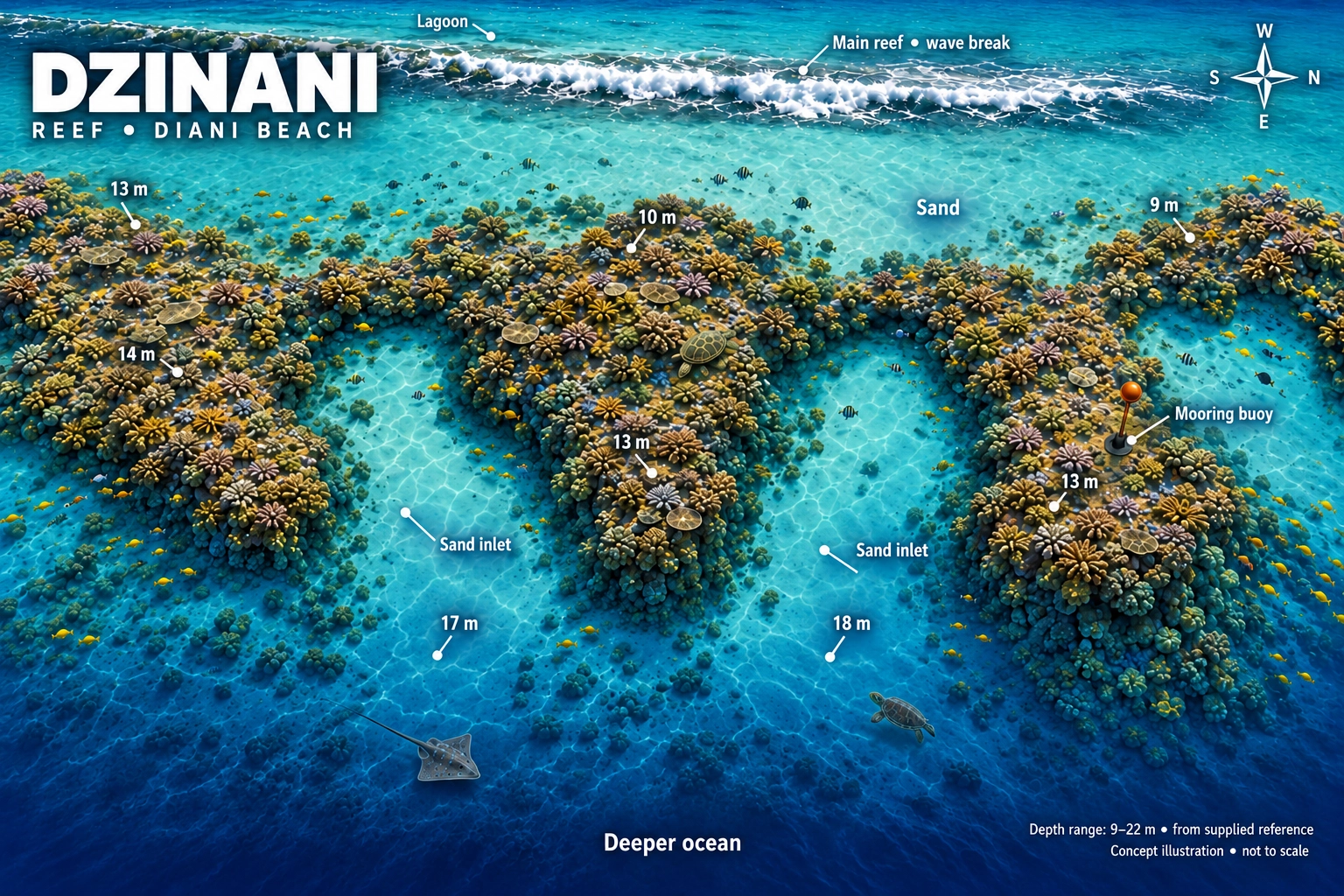
Dzinani
Three coral islands with turtles, colourful reef fish and plenty of small marine life.
Explore Dzinani →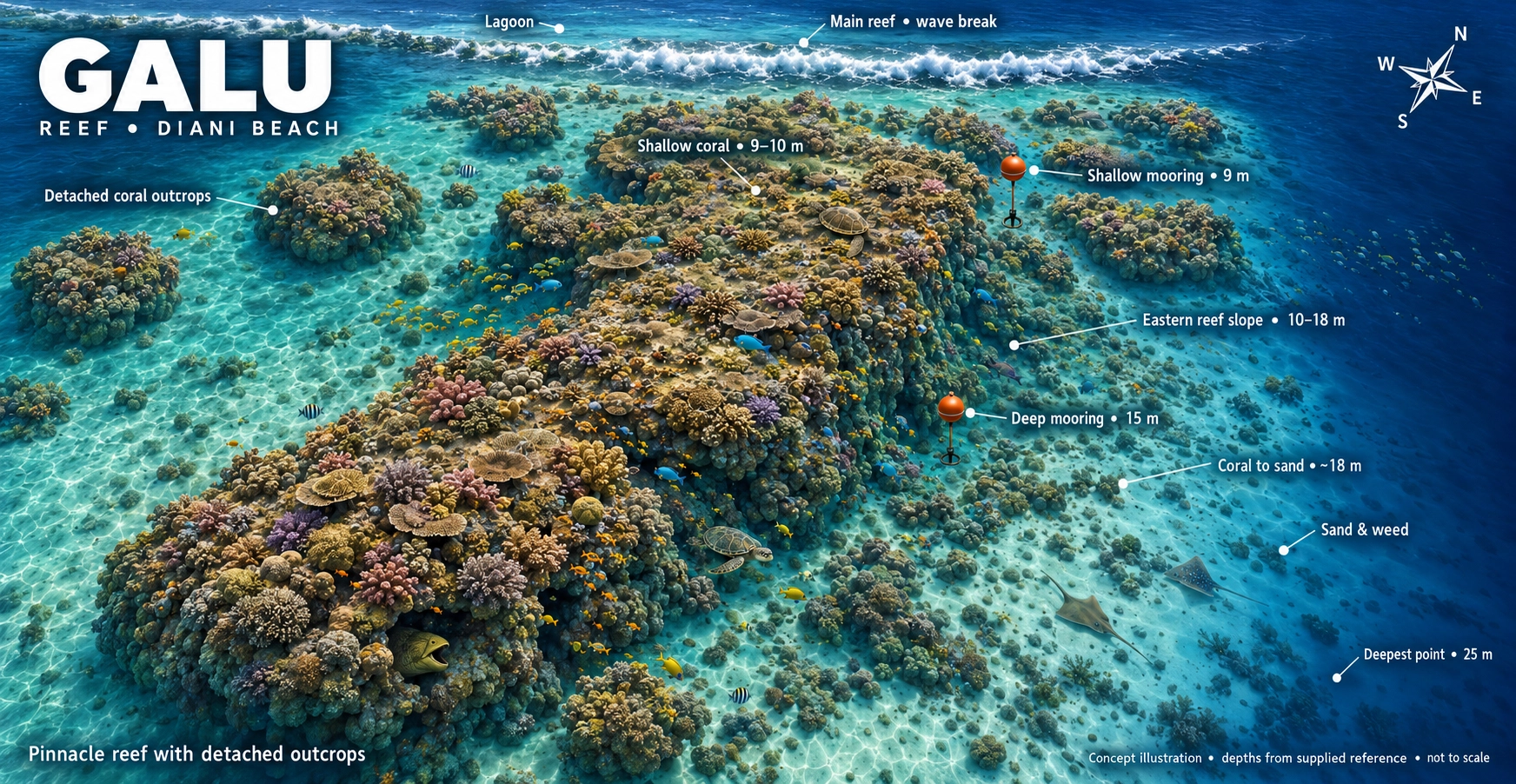
Galu
Coral bommies, sandy patches and a gentle slope make this a favourite for turtles and reef photography.
Explore Galu →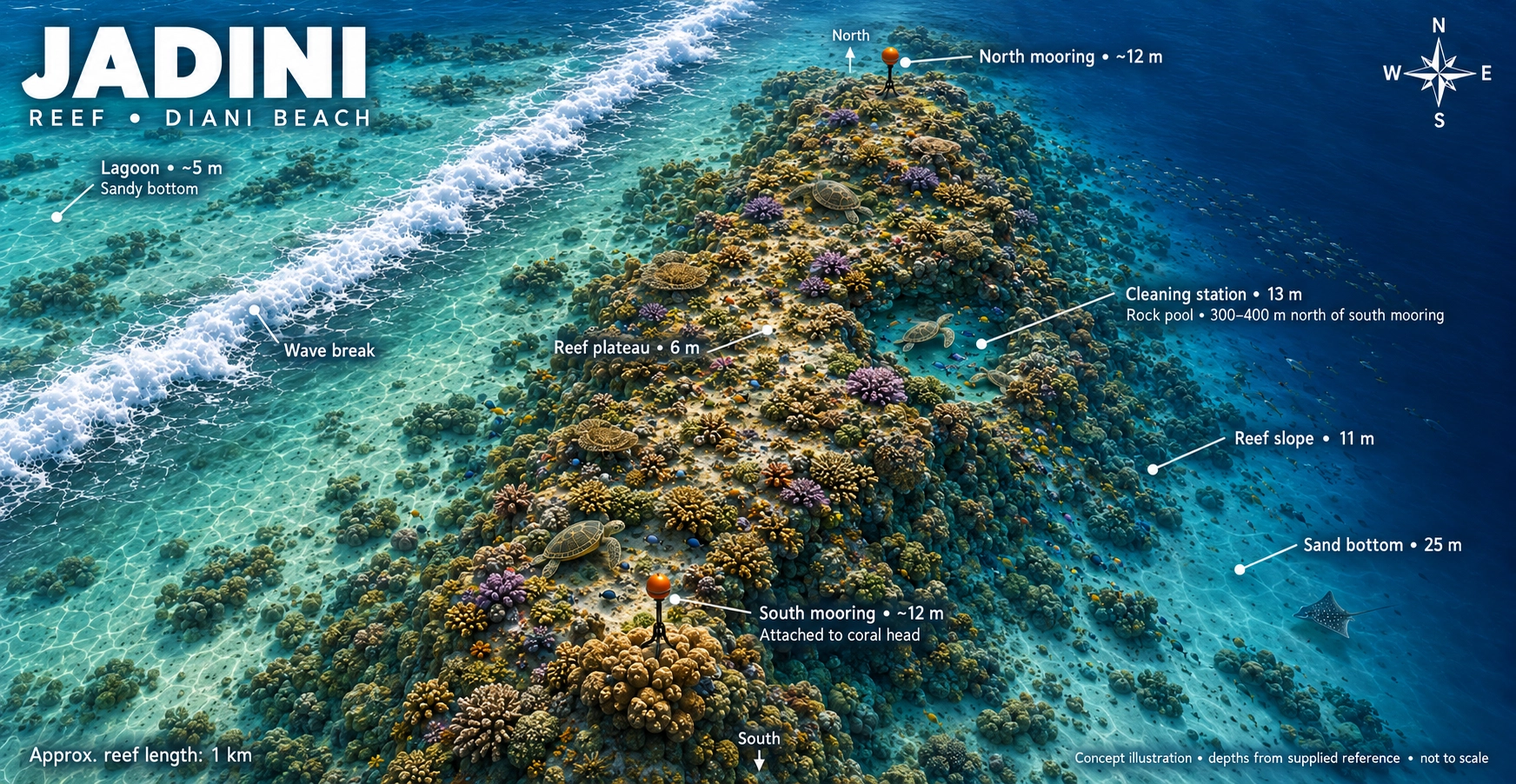
Jadini
A gentle 7–25m reef slope with turtles, moray eels, nudibranchs and colourful reef fish.
Explore Jadini →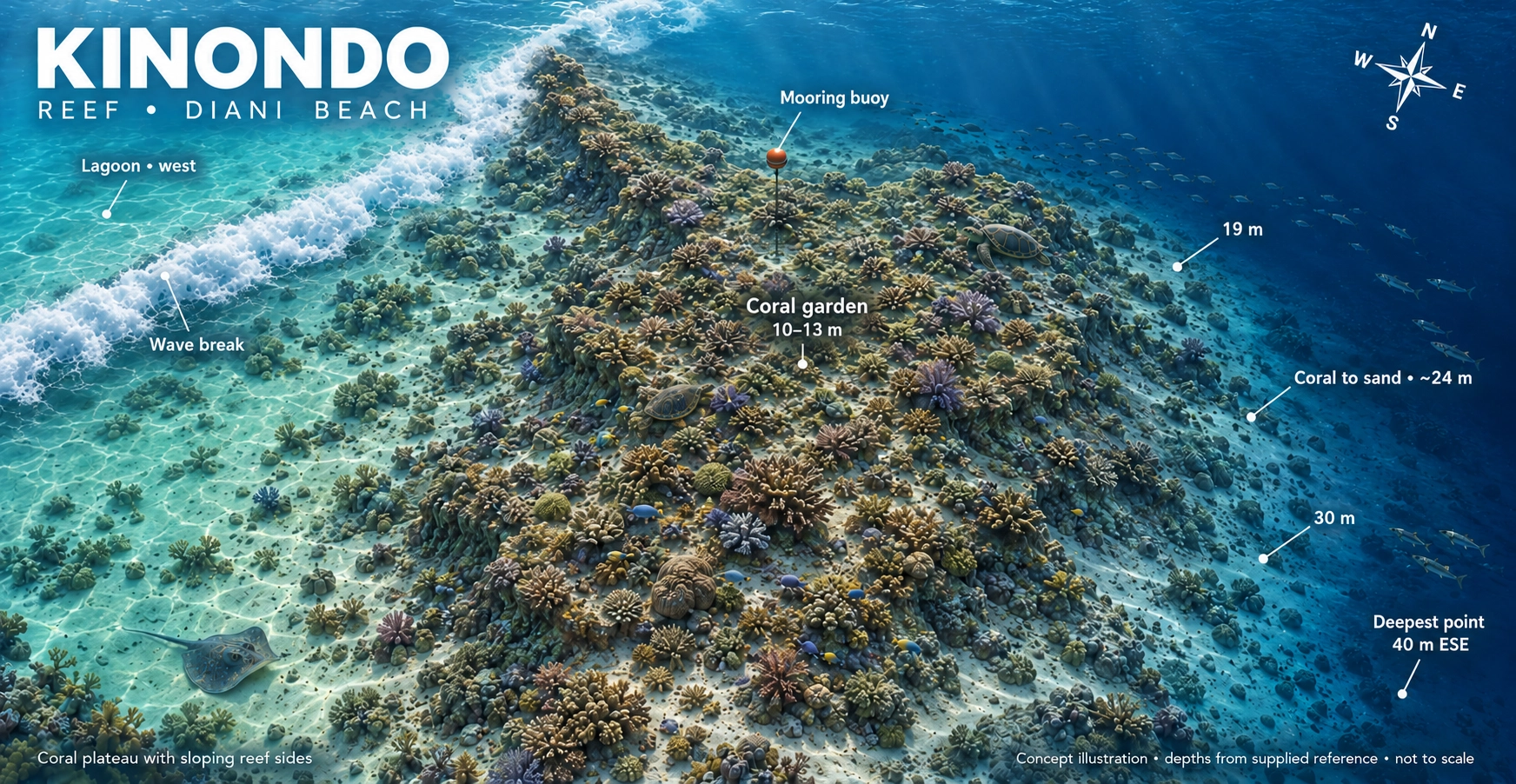
Kinondo
A southern pinnacle reef with a coral plateau, varied marine life and an eastern drop-off.
Explore Kinondo →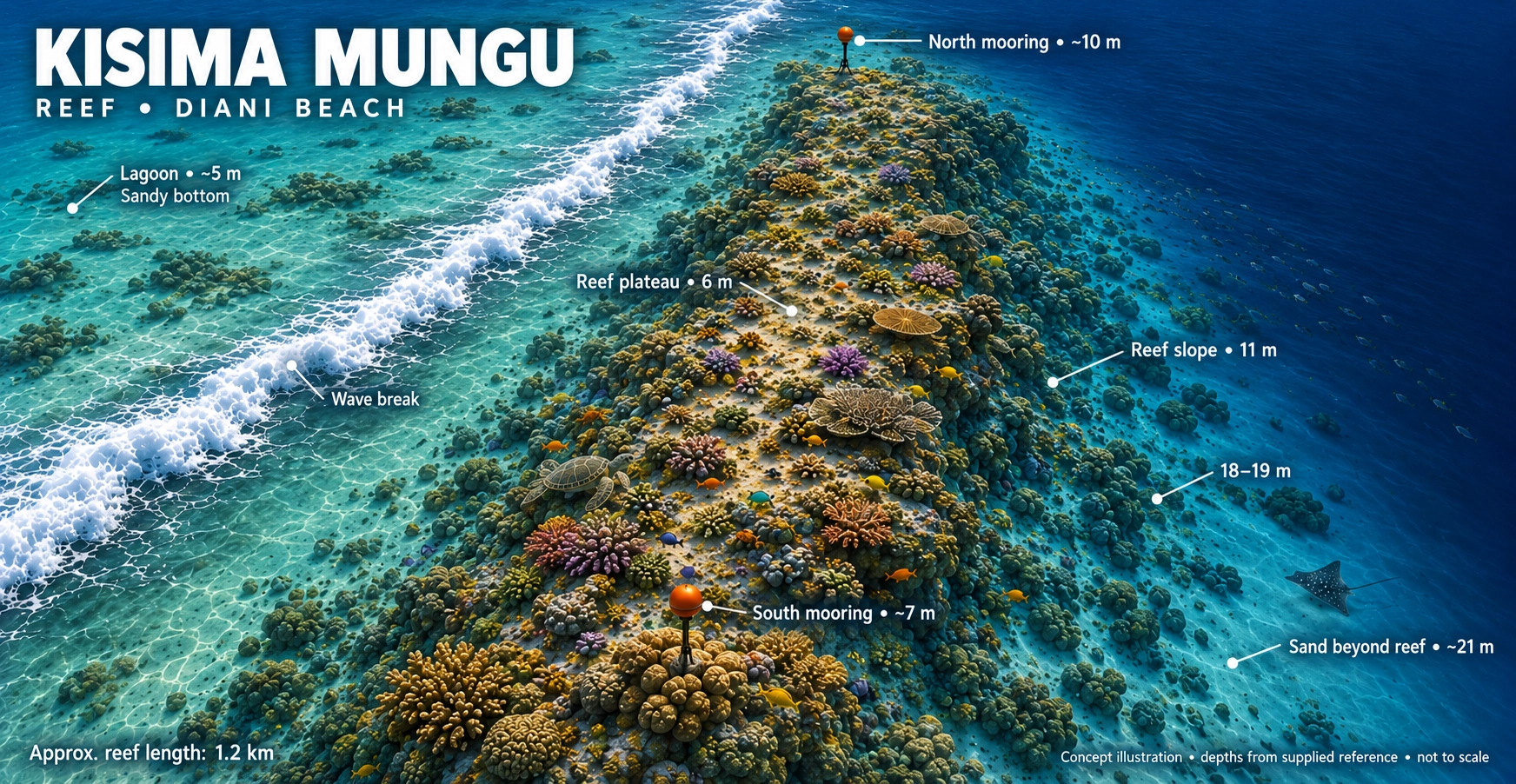
Kisima Mungu
A fringing reef with walls, overhangs and coral formations, linking towards Milele and Jadini.
Explore Kisima Mungu →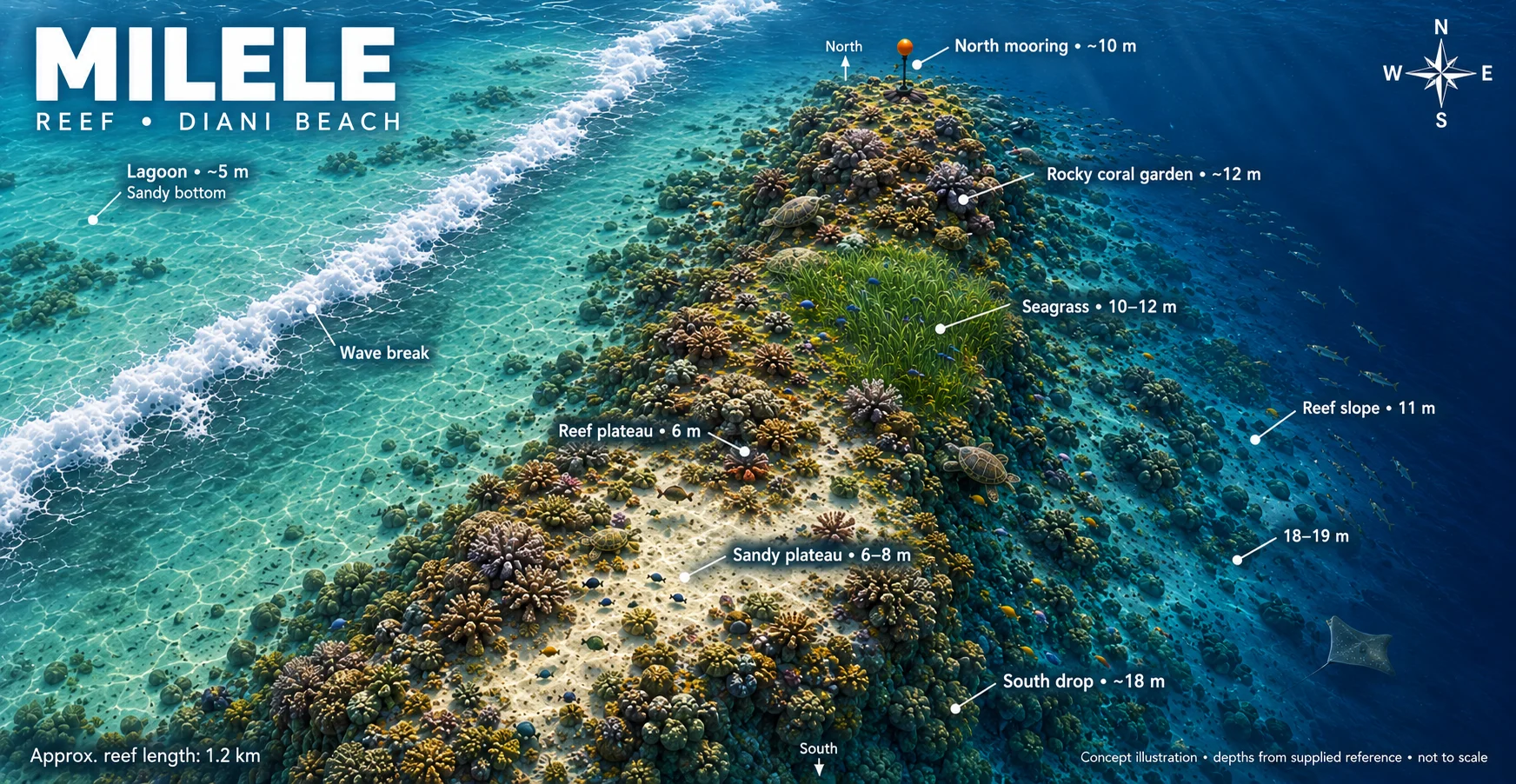
Milele
A fringing coral reef that slopes from shallow water to approximately 25m, with turtles and colourful reef life.
Explore Milele →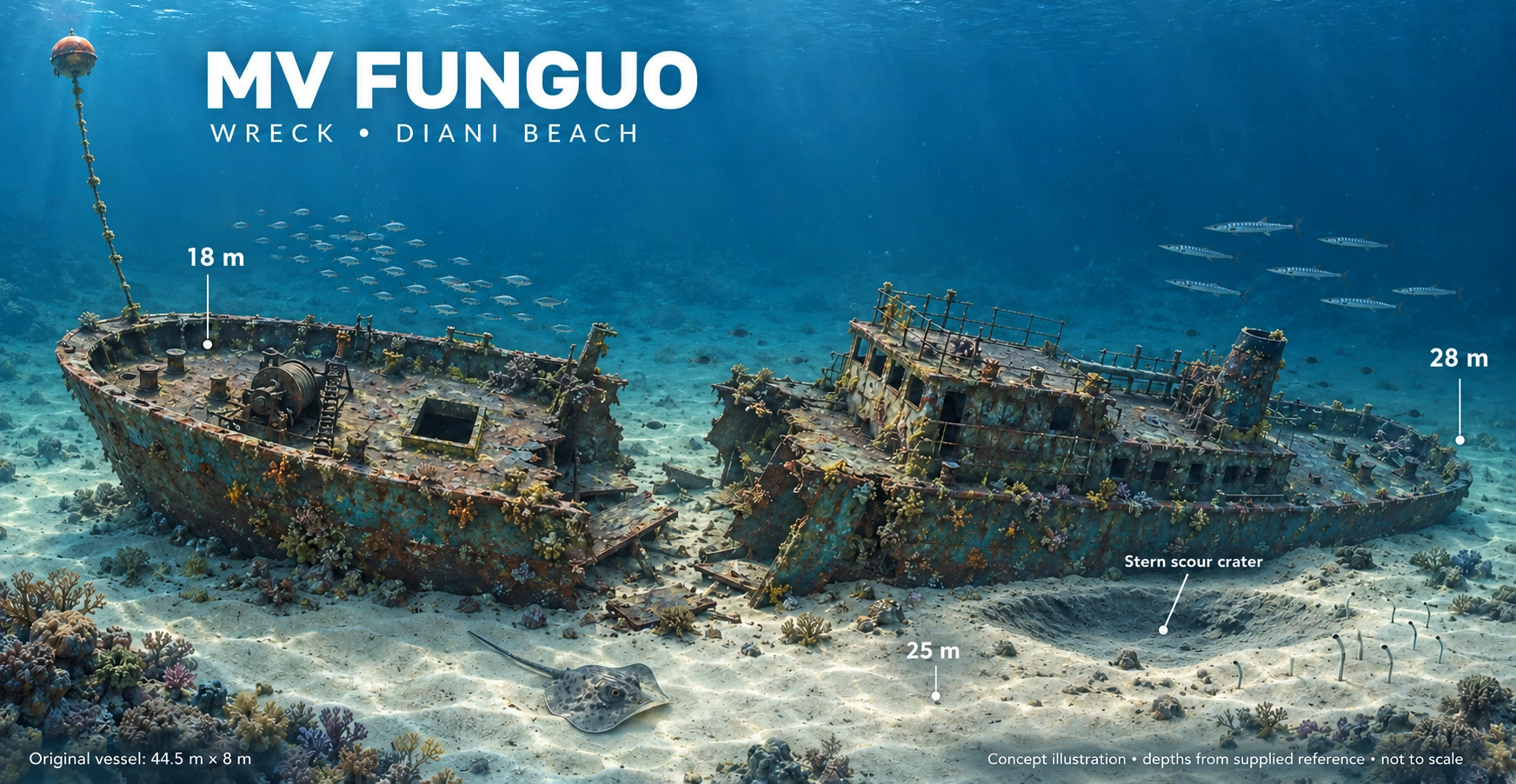
MV Alpha Funguo
A purpose-sunk wreck transformed into an artificial reef, with schooling fish and fascinating macro life.
Explore the wreck →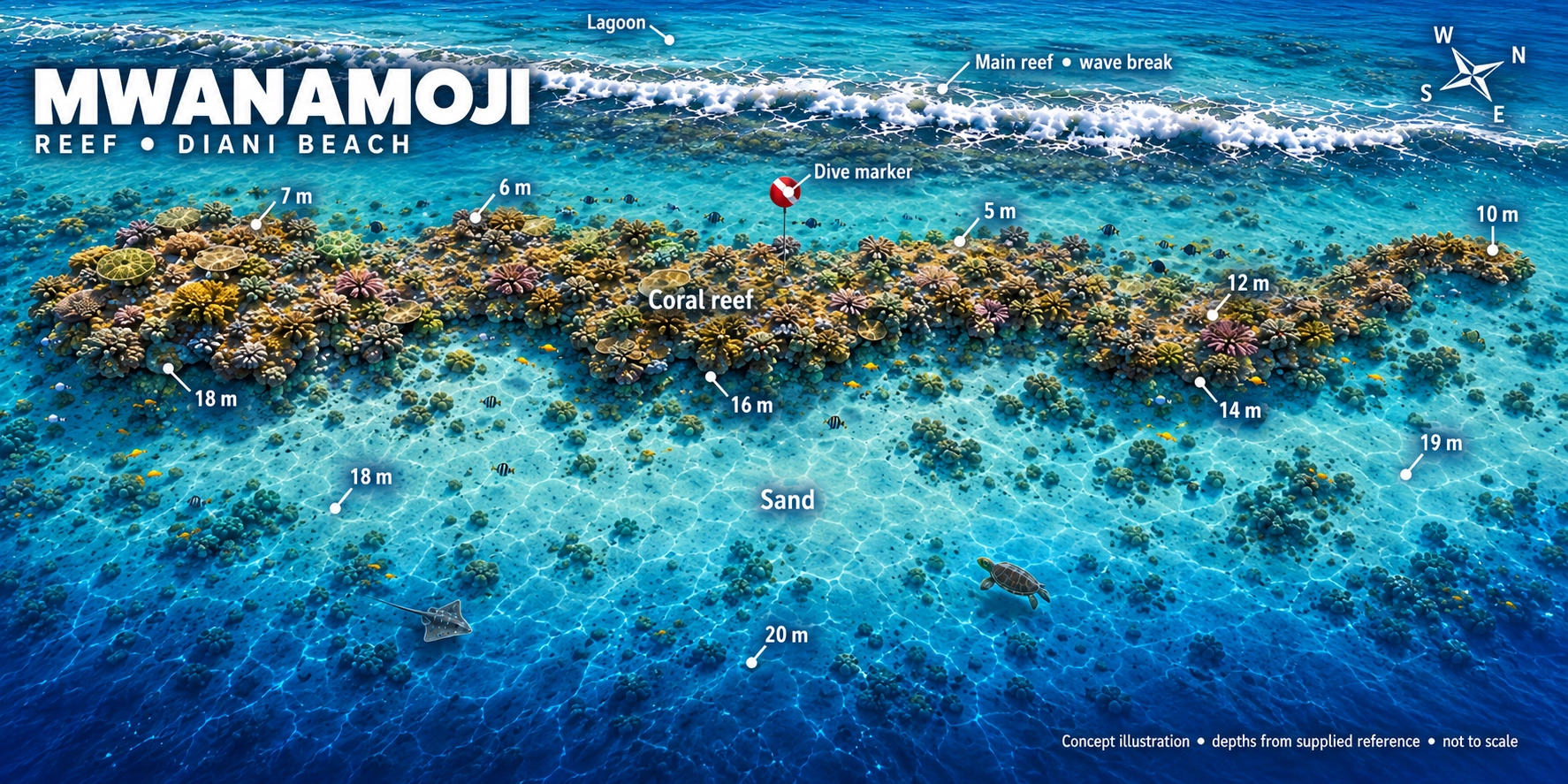
Mwanamoji
Coral gardens, bommies and sandy patches provide varied habitats for reef fish and smaller discoveries.
Explore Mwanamoji →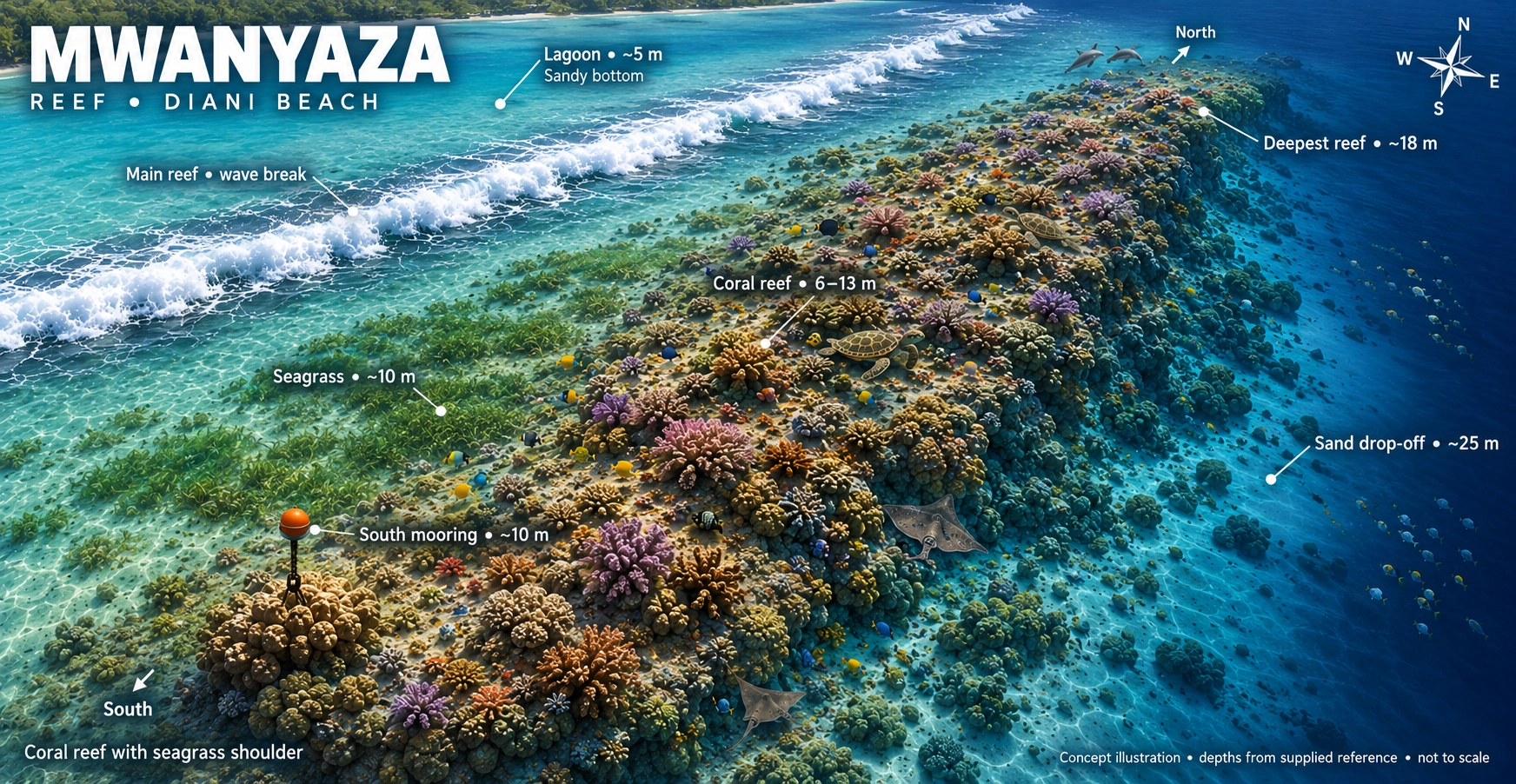
Mwanyaza
A long fringing reef with colourful corals, lively fish schools and routes adapted to the conditions.
Explore Mwanyaza →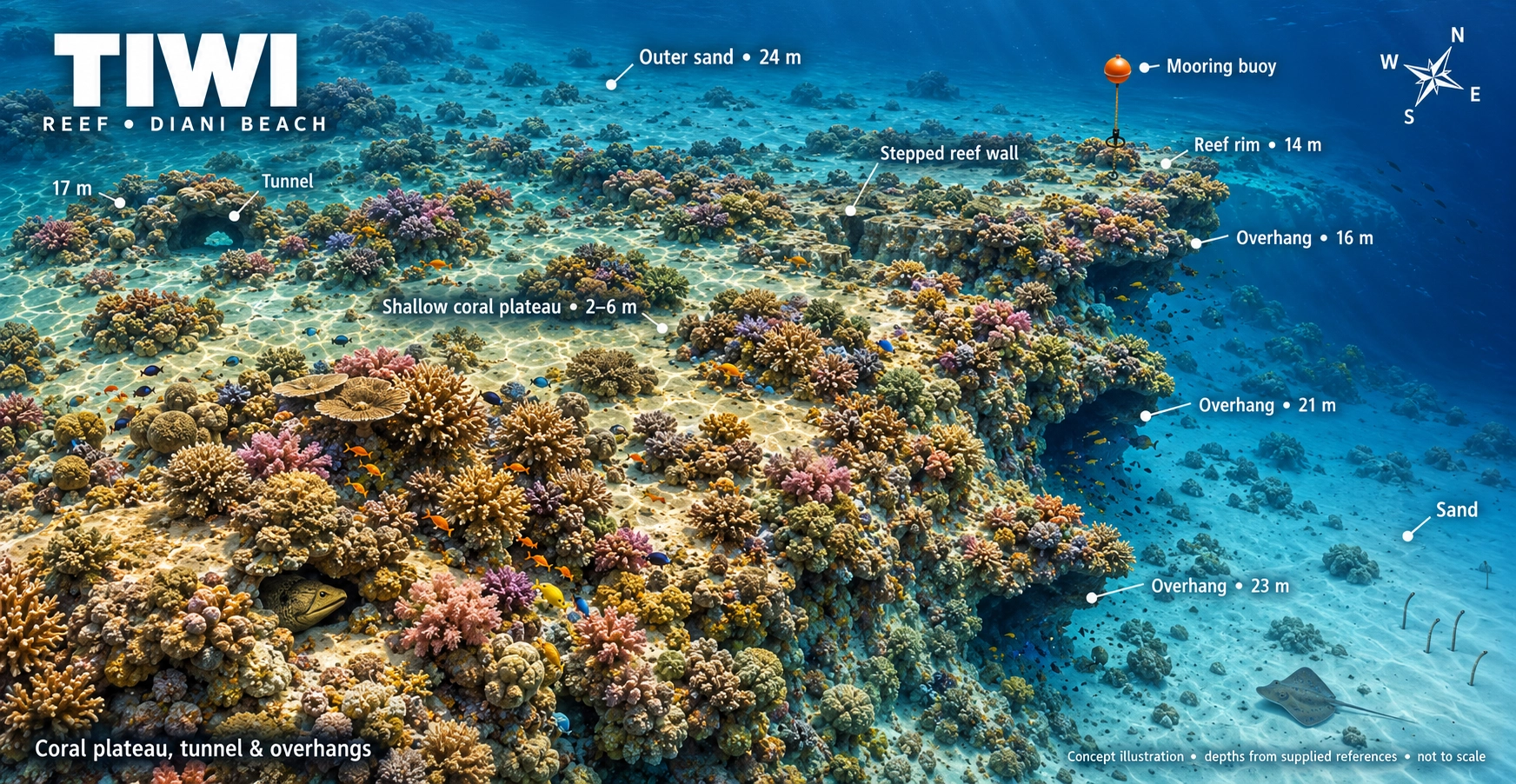
Tiwi Wall
Explore reef scenery and coral gardens near the Kongo River mouth, with visibility influenced by river conditions.
Explore Tiwi Wall →Igloo
Rounded coral formations, swim-throughs and the remains of an underwater observatory give this reef its character.
Explore Igloo →Sites and routes are chosen to suit ocean conditions and your dive experience. View all dive sites →
Make it part of your Diani dive adventure
Tell the Ocean Tribe team your certification and recent experience. The final sites are selected for the conditions and divers on the day.