Every diver should aim to become an eco-conscious diver. After all, the ocean gives us so much adventure, wonder, and beauty. The least we can do is protect it.
That’s where low-impact diving comes in. With just a few small changes in how you dive, you can reduce your environmental footprint and help preserve coral reefs and marine life for the future. Let’s take a look at how to dive responsibly and the training options that can turn you into a true ocean guardian.
What Is Low-Impact Diving?
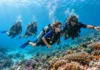
Low-impact diving is all about minimizing your disturbance to the underwater environment. That means:
- Avoiding contact with reefs and marine life
- Perfecting buoyancy to hover without stirring sand or touching the bottom
- Controlling your gear to prevent dangling hoses or fin strikes
- Making sustainable choices about the dive operators, equipment, and products you support
It’s not just about rules. It’s about respect. For the fragile ecosystems that we love to explore.
Mastering Buoyancy: The Foundation of Eco-Diving
Neutral buoyancy is the single most important skill for any eco-conscious diver. It lets you glide effortlessly without kicking up sediment or crashing into corals. At Ocean Tribe, we teach buoyancy as a core skill from your very first course, and refine it in every dive after.
Want to level up? The SSI Perfect Buoyancy Specialty is a must. It’s a short course, but the impact it has on your skills (and the reef) is huge.
Gear Control and Streamlining
It’s not just your body that can damage the reef. Dangling gauges, octopus hoses, or camera arms often cause accidental breakage. An eco-conscious diver checks and secures all their gear before entering the water.
At Ocean Tribe, we emphasize good trim, streamlined setup, and proper attachment of all accessories. Less drag, more control, and no damage to the reef.
Awareness and Etiquette
You’re not alone out there. Marine animals deserve space, and fellow divers deserve respect. Never chase, touch, or feed wildlife. Avoid finning too close to the bottom. And be extra cautious with your entry and exit, especially on shallow reefs.
Joining our SSI Marine Ecology or Coral Identification courses will make you more aware of what you’re seeing—and why it matters. The more you understand, the better you’ll dive.
Certifications for the Eco-Conscious Diver
There’s more than just buoyancy to being a responsible diver. Several training programs can help:
- SSI Blue Oceans: Learn best practices for sustainable diving and ocean protection.
- Marine Ecology: Understand ocean ecosystems and how to protect them.
- Fish or Coral ID: Identify species and contribute to citizen science projects.
- Dive Guide and Pro-Level Internships: Lead by example and inspire others to dive responsibly.
Every course builds not just your knowledge, but your role as a steward of the sea.
Give Back: Take Action Underwater
At Ocean Tribe, we don’t just teach low-impact diving. We live it. Join our monthly Blue Oceans cleanups and help remove marine debris from Diani’s lagoon. Certified divers can dive for free, and snorkellers can help from the surface. You’ll even get a digital recognition card for taking part.
Looking to make a bigger impact? Talk to us about our SSI Marine Conservation Diver pathway. A journey for divers who want to protect what they love.
Why It Matters
The ocean is under threat—from pollution, climate change, overfishing, and careless tourism. But every diver can be part of the solution. Becoming an eco-conscious diver isn’t just good for the environment—it makes you a better, more skilled, and more aware underwater explorer.
It’s the future of diving. And it starts with you.