WELCOME TO THE OCEAN TRIBE ONLINE DIVE THEORY LEARNING CENTRE
This is your go-to hub for understanding scuba theory. We’ve gathered clear explanations, expert tips, and top videos from across the diving world. Everything is designed to help you learn faster and smarter.
Browse each category to explore detailed topics. Watch helpful videos. Review key concepts. Reinforce your dive knowledge.
Whether you’re just starting or preparing for your SSI Instructor Training Course, this is the place to build confidence and clarity.
Your path to becoming a dive professional starts here. Let’s dive in.
The SSI Classified Diving program has been created to enable persons with disabilities who might not be able to earn full certifications the ability to dive and get certified with different safety parameters. Learn to work with disabled divers.
Begin your safari with a scenic drive to Tsavo East National Park, entering through Bachuma Gate (100 km from Mombasa). Enjoy a game drive en route to your lodge or camp. Tsavo East, one of Kenya’s largest and oldest parks, is home to abundant wildlife. Look out for elephants, lions, giraffes, and more. Explore famous attractions like the Yatta Plateau, Lugard Falls, and Galana River. After lunch at the lodge/camp, embark on an afternoon game drive.
📍 Dinner & Overnight: Tsavo East National Park- Full-Board Accommodation
Day 2: Tsavo East – Amboseli National Park
Start your day with an early morning game drive, the best time for wildlife sightings. Depending on your camp’s location, you may have breakfast before or after the game drive.
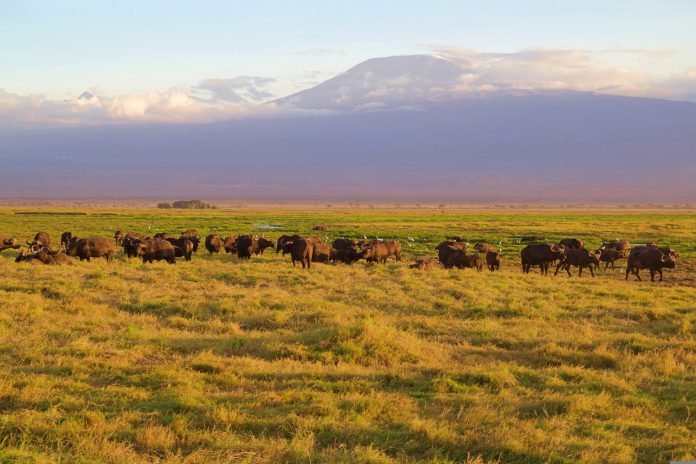
Drive to Amboseli National Park, famous for its large elephant herds and stunning views of Mount Kilimanjaro. Spot diverse wildlife, including giraffes, zebras, cheetahs, lions, and buffalo. Visit the park’s wetlands and seasonal lake, a haven for birdlife. After lunch at the lodge/camp, head out for an afternoon game drive.
📍 Dinner & Overnight: Amboseli National Park- Full-Board Accommodation
Day 3:Amboseli – Tsavo West National Park
Catch a breathtaking sunrise over Mount Kilimanjaro during an early morning game drive. Return for breakfast before driving to Tsavo West National Park.
Experience a dramatic change in scenery, from rocky hills to open savannahs. Visit Mzima Springs, a natural oasis fed by underground streams from the Chyulu Hills. Watch hippos and crocodiles from an underwater viewing area. After lunch at the lodge/camp, enjoy another afternoon game drive.
📍 Dinner & Overnight: Tsavo West National Park- Full-Board Accommodation
Day 4: Tsavo West – Diani Beach
Savor your final morning game drive in the park. After breakfast, begin your journey back to the coast. Stop for lunch along the way before arriving in Diani Beach by late afternoon.
Relax on the white sands of Diani Beach and explore its vibrant marine life. Stay at the luxurious Baobab Beach Resort & Spa with an all-inclusive package. Daily dive trips depart from the on-site Ocean Tribe dive center, offering incredible reef diving.
When not diving, enjoy kite-surfing, dolphin & whale shark snorkeling, spa treatments, microlight adventures, and Diani’s lively bars, restaurants, and nightlife.
Don’t see a dive and safari package that suits you? Contact us, and we can design a bespoke package just for you! Customize your trip with your group size, preferred parks, trip length, hotel catering options, and number of dives.
A question that we are constantly asked at Ocean Tribe is “Do I need to be able to swim to scuba dive?”. This is a more complicated answer than a simple yes or no, as it really depends on the experience you are looking to have.
If you are after getting your PADI Open Water Diver licence or any other scuba diving certification then the straight answer in yes. On the entry level PADI Open Water Diver and PADI Scuba Diver courses there are swim and floating tests that you need to be able to accomplish in order to earn the dive certification. On the PADI Open Water Diver course this is a 200m swim and a 10 minute tread or float.
The reason for this is not the particular ability to be able to swim for scuba diving but more for your own and your group’s safety, so that you are able to maintain yourself in deep water, in the unlikely event that your equipment has to be removed including your BCD (Buoyancy Control Device).
However if you are looking at doing a PADI Discover Scuba Diver experience then it is not 100% necessary to be able to swim. You will be under the direct supervision within arm’s reach of a PADI Instructor who will teach you to kick properly using fins in the water and this can be quickly learned. The rest of the time you will be neutrally buoyant underwater. However all this being said we still recommend being able to swim prior to trying or learning to scuba dive to enhance your confidence and the experience for you.
Ocean Tribe generally will do the scuba diving experience for non-swimmers in a swimming pool or an other shallow water area. If you then decide you really want to continue with scuba diving we also have professional swimming instructors on staff who can run programs to aid you to learn to swim.
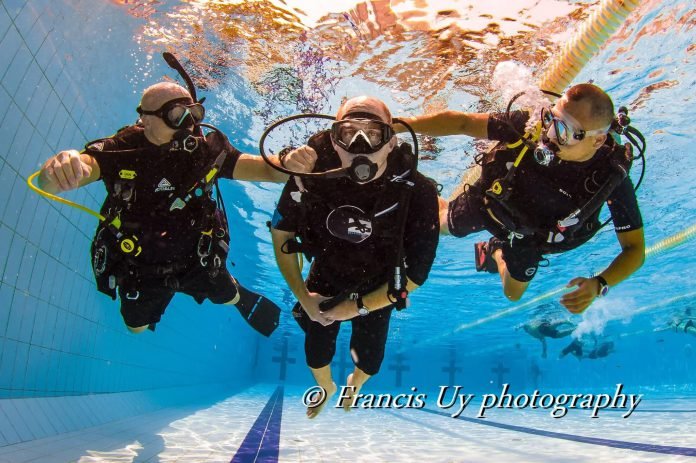
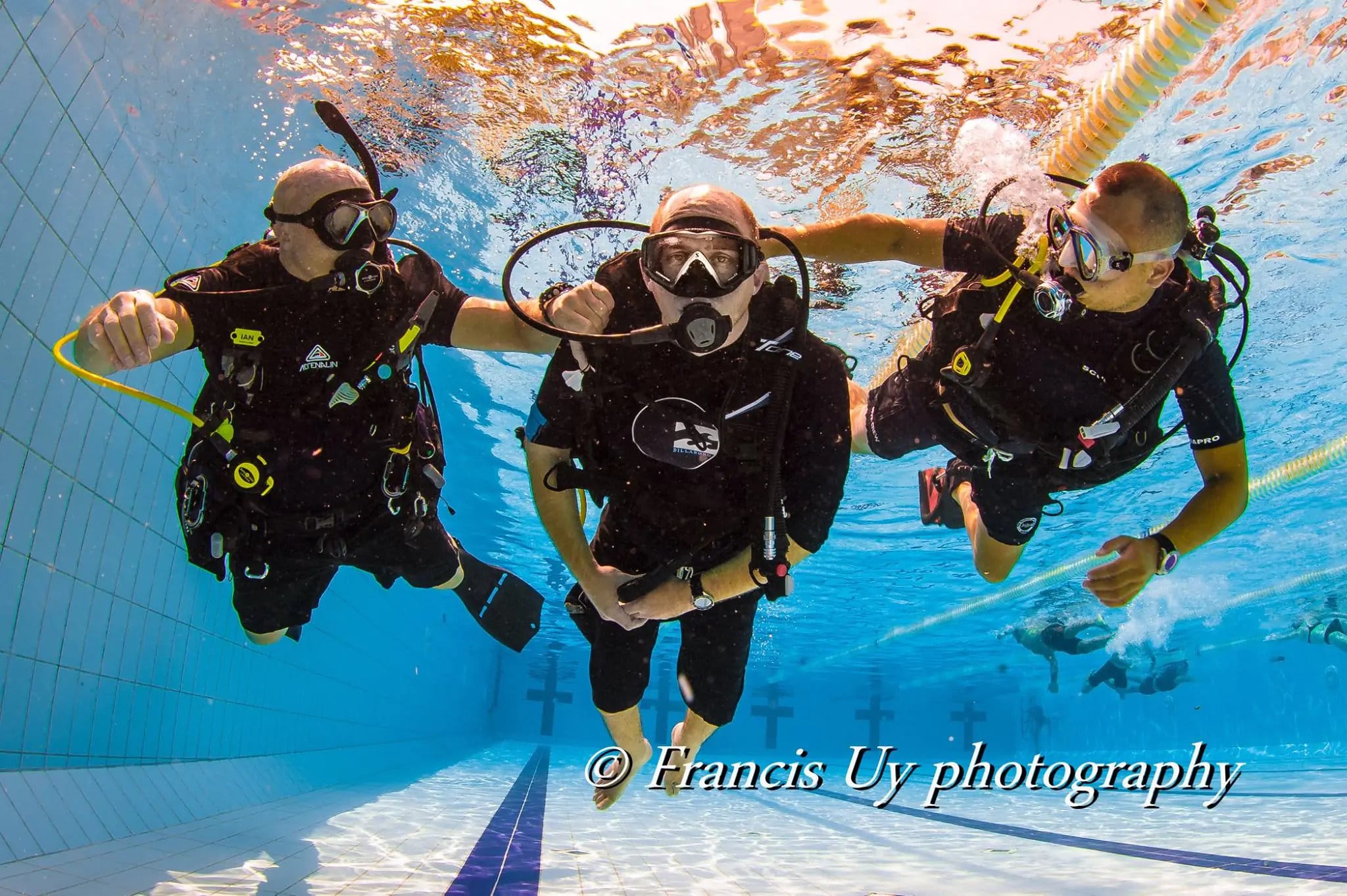
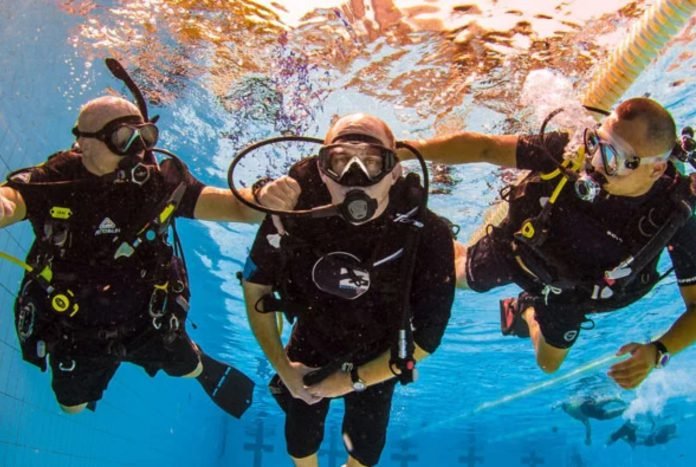
The exception to this rule is those people with disabilities taking part on one of our Disabled Diver International (DDI) level 3 diver programs. These divers will be taken through the water by 3 DDI dive professionals experienced in working with divers with disabilities and therefore swimming for these participants is not required due to the added safety measures. For people with disabilities who are wishing to scuba dive or try diving contact our PADI Course Director Mark who is a specialist in this field. You will be surprised how many conditions are able to get in the water and experience the wonders of scuba diving.
Contact us at Ocean Tribe in Diani Beach today for more information regarding swimming lessons, or to book your PADI Discover Scuba Diving experience or PADI Open Water or Scuba Diver course.
The SSI Classified Diver program adapts the established Open Water
Diver program to each student’s abilities, pace and support needs.
As a Classified Diving Instructor, you learn how to preserve SSI
training standards while adapting communication, equipment,
positioning and skill performance. The goal is not to lower the
standard—it is to find a safe and effective route to achieving it.
Teach divers with physical, sensory or cognitive disabilities.
Modify techniques around what each student can do.
Use adaptive equipment and alternative communication methods.
Create safe, dignified and genuinely inclusive experiences.
Train Classified Divers and Classified Dive Buddies.
Understanding the system
Three support levels. One ocean.
A diver’s classification is determined by demonstrated in-water
abilities and required support—not simply by a medical diagnosis.
1Most independent
Classified Diver Level 1
The diver can complete most required skills independently and
dives with one appropriately trained Classified Dive Buddy.
2Additional support
Classified Diver Level 2
The diver requires a trained support team of two Classified Dive
Buddies to provide the necessary in-water assistance.
3Professional support
Classified Diver Level 3
The diver requires two trained buddies plus a qualified Classified
Diving Professional as part of the support team.
Progress is individual. A diver may progress to a
different classification level as skills, confidence and independence
develop.
Professional toolkit
What you will learn
Develop practical strategies that can be applied before, during and
after a dive—not just during skill demonstrations.
🧠
Medical considerations
Understand relevant physical, sensory and neurological
considerations, risk management and the importance of medical
clearance.
🛠️
Adaptive equipment
Explore weighting, exposure protection, propulsion aids, support
equipment, full-face masks, communication systems and DPVs.
🤿
Adaptive skills
Modify entries, exits, buoyancy, trim, propulsion and emergency
procedures while maintaining required performance standards.
Use clear briefings, tactile signals and alternative communication
strategies, including techniques for visually impaired divers.
🧭
Team leadership
Position and manage support teams, control task loading and respond
to changing needs in real time.
Course flow
Your two-day training plan
01
Foundations and adaptationsTheory, techniques and core confined-water practice
Classroom
Disability awareness and relevant medical considerations
Risk management and safety planning
Equipment adaptations and support equipment
Adaptive teaching strategies
SSI standards and procedures
Pool / confined water
Candidate water fitness and rescue skills
Level 1 entries, exits, buoyancy and trim
Level 2 transfers, positioning and equipment handling
Level 3 team positioning and advanced adaptations
Instructor awareness, control and buddy teamwork
02
Teaching and evaluationScenario practice, presentations and assessment
Classroom
Review and knowledge consolidation
Scenarios and adaptive problem solving
Course planning and student-centred decisions
Final Classified Dive Professional examination
Pool / confined water
Visually impaired diver training
Hand signals and tactile communication
Candidate teaching presentations
Student positioning and control
Problem prevention and management
Final in-water teaching evaluations
Earn the rating
Certification requirements
Candidates must meet the applicable requirements and evaluations
in the SSI Classified Diving Instructor materials.
Complete the required dry-land practical session.
Complete practical applications for Levels 1, 2 and 3.
Organise and present required in-water skills.
Achieve the passing score on the In-Water Teaching Evaluation.
Complete the Candidate Water Fitness Evaluation.
Complete the Rescue Skills Workshop.
90%
Minimum passing score on the Classified Dive Professional
final examination.
Beyond the pool
Accessibility is the whole journey
Inclusive diving involves much more than adapting an underwater skill.
The seminar considers the complete customer journey—from the first
enquiry to the boat, accommodation and digital information.
🏢Buildings, bathrooms and changing areas
🛏️Accommodation and resort access
🚐Transport, transfers and vehicle access
🚤Boats, deck protection and entry systems
💻Websites and digital accessibility
📚Accessible learning materials
🤿Dive and adaptive equipment choices
💬Staff language, behaviour and communication
Course value
What is included?
📖Academic and in-water professional training
📱Relevant SSI digital training materials
📘Ocean Tribe Working with Divers with Disabilities handbook
🛠️Dive cylinders and weights during training
🎓SSI instructor certification fees
💳Classified Diving Instructor digital certification card
☕Light refreshments during the course
🤝Ongoing professional and career support
🏊Ocean Tribe Dive Club membership
🏷️Professional discounts on new dive equipment
♿Adaptive equipment assessment and guidance
🌍Practical accessibility planning for dive operations
MARK SLINGOSSI Instructor Trainer #76419
Specialist experience
Training shaped by lived experience
Mark Slingo became a wheelchair user following an accident in
2004 and has since built extensive international experience in
adaptive diver education, professional training and dive-centre
accessibility.
His background combines personal experience, instructor-trainer
expertise and years of work developing and delivering disabled
diving education around the world.
Adaptive diving trainer since 2005
First wheelchair-user PADI Course Director
Contributed to SSI Classified Diving development
SSI Instructor Trainer
SSI Elite Instructor Trainer 2025
International accessibility and training projects
Ocean Tribe founder
Accredited SSI Classified Diving Centre
Choose your route
Course investment
Professional
Classified Diving Instructor Seminar
US$499
Per candidate at Ocean Tribe Kenya
Two days of specialist professional training
Classroom and confined-water development
Digital learning resources and handbook
SSI instructor certification fees
Professional support after certification
Host the Seminar Worldwide
US$499
Per candidate · Minimum five candidates
Training delivered at your dive centre
Suitable for professional team development
Facility accessibility evaluation
Practical accessibility consultation
Contact Ocean Tribe to discuss dates and logistics
BECOME AN SSI CLASSIFIED DIVE BUDDY AND SUPPORT DIVERS OF ALL ABILITIES
Do you want to learn how to confidently and safely assist a dive buddy with physical disabilities or sensory disorders? The SSI Classified Dive Buddy course is designed to provide specialised training, ensuring you have the skills and knowledge to dive alongside a Classified Diver in environments and depths suited to their training level. This program is perfect for Stress & Rescue certified divers who are passionate about making scuba diving accessible for everyone.
The program is structured to help you develop the expertise needed to provide the extra safety and care required when diving with a Classified Diver. Below is an overview of what you’ll learn and accomplish during the course:
DURATION
The SSI Classified Dive Buddy Course can be completed over 2 days. It will include classroom training and a pool workshop.
All dive and snorkel equipment, including air fills and weights
Classroom Training
Pool workshop with an SSI Instructor
Transfers within Diani
AVAILABILITY
The SSI Classified Dive Buddy Course is offered daily at Ocean Tribe. Live availability can be found via contacting us via WhatsApp / Phone or by checking the online booking calendar to book online.
MEDICAL INFORMATION
All dive course participants must meet medical questionnaire requirements to be able to dive on the course. Some conditions or medications may prevent you from diving. Visit the Can I Dive page to see if you meet the requirements before booking.
Start by completing SSI’s cutting-edge digital learning modules, designed for convenience and flexibility. Study at your own pace before beginning in-person training. Topics covered include:
Propulsion methods and conducting dives with Classified Divers
Classifying different types of divers and their needs
Medical considerations, such as amputations, spinal cord injuries, cerebral palsy, and more
Understanding sensory and developmental disorders
Specialist equipment required for classified diving
Best practices for ensuring safety
Proper water entry and exit techniques
CLASSROOM TRAINING
On the first day of the program, you’ll dive into classroom sessions where you’ll discuss critical topics in classified diving.
Participate in group discussions, peer instruction, and interactive activities to reinforce key concepts.
Learn about medical conditions, adaptive techniques, and safety protocols specific to classified diving.
Complete the day with a final exam, requiring an 80% or higher passing score to proceed.
POOL WORKSHOP
The second day of the program takes place in a controlled pool or confined water environment, where you’ll put your knowledge into action:
Learn how to assist Classified Divers in performing Open Water skills, ensuring their safety and comfort throughout the dive.
Practice four practical applications, including dry land preparation, entry/exit procedures, and adaptive techniques.
After successfully completing all requirements, you’ll receive the SSI Classified Dive Buddy certification. This certification qualifies you to dive with Classified Divers in environments and depths aligned with their training. Your digital certification card will be instantly available in the SSI app, making it easy to access and share.
WHY BECOME A CLASSIFIED DIVE BUDDY
By becoming a Certified Dive Buddy, you’ll play a vital role in creating inclusive underwater experiences. Your training will allow you to make diving more accessible and rewarding for individuals with disabilities, opening doors to a world of adventure for everyone.
Take the first step in making a difference. Enroll in the SSI Classified Dive Buddy Program today and help bring the wonders of the underwater world to all divers!
ADDITIONAL INFO
Prerequisites and Forms
Minimum age 10
When enrolling in an entry-level recreational diving certificate you must complete the following self-assessed medical declaration form before starting your training. If you answer yes to any of the health questions, you will need to bring the completed form with you to your physician to recieve a physician’s letter/medical clearance before you start your course.
What to Bring
Hat
Swimsuit
Sunscreen
Sunglasses
Towel
Water Bottle
Extras
Camera Hire
Snacks and Beverages
T Shirt and Memorabilia
Do I need to be able to swim to scuba dive?
A question that we are constantly asked at Ocean Tribe is “Do I need to be able to swim to scuba dive?”. This is a more complicated answer than a simple yes or no, as it really depends on the experience you are looking to have.
If you are after getting your Open Water Diver licence or any other scuba diving certification then the straight answer in yes. On the entry level Open Water Diver and Scuba Diver courses there are swim and floating tests that you need to be able to accomplish in order to earn the dive certification. On the Open Water courses this is a 200m swim and a 10 minute tread or float.
Dive Jobs Kenya– Ocean Tribe are looking for dive centre staff to join our crew in our new dive base in Diani Beach.
Applicants should be Kenyan or have the right to work in Kenya. MUST BE ABLE TO SWIM AND ALREADY A CERTIFIED SCUBA DIVER OR INTERESTED IN EARNING THEIR SCUBA DIVER RATING.
DUTIES AND RESPONSIBILITIES GUIDE
A full time hourly position that rotates through retail sales, dive reservations, gas fills and booking scuba training courses.
A varied schedule will include day, evening and weekend shifts
Essential Job Functions
Greet customers and ascertain what each customer wants or needs.
Open and close cash registers, performing tasks such as counting money, separating charge slips, coupons, and vouchers, balancing cash drawers, and making deposits.
Manage Dive Centre Management System (Full Training will be Given)
Enthusiastically answer incoming calls.
Maintain knowledge of current sales and promotions, policies regarding payment and exchanges, and security practices.
Recommend, select, and help locate or obtain equipment based on customer needs, desires, and stock levels.
Independently sell and set up the following: retail items ranging from T-shirts to Computers, Diving & Snorkel Charters, gas fills, and training courses from Try Scuba Diving to IDC Staff Instructor.
Answer questions regarding the items listed above.
Describe and explain equipment use, operation, and care to customers.
Demonstrate use or operation of equipment.
Clean shelves, counters, and displays.
Exchange merchandise for customers and accept returns.
Bag or package purchases.
Help customers try on or fit equipment.
Inventory stock.
Prepare equipment for purchase or rental.
Collect customers and monitor dive and snorkel boats.
Estimate and quote equipment packages.
Estimate cost of repair or service of equipment.
Estimate cost of service, gear, or training required, such as “Cost of Open Water Diver Course, Price of Open Water BCD, Cost of Gas Fills, and Dive Charter” requested to complete Open. water Diver specialty from the dive boat in their own BCD.
Rent gear and prepare rental contracts for customers.
Distribute and maintain rental equipment, fill air cylinders as needed.
Attend all staff meetings and all in-service training programs.
Other Skills/Attributes
Self-motivated, professional, courteous and enthusiastic team player
Have a friendly outgoing personality and be goal oriented
Possess strong communication and exceptional customer service skills
Maintain an organised and neat work environment
Be passionate about your interests and personal growth
Able to multi-task in a multi-disciplined work environment
Adhere to training standards as set by PADI, DDI and DAN
Follow personal and professional safe diving practices
Comply with Ocean Tribe dress code and code of conduct as described in employee handbook, and Retail Center Staff
Full training will be given to the successful candidate as well as scuba diving certifications. Staff members will be expected to learn to dive for product knowledge and will be sponsored to professional levels if show the aptitude.
Interested applications should email a cover letter, CV and current photograph to mark.slingo@oceantribe.co
20th July 2019 marks the 5th year of PADI Women’s Dive Day. It is the largest organised event for diving celebrated across the globe by every resort and dive center. It is committed to fostering a global community that encourages divers of all genders, ages and experience levels to safely explore the underwater world. Since it’s inception the event has witnessed growth with many dive centres hosting the event and registering divers across the globe.
This year our dive center is joining the movement together with other dive centres in the region, to bring Diani a Women’s Dive Day filled with fun and educational activities.
There are about 10 dive sites in Diani Beach, on the day of the event we shall visit two of those dives, famously known for their turtles, beautiful corals and the cast of Nemo. For those who are not yet certified divers yet, don’t you worry. We have discounts on all of our courses starting from the Open Water Course which runs for 3-4 days.
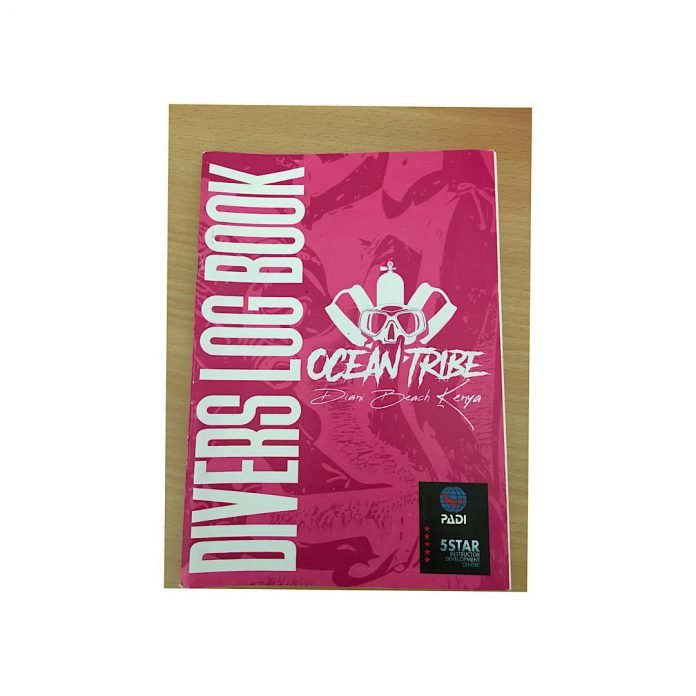
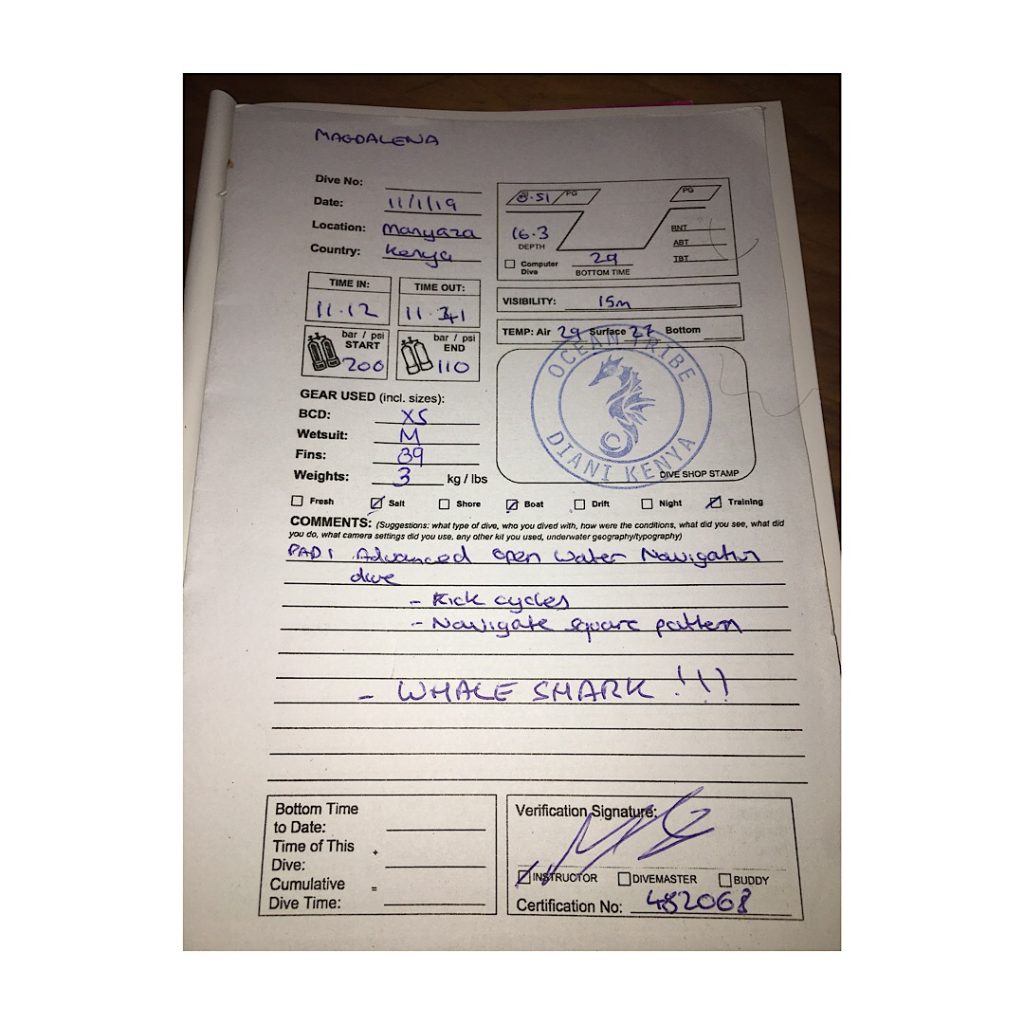
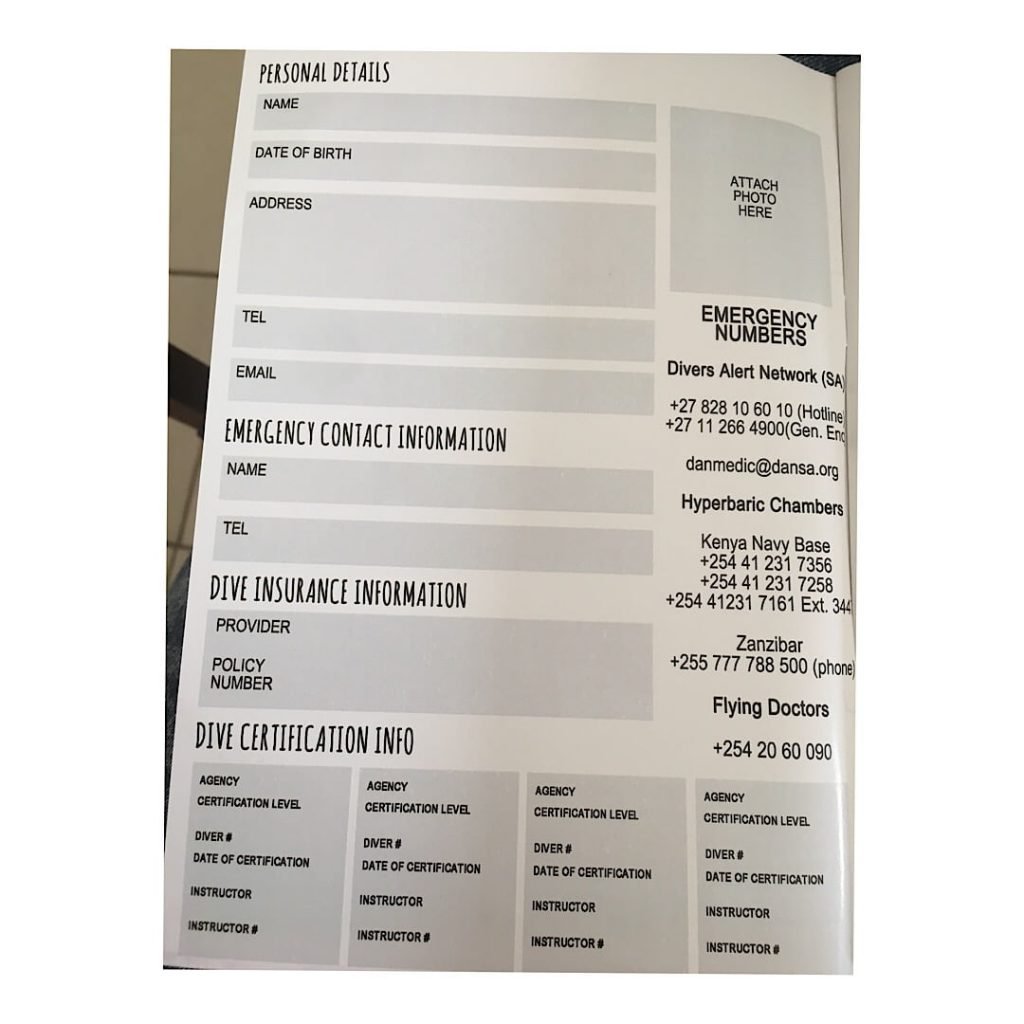
Keeping a dive log is one of the most important thing for a dive adventure and for the documentation of your dive trips. it is more important for professional divers to log their dives than it is for recreational divers, however recreational dives are still advised to keep a logbook record. For a professional diver a log book will be important for when they are seeking employment.A diver can either log their dives in a book that is provided to them by the company that certifies them or use online apps to do so. Most or all of these apps are linked to ones dive computer. My PADI Club is one of the best apps (https://my.padi.com/#!/login); Divemate( https://www.divemate.de/) . Different dive shops have different layouts for their dive log books but there are common contents you’ll find in every log book that is; Personal details, dive number, dive location, type of dive and the conditions, equipment used, comments and verification.
Keeping a log book updated after every dive is important, not only for the sake of dive journey but also your safety and that of the people you are diving with. Safety is one of the most important rules of Scuba diving. In the case of an accident which often unlikely your dive log can provide the necessary information to help know the factors that led to the accident. Keeping a log book will help you monitor your progress as a diver and help you know when you are ready to move to the next level of your scuba diving profession, this is because in PADI Scuba diving you have to attain a specific number of dives to move from one level of your Scuba diving profession to another; for example for a PADI Rescue diver to become a PADI Dive master one needs to have 60 logged dives or more. You therefore have to show the logged dives when you apply to another level of your diving career.
As a diver you have to ensure that your dive log book is always signed and verified by either your instructor or dive buddy, after every dive.
Safari and Dive Package Offer. Experience the Lion King and Finding Nemo in One Big Adventure Here at Ocean Tribe in Diani Beach Kenya, we are tremendously lucky to be able to offer some of the world’s best wildlife viewing, both underwater and on land. Kenya is home to the famous African savannahs and the multitude of wildlife from the Big 5 lion, leopard, elephant, rhino and buffalo, to the smaller fantastic range of birds and other creatures. This is in addition to fantastic vistas such as the Great Rift Valley, Mount Kenya (and Kilimanjaro on the border with Tanzania) and many more fabulous locations.
In conjunction with Vumbi Jeep Safaris, Ocean Tribe are delighted to be able to offer an Safari and Dive Package which combines the best of both environments. You will spend 3 days/2 nights in the African bush in Tsavo East and Tsavo West National Parks. There are also options to create bespoke packages to parks a such as Amboseli, Masai Mara, Nakuru and Samburu.
Nights will be set in safari game lodges with game drives to view the wildlife in its natural habitat. Add onto that awesome experiences such as breakfast out in the park and fabulous sundowners at the end of a game drive.
Following on from the safari you will arrive in Diani Beach where you will stay 4 nights at the luxurious Diani Reef Beach Resort one of Kenya’s top hotels, whose facilities include swimming pools, multi cuisine restaurants, a fabulous beach bar, spa and gym and of course Ocean Tribe water sports. Scuba diving can be done each morning (2 dive’s/ trip) on the local reefs and wreck as well as a fabulous dhow dolphin safari day out in Kisite National Park with 2 dives.
12:30pm- Arrive Voi Safari Lodge- Lunch/Relaxation
4:00pm- Afternoon Game Drive (optional)
6:30pm- Back at Lodge and Dinner
Day 2
07:00am- Depart lodge after early breakfast for day trip to Lugard Falls- Game Drive along the way
3:00pm – Back to lodge for relaxation then dinner
Day 3
08:30am- Depart lodge after breakfast -Game drive and exit national park
12:30pm- Arrive Diani Reef Resort and check in*
Day 4
08:00am- 2 Dive Trip pickup for transfer to Ocean Tribe
1230pm- Return to Diani Reef
Day 5
08:00am- 2 Dive Trip pickup for transfer to Ocean Tribe
12:30pm- Return to Diani Reef
Day 6
08:00am- 2 Dive Trip pickup for transfer to Ocean Tribe
12:30pm- Return to Diani Reef
Day 7
07:30- Pickup for transfer to Pili Pipa Dolphin Dhow Safari and 2 dives in Kisite National Park
Day 8
Check out of Diani Reef
Transfer to Mombasa International Airport/ Ukunda Airstrip
*- Accommodation at Diani Reef Beach Resort is on a half board basis based on two people sharing a room.
Total Price $1699/ person
Price is inclusive of ALL park entrance fees, full board accommodation on safari & half board accommodation at the coast, transfers in 4×4 vehicle, experience t shirt, dive equipment rental and sundowners on safari.
Price excludes bar bills.
For guests who would like to include scuba diving training as part of the Safari and Dive package we can offer PADI scuba dive courses at discounted rates. Flights internal and internationally can also be arranged by Ocean Tribe and custom packages are also available.
For more information about this awesome offer please contact info@oceantribe.co and we will be delighted to answer any questions you might have.
PADI Freediver Course in Kenya- Here at Ocean Tribe we are delighted to announce that we will be holding the first PADI Freediver program to be conducted in Kenya. The course at Ocean Tribe scuba diving in Diani Beach, will be conducted by award-winning Freediver and influencer PADI Freediving Instructor Trainer Dada Li. Dada is one of the world’s top freedivers and frequently travels for teaching programs and working on films around the world.
Freediving is about inward power, discipline and control. If you’ve always wanted to enter the underwater world quietly, on your own terms, staying as long as your breath allows, then freediving is for you. Taking the PADI Freediver course is your first step toward discovering why freediving is becoming a popular way to explore beneath the waves.
Prerequisites
To enroll in a PADI Freediver course you must be at least 15 years old. You need adequate swimming skills and need to be in good physical health. No prior experience with snorkelling, skin diving or freediving is required.
Younger than 15? 12 year olds and older can enroll in the PADI Basic Freediver course and eight year olds and older can enroll in the PADI Skin Diver Course.
Academic
The PADI Freediver course consists of three main phases:
Knowledge development about freediving principles through independent study with PADI Freediver eLearning (or your instructor may conduct class sessions if not available in a language you understand).
In the Pool
Confined water session to learn breathhold techniques as well as static and dynamic apnea. Goal – static apnea of 90 seconds and dynamic apnea of 25 metres/80 feet.
In the Ocean
Open water sessions to practice free immersion and constant weight freedives, plus proper buddy procedures. Goal – constant weight freedive of 10 metres/30 feet.
Equipment
In the PADI Freediver course, you learn to use a mask, snorkel and fins, and may also use a wetsuit and weight belt. Using gear designed specifically for freediving is best, however, in this course, you may be able to use snorkelling equipment you already own.
The cost of the program is $280 USD. If you wish to know more about the course then please contact info@oceantribe.co for more information.
Kisite National Marine Park – A Hidden Gem for Divers and Nature Lovers
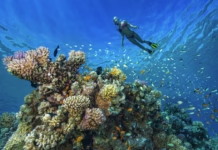
Kisite Mpunguti National Marine Park, located off the coast of Diani Beach in Kenya, is a true underwater paradise. This protected marine park is famous for its crystal-clear waters, vibrant coral reefs, and diverse marine life, making it one of Kenya’s top diving and snorkeling destinations.
The park’s waters teem with colorful fish, sea turtles, and playful dolphins. Depending on the season, you may even have the chance to swim with the magnificent whale sharks and graceful manta rays. Kisite Marine Park is part of the larger Kisite-Mpunguti Marine Reserve, a vital ecosystem that conserves not only marine life but also the surrounding islands.
For divers, Kisite offers some of the best dive sites in the region. Coral gardens and underwater caves provide a rich environment for divers of all levels. Whether you are a beginner or an experienced diver, the park’s calm, warm waters, and excellent visibility ensure a safe and memorable experience.
If you prefer snorkeling, Kisite’s shallow waters are equally spectacular. Here, you can swim alongside schools of tropical fish, see vibrant corals, and explore the rocky outcrops that attract an abundance of marine life. The park’s protected status ensures that the ecosystem remains pristine, offering an unparalleled underwater adventure.
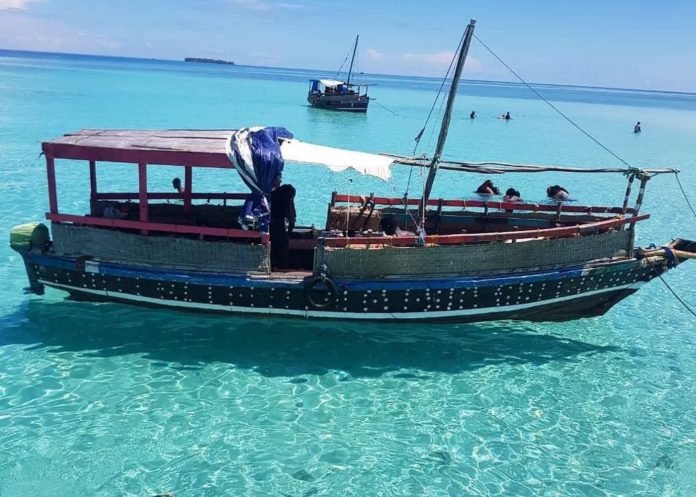
Besides diving and snorkeling, Kisite National Marine Park is also perfect for boat rides. Take a guided tour and enjoy breathtaking views of the Indian Ocean while spotting dolphins and enjoying the coastal scenery. Local guides provide insight into the park’s history and its role in marine conservation.
Easily accessible from Diani Beach and Mombasa, Kisite Marine Park offers an unforgettable escape into the heart of Kenya’s marine wonders. Whether you’re looking for adventure beneath the waves or a peaceful boat ride, Kisite National Marine Park guarantees a memorable experience.














 [/one_third]
 PADI Freediver Course in Kenya- Here at Ocean Tribe we are delighted to announce that we will be holding the first PADI Freediver program to be conducted in Kenya. The course at Ocean Tribe scuba diving in Diani Beach, will be conducted by award-winning Freediver and influencer PADI Freediving Instructor Trainer Dada Li. Dada is one of the world’s top freedivers and frequently travels for teaching programs and working on films around the world.