Home Blog Page 54

Learning about Pressure in Diving

Learn about pressure in diving and how it affects your body, gas consumption and air spaces underwater.

The Physics of Diving

  • Seawater: Pressure change of 1 bar per 10 meters
  • Freshwater: Pressure change of 1 bar per 10.3 meters. 

Ambient pressure and gauge pressure.

Thanks to Easy Dive Theory for making this video

Calculating Volume Changes

Learn how to calculate volume changes due to depth and as a result pressure. Learn what formula you should use to calculate the volume change.  (Boyle’s Law)

Constants you will use:

  • Seawater: Pressure change of 1 bar per 10 meters
  • Freshwater: Pressure change of 1 bar per 10.3 meters. 

Ambient pressure and gauge pressure.

Thanks to Easy Dive Theory for making this video

The Effects of Breathing Oxygen Under Pressure

What are the effects of breathing oxygen under pressure? Find out how the partial pressure of the mix in the air can affect you when you dive. When you breathe oxygen under pressure you are possibly exposing yourself to the risk of Pulmonary Oygen Toxicity and Central Nervous System Oxygen Toxicity.

Thanks to Easy Dive Theory for making this video

Advanced Wreck Diving Course

Wreck diver
SSI Advanced Specialty · Diani Beach

Enter The Wreck. Find Your Way Out.

Develop the line-handling, buoyancy, gas-management and emergency skills needed to conduct controlled limited-penetration dives inside the light zone of a wreck.

Download Brochure
40m Maximum depth
📅 2 Days Focused wreck training
🤿 4 Ocean Dives Progressive training dives
🎂 Minimum Age 15 Medical requirements apply
📋 24 Logged Dives Plus qualifying certification
💵 US$299 Includes digital materials
The foundational SSI Wreck Diver Specialty content is incorporated into this Advanced Wreck program.
Plan · Line · Penetrate

Go beyond the outside

Advanced Wreck Diving builds on foundational wreck skills and introduces controlled penetration techniques using a single continuous guideline.

You will learn to plan and execute no-decompression penetration dives through clear entry points while remaining inside the light zone and maintaining a direct guideline back to open water.

  • Develop precise buoyancy, trim and propulsion.
  • Plan gas use specifically for wreck environments.
  • Map and navigate an unfamiliar wreck.
  • Deploy and follow a continuous guideline.
  • Practise lost-line and emergency procedures.
  • Complete a controlled limited-penetration dive.
Know the limits

Controlled penetration—not technical wreck diving

This is a recreational, no-decompression program with clearly defined limits. Good wreck divers know where the course boundary lies.

💡

Remain in the light zone

Penetration is limited to areas where natural light and a clear, controlled exit route remain available.

🧵

Continuous guideline

A properly laid line maintains a direct route from the penetration area back to open water.

⏱️

No decompression

Dives remain within recreational no-decompression limits and the maximum depth permitted by your certification.

This is not a TDI Advanced Wreck or Extended Range course. SSI Advanced Wreck is a limited-penetration recreational specialty. If you want to train for more complex overhead environments, contact Ocean Tribe about Extended Range Wreck or Extended Range Cavern training.
Who can join?

Prerequisites

  • Minimum age: 15 years.
  • At least 24 logged open-water dives.
  • SSI Deep Diver certification, Advanced Open Water certification or recognised equivalent.
  • Adequate buoyancy, trim and propulsion skills.
  • Ability to meet all SSI medical requirements.
Safety first

Medical information

Every participant must meet the diver medical questionnaire requirements before entering the water.

Some conditions, previous medical history or medications may require written clearance from a qualified doctor. Review the questionnaire before booking so any necessary approval can be arranged before the course.
Your course package

What is included?

📱

SSI Digital Learning

Detailed theory covering wreck hazards, equipment, penetration planning and emergency procedures.

🎤

Advanced Wreck briefings

Instructor-led preparation focused on planning, guideline use, gas management and emergency procedures.

🤿

Four wreck training dives

Four progressive ocean dives, including controlled penetration where conditions and diver readiness allow.

🧵

Guideline and reel training

Learn to deploy, secure, follow and retrieve a guideline in a wreck environment.

🛟

Diving equipment

Required standard scuba equipment, cylinders, air fills and weights during scheduled training.

🎓

SSI certification

Internationally recognised SSI Advanced Wreck Specialty certification after completing all requirements.

🍉

Boat refreshments

Fruit, drinking water and light snacks during the scheduled boat dives.

🚐

Diani transfers

Scheduled course transfers within the Diani area.

👨‍🏫

Instructor supervision

Close coaching and feedback with emphasis on control, precision and safe decision-making.

Your training progression

Two days. Four wreck dives.

Develop the theory, dry-land line skills and in-water experience required for controlled wreck penetration.

BEFORE
Complete before arrival

SSI Digital Learning

Complete the Advanced Wreck Digital Learning before the course. Study at home, make in-app notes and finish the section reviews before practical training begins.

What to expect
The training introduces wreck-diving hazards, dive planning, specialised equipment, line procedures and emergency concepts. Your instructor will review the material and expand on it during the course.
DRY
Practise before diving

Dry-land skill development

Develop reel and line-handling techniques in a controlled dry-land environment before using them underwater.

What to expect
Practise laying, securing and retrieving a static guideline and review the procedures that will be used during the wreck dives.
DAY 1
Orientation · Briefings · Dives 1 and 2

Wreck orientation

Travel by boat to a suitable wreck and begin applying specialist wreck-diving techniques under direct instructor supervision.

Dive 1
  • Wreck orientation
  • Navigating the wreck
  • Buoyancy and trim assessment
Dive 2
  • Using safety lines
  • Underwater SMB deployment
  • Controlled swim-through
DAY 2
Line practice · Dives 3 and 4

Guidelines and penetration

Build your guideline skills and complete a controlled limited-penetration dive when conditions and performance allow.

Dive 3
  • Laying a static guideline
  • Lost-line procedure
  • Underwater SMB deployment
Dive 4
  • Wreck orientation
  • Static guideline deployment
  • Lost-line procedure
  • Underwater SMB deployment
  • Limited-penetration dive
Your training wreck

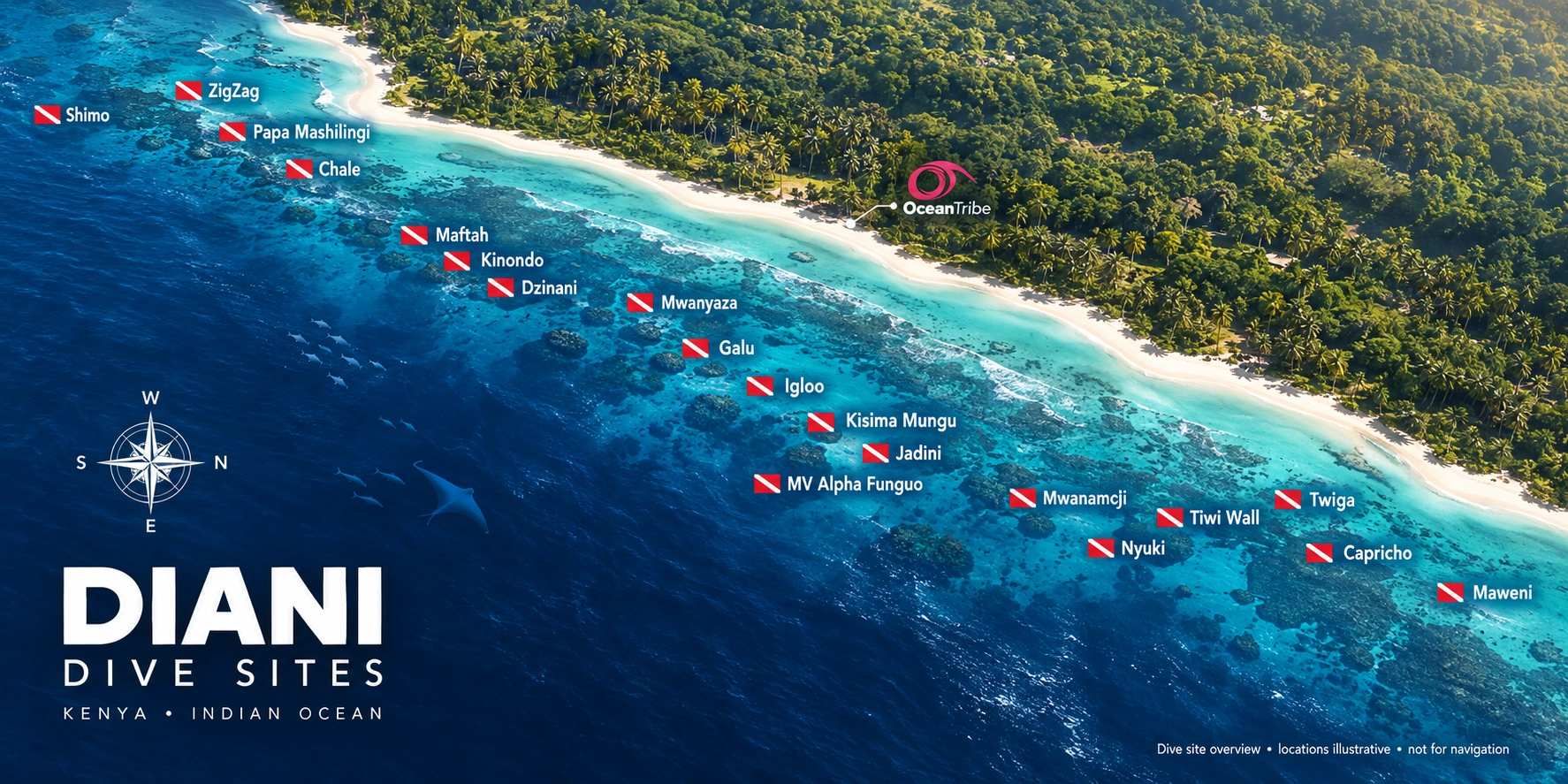
MV Alpha Funguo

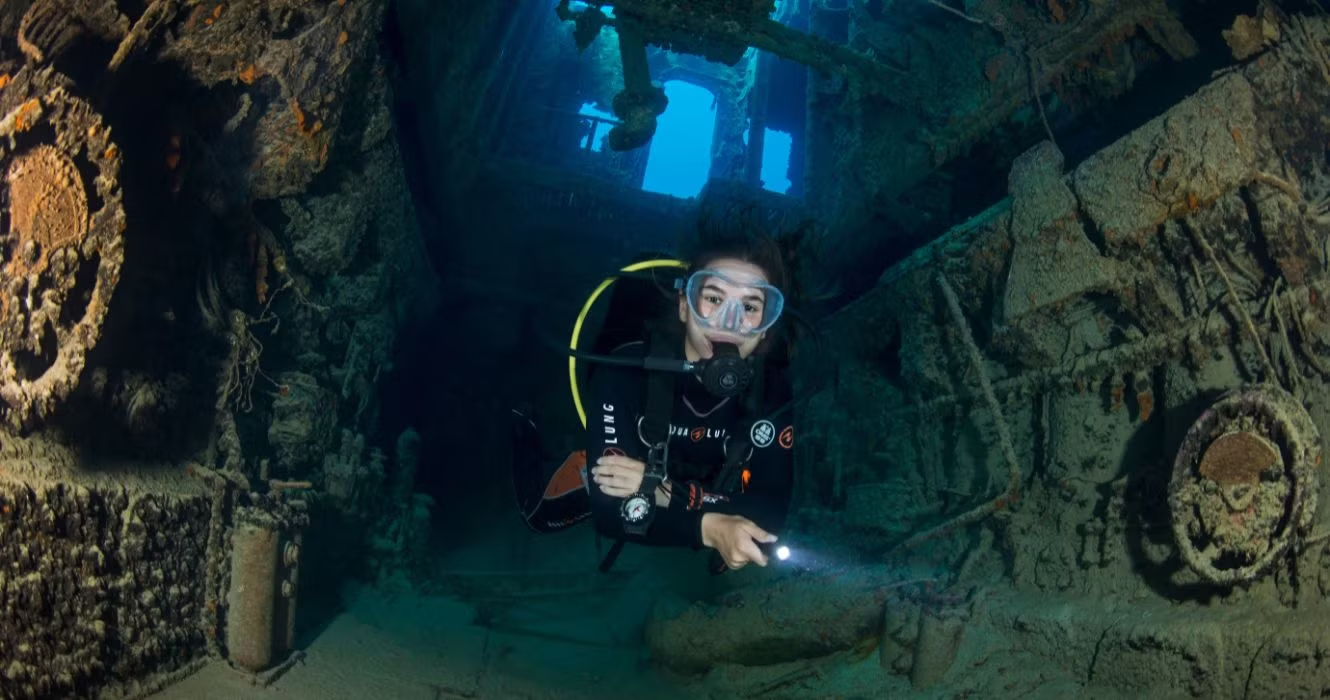
Your wreck training is planned for the MV Alpha Funguo, subject to weather, ocean conditions, diver readiness and instructor assessment.

Its structure provides opportunities to develop orientation, guideline and controlled-penetration skills in a real wreck environment.

4 Ocean dives
2 Training days
40m Maximum course depth
Course investment

Start your wreck mission

The course is available throughout the year, subject to instructor availability and suitable wreck-diving conditions.

Contact Ocean Tribe if you need help checking your certification, logged dives or medical requirements before booking.

SSI Advanced Wreck
$299
Two-day course · Four dives · Digital materials included
  • SSI Advanced Wreck digital learning
  • Dry-land line practice
  • Four progressive training dives
  • Instructor-led skills development
  • Certification on completion
Build your wreck-diving toolkit

Useful courses to combine

Add depth, gas planning, equipment configuration and precise control to become a more capable wreck diver.

Explore to 40 metres

Deep Diving

Develop deeper-dive planning, gas management, narcosis awareness and emergency skills.

Explore Deep Diving →
Streamline your setup

Sidemount Diving

Build balance, streamlining and gas redundancy using a flexible twin-cylinder configuration.

Explore Sidemount →
Make more of every dive

Enriched Air Nitrox

Analyse enriched-air blends and plan dives with extended no-decompression limits.

Explore Nitrox →
Refine control and trim

Perfect Buoyancy

Improve stability, trim and propulsion while using a reel and working close to a wreck.

Explore Perfect Buoyancy →
Complete training pathway

Mission Ready Diver Package

Combine Deep Diving, Sidemount, Advanced Wreck and Enriched Air Nitrox into one focused program with twelve training dives.

Discover Mission Ready Diver
4 SSI specialties
12 Training dives
6 Training days
40m Maximum depth
Ocean Tribe underwater photography
Remember the mission

Photos and videos

Purchase professional underwater photos and videos captured by Ocean Tribe’s in-house photography team.

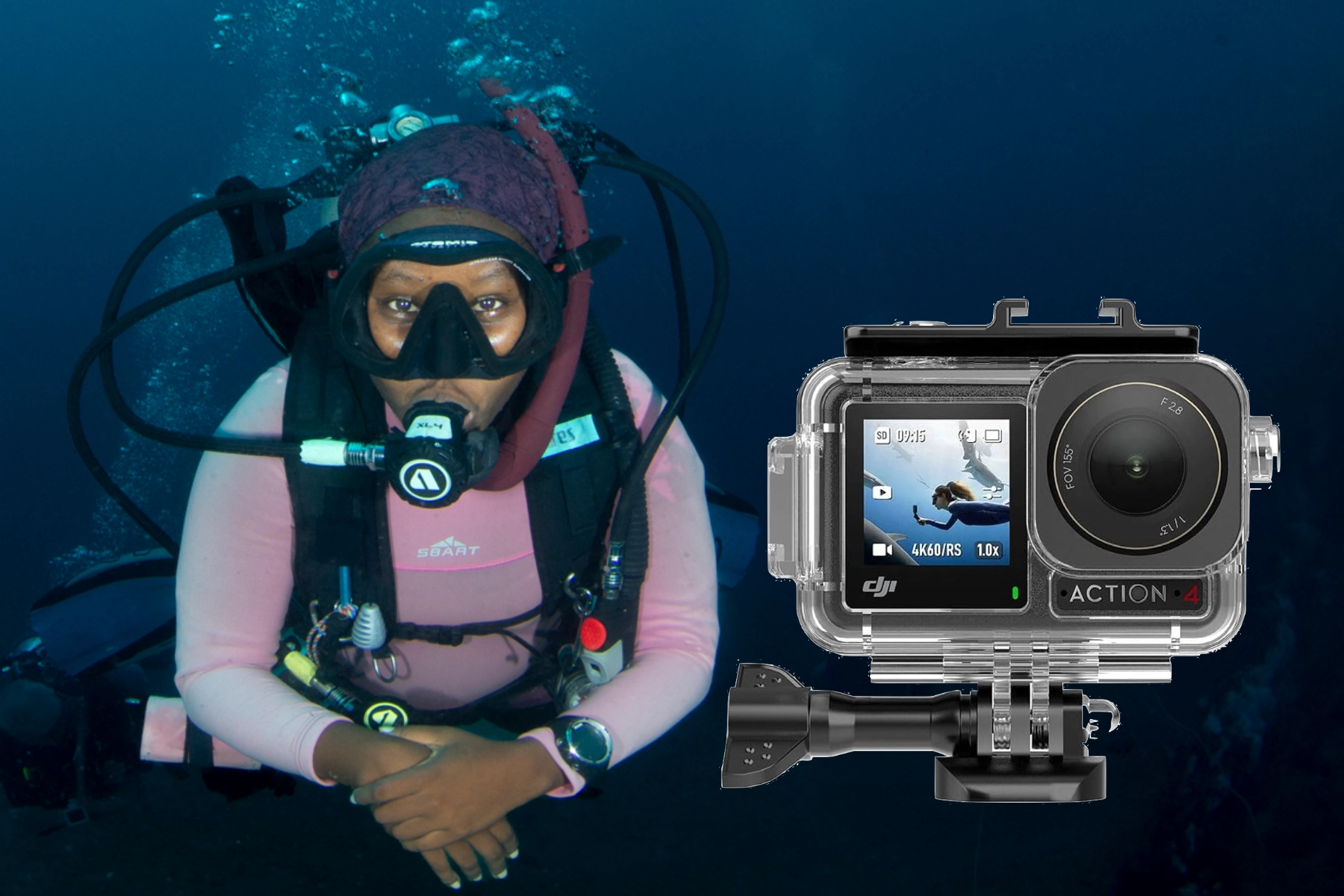
Subject to availability, DJI Osmo Action 4 cameras may also be hired from the dive-centre front desk.

Buy Your Dive Photos
Life around the wreck

What you might see

Wrecks provide structure and shelter, attracting reef fish and other marine life. Every dive brings something different.

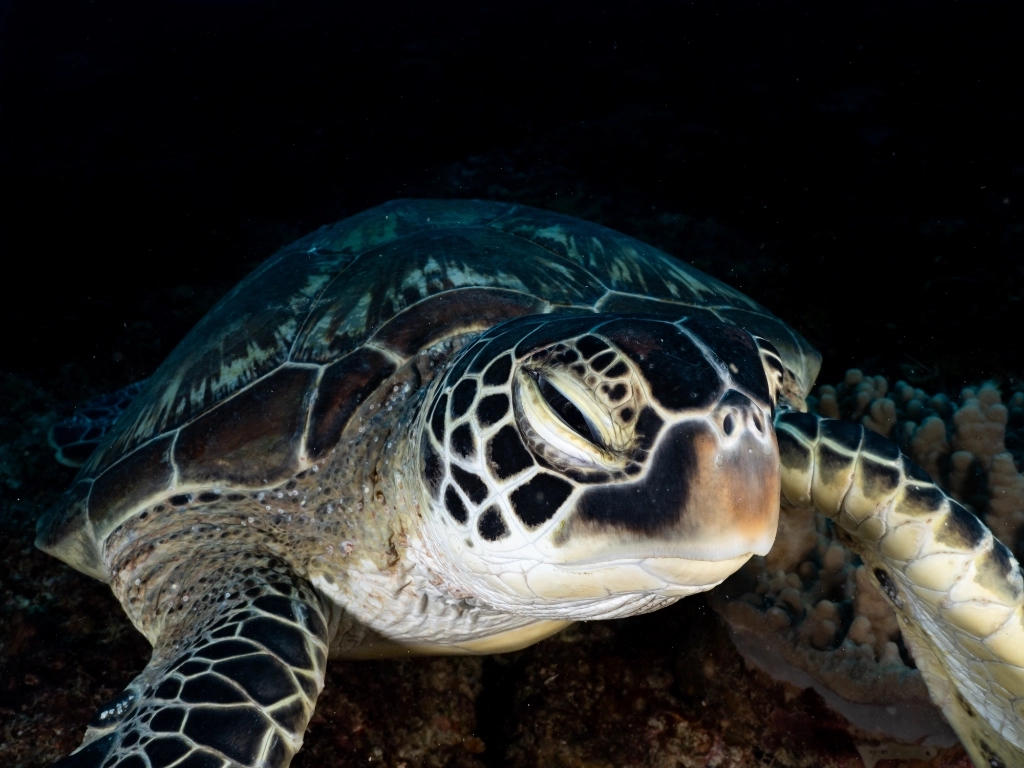
Sea turtle underwater
Reef favourite

Sea turtles

Watch for turtles cruising past or resting near the reef.

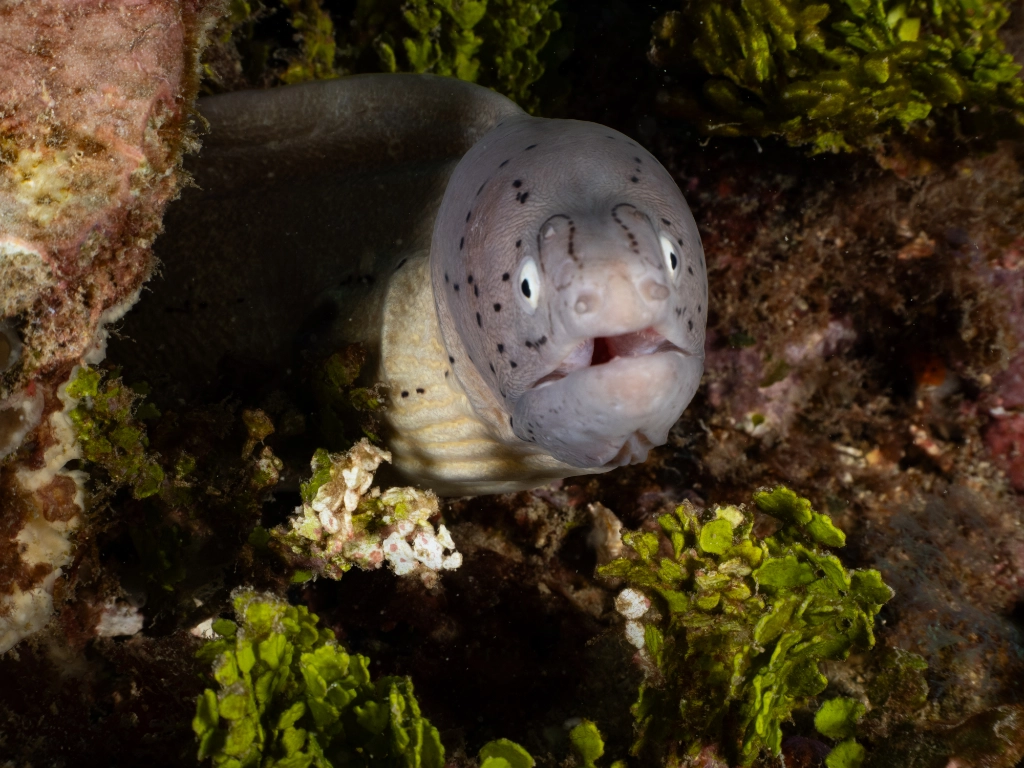
Moray eel among the reef
Look in the structure

Moray eels

Look carefully into protected openings and sheltered spaces.

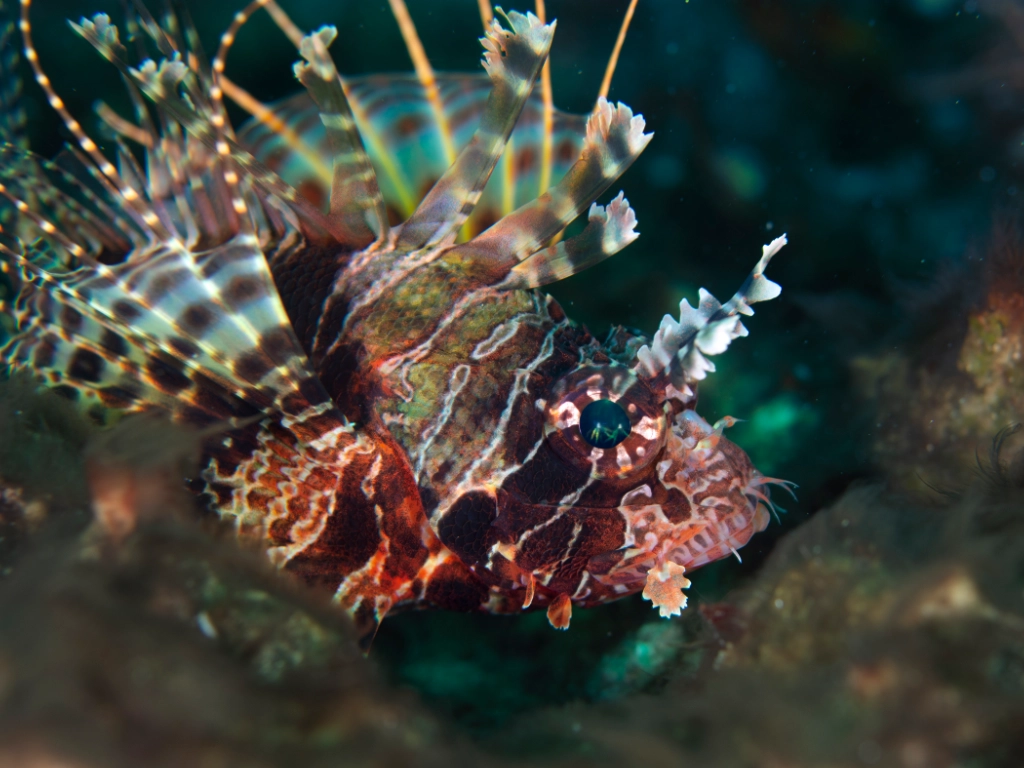
Lionfish with distinctive fins
Wreck resident

Lionfish

These distinctive predators often shelter around structures.

Colourful nudibranch
Tiny treasures

Nudibranchs

Slow down and inspect the wreck carefully for colourful details.

Manta ray underwater
Seasonal · October–March

Manta rays

Keep an eye on the blue for a seasonal passing manta.

Whale shark underwater
Seasonal · October–March

Whale sharks

These ocean giants may visit Diani during the seasonal window.

Wildlife, not a promise: Sightings depend on the dive site, season and ocean conditions. Never touch or chase marine life, and avoid contact with the wreck and surrounding coral.
Your next dive goes deeper

Explore beyond the deck

Develop the control, planning and line skills needed to begin exploring the inside of a wreck safely and responsibly.

Diani Beach, Kenya · +254 700 934 854 · info@oceantribe.co

Divemaster Course- Knowledge Development

SSI Divemaster course dive theory
SSI Divemaster Training

Know more. Lead better.

Build the professional-level dive knowledge you need to plan dives, manage divers, solve problems and explain the science behind safe scuba diving.

18+ Minimum professional age
40 Logged dives to begin training
60 Logged dives required for certification
14–28 Typical Ocean Tribe course days
More Than Memorising Facts

Learn to think like a dive professional

Divemaster knowledge development takes everything you learned as a recreational diver and connects it to real professional decisions. You will study why things happen underwater, how to plan around them and how to communicate that information clearly to other divers.

Your training combines SSI Digital Learning, knowledge reviews, instructor-led workshops and practical application. Your instructor will review difficult concepts with you, correct misunderstandings and show you how the theory applies to actual dive-centre operations.

This is knowledge you will use while giving briefings, planning dives, assisting students, handling problems and progressing toward your SSI Instructor Training Course.

The goal is understanding

A professional should be able to do more than select the correct exam answer. You should be able to explain the idea, apply it to a dive and use it to make a safe decision.

Your Learning Journey

Digital learning backed by real instructor support

Work through the theory in manageable stages, then turn that information into practical professional knowledge.

Study

Complete the assigned SSI Digital Learning modules using the MySSI app or online learning platform.

Review

Complete knowledge reviews that help identify the subjects you understand and the areas that need more work.

Workshop

Discuss the topics with your SSI Instructor and work through examples based on genuine diving situations.

Apply

Use the knowledge during dive planning, briefings, diver supervision, training assistance and final assessments.

Professional Dive Theory

What will you study?

You will go beyond recreational-level knowledge and learn how each subject affects the divers under your supervision.

Dive Physics

Pressure, buoyancy, gas behaviour and the physical principles that affect divers and equipment underwater.

Dive Physiology

How pressure and breathing gases affect the body, including decompression illness, narcosis and oxygen exposure.

Dive Equipment

Equipment function, appropriate configuration, common problems and how equipment choices affect the dive plan.

Decompression Theory

Inert-gas loading, ascent planning, repetitive diving and the principles behind dive tables and computers.

Dive Planning

Evaluate depth, time, gas, conditions, diver ability, environmental factors and emergency options.

Diver Management

Organise groups, assess ability, set expectations, prevent problems and supervise certified divers effectively.

Emergency Procedures

Recognise developing problems, respond to incidents and build practical emergency plans for different dive environments.

Aquatic Environment

Understand conditions, entries, currents, visibility, marine life and environmental considerations when planning dives.

The Academic Foundation

Three connected parts of your professional theory

Your Divemaster knowledge is developed through the Dive Guide material, Science of Diving and computer-based dive planning.

SSI Dive Guide

Learn professional conduct, dive preparation, briefings, guiding, diver supervision, site assessment and leadership responsibilities.

Explore the Divemaster course →

Science of Diving

Develop a detailed understanding of physics, physiology, decompression theory, equipment and the aquatic environment.

View Science of Diving →

Computer Diving

Understand how dive computers calculate exposure, manage repetitive dives and support better dive-planning decisions.

View Computer Diving →
SSI Divemaster certification card
Knowledge For Your Career

This theory stays with you long after the exam

Strong dive theory gives you the confidence to answer questions, recognise problems early and explain the reasoning behind safe diving practices.

  • Plan and supervise dives more confidently
  • Deliver clearer professional dive briefings
  • Assist instructors and student divers more effectively
  • Explain concepts rather than simply repeating rules
  • Prepare for the SSI Instructor Training Course
  • Build the foundation for future instructor-level exams
Before You Begin

Divemaster course entry requirements

Ocean Tribe will review your certifications and logged experience before your professional training begins.

Dive experience

You should have at least 40 logged open-water dives totalling 25 hours to enter the training.

To earn the SSI Divemaster certification, you must have at least 60 logged open-water dives totalling 40 hours and complete all course requirements.

Age 18+ You must be at least 18 to qualify as an SSI Divemaster.
Rescue certified SSI Diver Stress & Rescue or an accepted equivalent.
Current emergency training First Aid, CPR and oxygen-provider training must be current.
Experience areas Deep, Navigation and Night & Limited Visibility certifications, or verified experience meeting current SSI standards.
Full Divemaster Training

Choose the package that matches your current experience

Knowledge development forms part of the complete Ocean Tribe SSI Divemaster program.

For qualified candidates

Divemaster Basic Package

$949 one diver
  • SSI Dive Guide and Divemaster training
  • Divemaster digital learning
  • Science of Diving
  • Computer Diving and Marine Ecology learning
  • Divemaster professional package
  • SSI professional registration and initial renewal

Two-or-more-diver rates may be available for candidates booking together. Course suitability and any required preparatory training will be confirmed before enrolment.

Knowledge Development FAQs

Questions before you begin?

Can I complete the digital learning before arriving in Diani?

Yes. Completing assigned digital learning before your practical training gives you more time to ask questions and apply the theory during your course. Ocean Tribe will explain which sections should be completed before arrival.

Is Science of Diving required for SSI Divemaster?

Yes. Science of Diving is a core part of the SSI Divemaster pathway. You must demonstrate the required professional-level knowledge and successfully complete the applicable assessments.

What happens if I struggle with physics or decompression theory?

Your instructor will review the subject with you using workshops, examples and practical diving situations. The aim is to help you genuinely understand and apply the material.

Is the knowledge development only useful for the final exam?

No. You will use it when planning dives, giving briefings, supervising divers, assisting students and preparing for future professional training such as the SSI Instructor Training Course.

Do I need Deep, Navigation and Night certifications?

SSI standards allow recognised certifications or verified experience in these areas, subject to the current training standards and your instructor confirming that you demonstrate the required ability. Ocean Tribe will check your dive history before the course.

Which Divemaster package should I choose?

The Basic Package is designed for divers who already satisfy the required training and experience. The Deluxe Package includes important prerequisite courses for candidates who still need to complete them. Send Ocean Tribe your certifications and logged-dive information for an individual recommendation.

Ready to turn dive experience into professional knowledge?

Speak directly with the Ocean Tribe professional training team in Diani. We will review your experience, explain the course and help you plan the right route to SSI Divemaster.

Divemaster Course- Assisting in Training

Assisting in training
SSI Divemaster Training

Step Up.
Support. Lead.

Learn how to support an SSI Instructor during real diver training. Develop the awareness, organisation and people skills that turn an experienced diver into a trusted dive professional.

Explore Your Training Role
14–28 Days Course duration
18+ Minimum age
18m Training depth
$950 Course price
Beyond the certification

Learn to be the instructor’s right hand

One of the most important roles of an SSI Divemaster is assisting an instructor during diver training. It is not simply about carrying equipment or following the group. You need to anticipate what comes next, watch the students, support the instructor and help the entire session run safely and smoothly.

At Ocean Tribe, you will assist experienced SSI Instructors during real training programs whenever suitable courses are running. If a required training situation is not available, realistic simulations can be used so you still develop and demonstrate the required skills.

Professional training in a working dive centre: you will learn how your actions affect the instructor, the students, the boat crew and the success of the entire diving day.
SSI Divemaster certification card
Your practical role

What will you do while assisting?

A capable Divemaster helps create a calmer, safer and more organised learning environment for every student.

01

Group control

Monitor the rest of the group while the instructor works with an individual student. Maintain position, awareness and clear communication without distracting from the lesson.

02

Demonstration assistance

Support demonstrations that require a second diver, including air-sharing exercises. Good positioning helps every student see exactly what is happening.

03

Course logistics

Prepare spare equipment, organise cylinders, assist students with their gear and check that descent lines, emergency equipment and training aids are ready.

04

Dive guiding

Lead the underwater tour while the instructor observes student performance. Practise navigation, pace control, group positioning and environmental awareness.

05

Equipment troubleshooting

Recognise common equipment problems and make safe, appropriate adjustments. Learn which problems you can resolve and when the instructor must take over.

06

Student support

Be calm and approachable. Listen to student concerns, reinforce the instructor’s guidance and help nervous divers feel supported without stepping outside your professional role.

Think like a professional

Before, during and after every session

Good assisting begins before anyone enters the water and continues after the final student has removed their equipment.

Stage 01

Prepare

Review the plan, understand your assigned role and confirm that equipment, teaching aids and emergency resources are ready.

Stage 02

Observe

Watch the instructor, students, surroundings and group position. Spot developing problems before they become disruptive.

Stage 03

Support

Carry out the instructor’s directions calmly and efficiently while communicating clearly with both students and the dive team.

Stage 04

Reflect

Join the debrief, discuss what worked and identify how your positioning, awareness and assistance can improve next time.

Complete Divemaster course $950

Included in the price

  • SSI digital learning
  • Required course materials
  • Professional-level training
  • Instructor mentorship
  • SSI Professional Application Fee
Entry requirements

Are you ready to start?

  • Minimum age: 18 years old
  • Rescue Diver certification or recognised equivalent
  • Current CPR and first-aid training completed within the previous two years
  • Current emergency oxygen-provider training completed within the previous two years
  • Proof of Deep Diving experience
  • Proof of Night Diving experience
  • Proof of Navigation Diving experience
Logged dives, medical fitness, equipment and final eligibility will be checked by the Ocean Tribe professional training team before your course begins.
People skills matter

Students will often come to you first

Student divers sometimes find it easier to speak to the Divemaster than to the instructor. You may be the person they approach with a question, a concern or a quiet admission that they feel nervous.

Your job is to listen, remain reassuring and pass important information to the instructor. You reinforce the instructor’s teaching rather than replacing it. This balance of friendliness, judgement and professional boundaries is a key Divemaster skill.

Questions answered

Assisting in training FAQ

Will I assist with real student courses?
Whenever suitable courses are available, you will assist Ocean Tribe SSI Instructors during real diver training. If a required training situation is unavailable, a realistic simulation may be used.
Will I be allowed to teach students independently?
No. A Divemaster assists the instructor within the limits of their training and SSI standards. The instructor remains responsible for teaching and evaluating the students.
Do I need to be comfortable demonstrating skills?
Yes. Professional-quality skills, clear positioning and controlled demonstrations are important parts of becoming an effective Divemaster.
What happens if I have not completed every prerequisite?
Contact the professional training team with your certification history and logged dives. Ocean Tribe can explain which additional training you need before beginning the Divemaster program.
Is assisting in training the whole Divemaster course?
No. It is one important part of the complete program. Your Divemaster training also includes professional knowledge, dive theory, water fitness, rescue ability, guiding, dive-centre operations and practical evaluations.
Can I take longer than 14 days?
Yes. Although a structured course can be completed in approximately 14 days, taking longer gives you more time to gain experience, practise your skills and develop stronger professional judgement.
Your dive career starts here

Ready to become the professional others rely on?

Tell us your current certification level, number of logged dives and preferred training dates. We will help you plan the right Divemaster route in Diani.

SSI Instructor Training Course Digital Learning

SSI ITC Digital Learning

How to Complete the Digital Learning for the SSI Instructor Training Course at Ocean Tribe

Embarking on the SSI Instructor Training Course (ITC) with Ocean Tribe in Diani Beach, Kenya, is a significant step in your diving career. To ensure a smooth journey, it’s crucial to complete the Digital Learning component effectively. Here’s a straightforward guide to help you navigate this process.


Getting Your Digital Learning Assigned

First, create a profile on the MySSI platform. Once your profile is set up, Ocean Tribe will assign the ITC Digital Learning materials to your account.

After the assignment, you can access the materials through the MySSI app or website. This flexibility allows you to study at your own pace, whether on a computer, tablet, or smartphone.


Understanding the Digital Learning Sections

The ITC Digital Learning is divided into ten comprehensive sections:

  1. Overview of SSI
  2. Duties of an SSI Professional
  3. Program Management
  4. Academic Sessions
  5. In-Water Training
  6. Assistant Instructor Program
  7. The Open Water Diver Program
  8. Open Water Specialties
  9. Stress & Rescue and Dive Guide
  10. The Business of Diving

Each section includes review questions and assessments to reinforce your understanding.


Completion Timeline

It’s essential to complete all ten sections, including the reviews and assessments, before the start of your ITC sessions. This preparation ensures you’re ready for the practical applications and evaluations that follow.


Final Steps

After completing the sections, you’ll take a final exam. Achieving a passing score is necessary to proceed with the in-person components of the ITC.

Remember, thorough preparation through the different modules sets the foundation for your success as an SSI Instructor. Dive in, study diligently, and get ready to inspire the next generation of divers.


What to Expect on the SSI Instructor Evaluation

SSI Instructor evaluation
● The Final SSI Instructor Step

What Happens on the SSI Instructor Evaluation?

Discover how the SSI Instructor Evaluation verifies your dive standards knowledge, classroom teaching and in-water instructional ability.

📅 Typical format A two-day evaluation
4️⃣ Evaluation areas Four main components
👨‍🏫 Evaluator Authorised SSI Instructor Certifier
🏆 Successful completion SSI Open Water Instructor

The IE confirms that you are ready to teach

After successfully completing the SSI Instructor Training Course, the Instructor Evaluation verifies that your knowledge, diving skills and teaching ability meet the required SSI performance standards.

The evaluation is conducted by an authorised SSI Instructor Certifier. It is separate from the development and coaching you receive during the ITC.

During your Ocean Tribe ITC, you will practise the same types of academic and in-water presentations used during the evaluation. By the time the IE begins, the structure should already feel familiar.

We often say IE means “It’s Easy”. It should feel manageable when you have prepared thoroughly, listened to your trainers and used the ITC to improve your weaker areas.
4

Areas of evaluation

The IE evaluates written knowledge, academic teaching, confined-water teaching and open-water teaching.

Each section focuses on your ability to apply SSI standards and create a safe, effective learning environment for student divers.

The four main IE components

Your exact timetable may vary, but the Instructor Evaluation normally includes these four core areas.

1

Written examinations

Demonstrate your understanding of SSI Training Standards.

2

Academic presentation

Teach an assigned knowledge topic using SSI materials, examples and student interaction.

3

Confined-water teaching

Brief, demonstrate, supervise, identify student problems and debrief an assigned skill.

4

Open-water teaching

Conduct two assigned skills in open water while controlling the site, students and assistants.

📝

Written examinations

Show that you understand the SSI standards governing the programs you will teach.

1

Complete a multiple-choice examination covering professional-level dive theory and SSI Training Standards.

2

Theory subjects may include physics, physiology, equipment, decompression theory, ecology, dive skills and dive planning.

3

The standards section tests your ability to understand program requirements, ratios, depths, supervision and certification procedures.

4

The standards portion is normally open book. The goal is to know how to locate the correct information—not memorise every standard.

5

Your Ocean Tribe ITC includes exam preparation and practice to identify any areas requiring additional study.

🎤

Academic presentation

Demonstrate that you can explain diving knowledge clearly and help a student understand a difficult concept.

1

The evaluator assigns a question or knowledge topic from an appropriate SSI diver-training program.

2

Prepare a short presentation using SSI lesson guides, manuals, digital learning and other approved teaching materials.

3

Explain the subject clearly, involve your students and use appropriate examples from real diving.

4

Connect the knowledge to student safety, comfort, equipment or their future diving experiences.

5

Presentations commonly last around 10–15 minutes, depending on the assigned topic and current evaluation requirements.

🏊

Confined-water teaching

Show that you can organise, teach and evaluate scuba skills in a controlled in-water environment.

1

Deliver a clear briefing explaining the skill, its value, the required performance and how the session will operate.

2

Demonstrate the assigned skill slowly, clearly and at demonstration quality.

3

Supervise the students while maintaining appropriate positioning, control and awareness.

4

Identify deliberately assigned student problems, intervene when required and help each student meet the performance requirements.

5

Finish with an effective debrief that reinforces success and provides useful corrective feedback.

6

You may also be asked to demonstrate selected Open Water Diver skills, including an emergency skill, at instructor quality.

🌊

Open-water teaching

Bring together site organisation, student control, skill teaching and professional judgement in a real open-water environment.

1

Prepare the training site and organise the equipment, students and certified assistants.

2

Brief the assigned Open Water Diver skills, including the session organisation and safety procedures.

3

Teach the assigned skills while maintaining control of the group and the open-water environment.

4

Recognise and correct deliberately assigned student problems while ensuring the performance requirements are met.

5

Conclude with an organised exit and a clear, positive student debrief.

6

Complete the required rescue demonstration, including bringing an unresponsive diver to the surface and providing appropriate assistance.

IE the final verification—not the first practice

Your ITC prepares you for this

None of the evaluation formats should be a surprise. During the ITC, you will practise the presentation structure, scoring approach and skills required for the IE.

✓

Practise theory and standards examinations before the IE.

✓

Deliver several academic presentations and receive trainer feedback.

✓

Practise confined-water briefings, demonstrations and student corrections.

✓

Conduct open-water presentations in realistic teaching scenarios.

✓

Refine your rescue and demonstration-quality scuba skills.

What happens next?

After successful completion

Once all certification requirements are completed and processed, you can begin your career as an SSI Open Water Instructor.

  • Complete the applicable SSI professional-registration requirements.
  • Begin teaching through an eligible SSI Training Centre.
  • Develop experience through team teaching and mentorship.
  • Add Specialty Instructor ratings.
  • Progress toward Specialty Instructor and Divemaster Instructor.

If a component needs to be repeated

Not passing one section does not normally mean repeating the entire Instructor Training Course or Instructor Evaluation.

  • Review the evaluator’s feedback with your training team.
  • Practise the specific area that needs development.
  • Return to a future IE to repeat the required component.
  • Confirm current resit dates and fees directly with Ocean Tribe.

Instructor Evaluation FAQs

Is the Instructor Evaluation included in the ITC?

The IE is a separate evaluation following the ITC. Ocean Tribe’s current full ITC packages may include the IE fee, but you should confirm the inclusions of your selected package when booking.

Who conducts the Instructor Evaluation?

The IE is conducted by an authorised SSI Instructor Certifier rather than being evaluated solely by the team who delivered your ITC.

How long does the IE take?

The Ocean Tribe IE is normally scheduled across two days. The exact timetable can vary according to candidate numbers, conditions and SSI requirements.

What happens if I do not pass one section?

You will normally need to repeat only the relevant component at a future IE. The evaluator and training team will explain the development required and any applicable resit fees.

Is the standards exam open book?

The standards component is normally open book because instructors need to know how to locate and correctly apply current SSI Training Standards. Confirm the current format during IE orientation.

Do I need to memorise my academic presentation?

No. You should use the approved SSI teaching materials effectively, explain the assigned subject clearly and interact naturally with your students rather than delivering a memorised speech.

Prepare for your IE with a complete Ocean Tribe ITC

Develop your teaching skills, practise every evaluation component and arrive at your SSI Instructor Evaluation ready to succeed.

What Happens on the SSI ITC Instructor Training Course?

what happens on the SSI ITC
● SSI Instructor Training in Kenya

What Happens on the SSI ITC?

Discover how the SSI Instructor Training Course transforms experienced dive leaders into confident educators through workshops, teaching presentations, skill development and real in-water practice.

View Course Dates
🎤 Academic development Workshops and teaching presentations
🏊 Confined water Skill demonstrations and student coaching
🌊 Open water Realistic ocean teaching scenarios
🏆 Final destination Preparation for the SSI Instructor Evaluation

Learn how to teach—not simply how to pass an exam

During the SSI Instructor Training Course, you take part in practical workshops designed to develop the art of teaching scuba divers safely, clearly and confidently.

You will attend presentations led by the Ocean Tribe SSI Instructor Trainer and supported by Assistant Instructor Trainers. These sessions combine teaching methods, SSI program knowledge, professional standards and practical career development.

You then put that knowledge into action by delivering academic, confined-water and open-water presentations in realistic student scenarios.

The ITC is a development course. It is where you practise, make adjustments, receive coaching and build the professional habits required to become an effective instructor.
01

From diver to educator

Being able to perform a scuba skill is only the beginning. An instructor must be able to explain it, demonstrate it, supervise it and recognise when a student needs extra support.

The ITC develops each of those abilities through repetition, feedback and progressively more realistic teaching exercises.

How the ITC develops your teaching

Each part builds on the last, moving from preparation and workshop development into realistic academic and in-water teaching.

1

Digital learning and preparation

Complete your SSI ITC Digital Learning, revise dive theory, review SSI training standards and practise your scuba skills before live training begins.

2

Instructor-led workshops

Explore teaching techniques, program administration, professional responsibilities, risk management and the SSI education system.

3

Academic teaching practice

Deliver short classroom presentations using SSI materials and learn how to turn technical information into an engaging student lesson.

4

Confined-water presentations

Brief, demonstrate, supervise and debrief scuba skills while your fellow candidates simulate realistic student difficulties.

5

Open-water teaching

Plan and conduct ocean sessions while managing the site, your assistants, student divers and the required performance objectives.

6

Reviews and exam practice

Complete knowledge reviews and practise the theory and standards examinations used during the separate SSI Instructor Evaluation.

7

Final performance review

Review your progress with the training team, identify final areas to refine and prepare to enter the Instructor Evaluation confidently.

The core training components

Your course combines knowledge, practical teaching and professional development. Each element helps you prepare for both the Instructor Evaluation and the real job that follows it.

🧠

ITC workshops

Build on your digital learning through staff-led discussions, demonstrations, problem-solving exercises and team activities.

📝

Exam practice

Review dive theory and learn how to locate information efficiently within SSI training standards and professional materials.

👌

Demonstration-quality skills

Refine your scuba and rescue skills so every important step is slow, controlled, visible and easy for students to understand.

👀

Student supervision

Learn positioning, control, assistant use and techniques for spotting potential problems before they become serious.

💬

Evaluation and feedback

Recognise whether a student has met the performance requirements and provide feedback that is constructive and motivating.

🌍

Professional development

Discuss career planning, customer care, the business of diving and the professional behaviour expected from an SSI Instructor.

Your three presentation environments

A dive instructor must be able to communicate effectively in a classroom, at the pool and in open water. The ITC develops all three.

🎤

Academic presentations

Use SSI lesson guides, digital learning and instructor materials to answer an assigned question clearly. You will practise involving students, using examples and connecting theory to real diving.

🏊

Confined-water presentations

Brief a skill, demonstrate it at teaching quality and supervise simulated students. You must identify deliberately assigned problems, correct them and finish with an effective debrief.

🌊

Open-water presentations

Organise a real ocean training site and teach multiple skills while managing environmental conditions, student safety, assistants and the session’s performance requirements.

It is not only about teaching scores

Instructor candidates are expected to behave like dive professionals throughout their training—not only when an evaluation officially begins.

✓

Professional behaviour: punctuality, preparation, attitude, communication and respect for candidates, staff and customers.

✓

Equipment presentation: complete, suitable and professionally maintained diving equipment.

✓

Safety and control: effective supervision, positioning, organisation and use of certified assistants.

✓

SSI system knowledge: understanding how SSI programs, standards and the Diver Diamond support student development.

✓

Demonstration skills: calm, controlled and clearly visible scuba and rescue-skill demonstrations.

✓

Coachability: the ability to accept feedback, adapt your approach and improve throughout the course.

Act like the professional you are becoming

Great instructors do more than deliver course content. They create a safe learning environment, adapt to individual students and represent the dive centre and training organisation professionally.

  • Put diver safety before convenience.
  • Use training standards consistently.
  • Communicate calmly and clearly.
  • Support students with different learning needs.
  • Model responsible and environmentally aware diving.

Prepare for a real diving career

Ocean Tribe uses the ITC to develop employable instructors—not only candidates who can complete an evaluation.

  • Develop confident customer communication.
  • Understand the business side of professional diving.
  • Build experience working with a training team.
  • Discuss career opportunities and professional progression.
  • Plan your route toward Specialty Instructor and Divemaster Instructor.

What can you add around the ITC?

Your Open Water Instructor rating is the start of your instructional journey. Additional instructor programs can broaden what you are qualified to teach and help you progress through the SSI professional system.

Explore Specialty Instructor Courses

React Right Instructor

Develop the ability to teach CPR, First Aid and emergency oxygen skills required by divers and dive professionals.

Specialty Instructor ratings

Add programs such as Deep Diving, Navigation, Night Diving, Perfect Buoyancy and Enriched Air Nitrox.

Divemaster Instructor pathway

Work toward the instructor ratings and certification experience required to train SSI Dive Guides and Divemasters.

What Happens on the ITC FAQs

Is the ITC mainly classroom based?

No. Classroom workshops are important, but a substantial part of the program involves confined-water training, skill demonstrations, rescue development and open-water teaching presentations.

Do I need to complete the digital learning before arriving?

Yes. Completing the assigned digital learning before live training allows the workshops to concentrate on applying the knowledge rather than introducing every subject from the beginning.

Will I have to teach in front of the other candidates?

Yes. You will deliver academic and in-water presentations while fellow candidates act as students. This creates a supportive place to practise, receive feedback and improve.

Is the Instructor Evaluation part of the ITC?

The ITC prepares you for the separate SSI Instructor Evaluation. The evaluation is conducted by an authorised SSI Instructor Certifier and verifies your knowledge and teaching performance.

What happens if I struggle with a presentation?

The ITC is a training environment. Your trainers will identify what needs improvement, coach you through the relevant techniques and give you opportunities to develop your performance.

Ready to turn your diving experience into teaching skills?

Train with Ocean Tribe in Diani Beach and develop the knowledge, confidence and practical ability required to teach the next generation of divers.

How Should I Prepare for My SSI ITC Instructor Training Course?

Properly prepare for the SSI ITC
● SSI Instructor Training Preparation

How Should I Prepare for My SSI ITC?

Arrive ready to teach, learn and improve. Use this practical guide to prepare your digital learning, dive theory, SSI standards, equipment and demonstration-quality scuba skills.

💻 Complete first SSI ITC Digital Learning
📘 Study SSI standards and dive theory
👌 Practise Demonstration-quality scuba skills
⚙️ Prepare Documents, materials and equipment

A little preparation makes the ITC much more enjoyable

The SSI Instructor Training Course is not the ideal place to begin relearning basic dive theory or discovering the SSI materials for the first time.

Arriving prepared allows you to concentrate on developing the new skills that matter: teaching, demonstration, student supervision, evaluation and professional decision-making.

Your goal is not to memorise everything. You should understand the core concepts, know where to find the standards and be comfortable demonstrating your diving skills slowly and clearly.

Do not wait until the final week. Short, regular study and practice sessions are usually more effective than trying to complete everything immediately before the course.
4

Areas to prepare

Focus your preparation on digital learning, dive theory and standards, demonstration-quality water skills, and practical course organisation.

If you are unsure where to begin, send Ocean Tribe your current certification history and planned course dates.

The four pillars of ITC preparation

💻

Digital learning

Complete every assigned ITC section, review question and assessment before live training begins.

🧠

Theory and standards

Refresh your dive theory and become familiar with locating information in the current SSI Training Standards.

🤿

Dive skills

Practise each skill slowly, neutrally buoyant where appropriate and with every key step clearly visible.

📋

Practical readiness

Check your equipment, medical, certifications, travel arrangements and required professional materials.

Build your readiness step by step

This is a suggested preparation structure rather than a fixed SSI schedule. Start earlier whenever possible and adapt it to your experience.

Start early

Organise your course

Confirm your prerequisites, medical, certifications, logged dives, course dates, accommodation and equipment requirements.

Build knowledge

Complete the learning

Work steadily through your ITC Digital Learning and refresh your Science of Diving knowledge.

Practise regularly

Refine your skills

Practise the full scuba-skills circuit, rescue skills, navigation, lift-bag use and professional dive briefings.

Final review

Arrive rested and ready

Review weak areas, prepare your equipment and materials, then avoid exhausting yourself immediately before training.

Know the theory—and where to find the standards

You do not need to memorise the entire SSI Instructor Manual. You do need to understand its structure and locate the correct standard efficiently.

⚖️

Dive physics

Pressure, volume, density, buoyancy and the gas laws that affect divers.

🫁

Dive physiology

Pressure-related injuries, decompression illness, narcosis and oxygen exposure.

⚙️

Dive equipment

Equipment function, configuration, care, problem recognition and appropriate use.

⌚

Decompression theory

Dive computers, tables, ascent procedures and responsible dive planning.

🧭

Dive planning

Environmental conditions, navigation, gas management and emergency planning.

📘

SSI Training Standards

Program prerequisites, ratios, depth limits, supervision and certification requirements.

💎

The SSI Diver Diamond

How knowledge, skills, equipment and experience combine to develop capable divers.

🌊

Environmental awareness

Responsible diving, marine protection and managing training around local conditions.

Practise your demonstration-quality skills

Your demonstrations should be slow, controlled and easy to understand. Exaggerate important actions and pause so students can identify each step.

Useful practice: ask another professional to watch your demonstrations or record them on video. What feels slow to you may still appear fast to a student.

Equipment, entries and regulator skills
  • Equipment assembly
  • Buddy check
  • Deep-water entry
  • Buoyancy check
  • Regulator clearing
  • Regulator retrieval
  • Snorkel-to-regulator exchange
  • Free-flow regulator breathing
Mask and buoyancy skills
  • Partially flooded mask
  • Fully flooded mask
  • Mask removal and replacement
  • No-mask breathing
  • Neutral buoyancy using the LPI
  • Neutral buoyancy using oral inflation
  • Five-point descent
  • Five-point ascent
Emergency and equipment-removal skills
  • Emergency swimming ascent
  • Emergency buoyant ascent
  • Equipment removal and replacement at the surface
  • Equipment removal and replacement underwater
  • Weight-system removal and replacement at the surface
  • Weight-system removal and replacement underwater
Rescue, navigation and professional skills
  • Unconscious diver at the surface
  • Surfacing an unresponsive diver
  • Reciprocal compass heading
  • Exiting an unresponsive diver
  • Rigging and using a lift bag
  • Panicking diver: surface approach
  • Panicking diver: underwater approach
  • Managing a panicking diver underwater

Make sure nothing is missing

Use these guides alongside your digital learning to prepare your qualifications, equipment and professional training materials.

✓

ITC prerequisites

Confirm your professional certification, logged dives, medical, First Aid training and specialty experience.

Check the prerequisites →
⚙️

Required equipment

Check your personal dive gear, signalling equipment, teaching accessories and professional equipment configuration.

View the equipment list →
📚

Required materials

Prepare your digital resources, wetnotes, evaluation slate, computer or tablet and study materials.

View the materials →

Before travelling to your ITC

Use this quick checklist shortly before your course begins. Contact Ocean Tribe immediately if any required item is incomplete.

✓

Digital Learning, reviews and assigned assessments completed.

✓

Medical clearance, CPR and First Aid certification are current.

✓

Certification history and logged dives are available for review.

✓

Dive equipment has been checked, serviced and correctly configured.

✓

Laptop or tablet, charger, stationery and SSI materials are packed.

✓

Travel, accommodation and arrival details have been confirmed.

✓

You have rested and avoided exhausting final-minute preparation.

Prepared to begin your instructor journey?

Choose your ITC dates, complete your preparation and arrive in Diani ready to develop into a confident SSI diving instructor.

View Course Dates
Learn to Dive Platinum Package

COURSE PACKAGES