When divers ask how many divers in a group, they are usually really asking one thing: will I actually be looked after underwater?
At Ocean Tribe, the answer is simple. We run a maximum ratio of 4 divers to 1 dive guide. And most of the time, we aim to keep it even lower. In many cases, we offer 2:1, 1:1, or small buddy teams.
That is not by accident. It is a deliberate choice based on safety, quality, and the kind of diving experience we believe you should have.
The industry standard, and why we go further
Across the diving world, a 4:1 ratio is widely considered an ideal maximum for guided diving . It allows a guide to manage the group safely, maintain awareness, and respond if anything changes. However in busier places you often find larger groups of up to 8 or even 10:1.
But “acceptable” is not the same as “excellent”.
We choose to stay at or below that level. And wherever possible, we reduce group sizes even further.
Why smaller groups matter
Smaller groups are not just a luxury. They fundamentally change your dive.
First, safety improves immediately. A dive guide can see everyone at all times, react faster, and prevent small issues from becoming big ones. Diving safety depends heavily on team awareness and human factors, not just equipment .
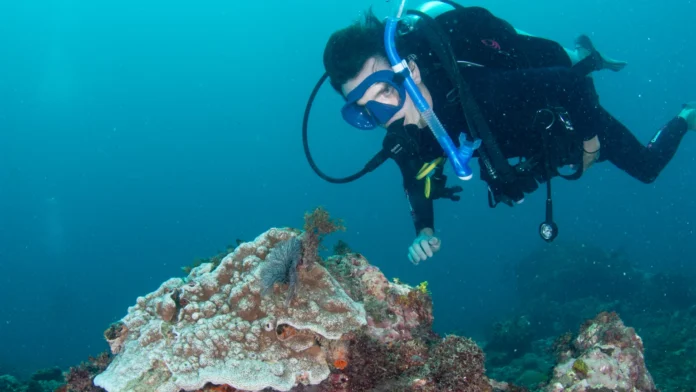
Second, you get more attention. Whether you are newly certified or experienced, having a guide who can focus on you makes a huge difference. Skills improve faster. Confidence builds naturally.
Third, dives are calmer and more controlled. Large groups create task loading. More movement. More confusion. Smaller groups mean smoother descents, better communication, and more relaxed diving.
1:1 diving is possible
If you really want the best experience, we can go even further.
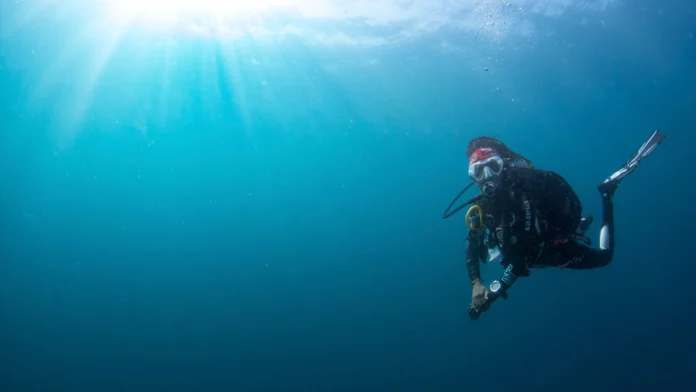
At Ocean Tribe, 1:1 diving is absolutely possible. One diver. One professional. Full attention.
This is ideal if:
- You are new or feeling nervous
- You want to improve specific skills like buoyancy or air consumption
- You are taking photos or want a slower, more relaxed pace
- You simply want a premium, private experience
In training environments, even stricter ratios are often used. For example, introductory dives are commonly run at 1:1 instructor to student to ensure full supervision and safety . That level of attention is what we aim to bring into all our diving where possible.
Better diving, not just safer diving
There is another reason we keep groups small.
Marine life behaves differently around small groups.
Fewer bubbles. Less noise. Less chaos.
That means:
- Turtles stay relaxed
- Rays do not disappear
- Reef fish carry on as normal
As such you as a diver see more, enjoy more and you remember more.
Flexibility based on conditions
We do not believe in rigid rules that ignore reality.
Group size will always be adjusted based on:
- Diver experience levels
- Conditions on the day
- Current, visibility, and depth
- The type of dive
If conditions demand it, we reduce group sizes even further. Because the goal is always the same: safe, controlled, enjoyable diving.
So, how many divers in a group?
At Ocean Tribe:
- Maximum: 4 divers per dive guide
- Typical: Often less than 4
- Best experience: 2:1 or 1:1 where possible
We do not run large groups. We do not rush dives. And we do not compromise on attention.
Because diving is better when it feels personal.
Final thought
Anyone can put divers in the water.
Not everyone takes the time to do it properly.
If you are asking how many divers in a group, what you really want to know is this:
Will I be looked after?
At Ocean Tribe, the answer is yes.