Home Blog Page 33

What Dive Courses Can You Do Online During the Coronavirus Lockdowns?

You can start your dive courses online during the enforced coronavirus lockdown. While the actions of many of our governments, have meant that we are unable to get in the ocean or travel, it doesn’t mean you can’t prepare for your next dive experience.

Ocean Tribe are offering the opportunity for you to complete the knowledge development sections of PADI courses through the eLearning PADI Library app /PADI Training app for manual and video study and though online webinars with Ocean Tribe Instructors. PADI online courses included are from beginner to instructor level.

Additionally Ocean Tribe PADI Course Director Mark and some guest speakers will be running webinars on different diving subjects to keep you informed and in the loop. We are also always here for a chat on Facebook, Zoom or WhatsApp . If you want some banter with divers or to find out more about what dive courses you can do online hit us up.
PADI Open Water Diver Course

Includes:

PADI eLearning- Manual, Videos, Exams

Online coaching from Ocean Tribe Instructors

Just Buy eLearning

Book Full Course for Fabulous Discount (Course Redeemable at ANY time)

PADI Scuba Tune Up

Includes:

PADI eLearning- Manual, Videos, Exams

Online coaching from Ocean Tribe Instructors

Just Buy eLearning

Book Full Course for Fabulous Discount (Course Redeemable at ANY time)

PADI Advanced Open Water Diver Course

Includes:

PADI eLearning- Manual, Videos, Exams

Online coaching from Ocean Tribe Instructors

Just Buy eLearning

Book Full Course for Fabulous Discount (Course Redeemable at ANY time)

PADI Rescue Diver Course

Includes:

PADI eLearning- Manual, Videos, Exams

Online coaching from Ocean Tribe Instructors

Just Buy eLearning

Book Full Course for Fabulous Discount (Course Redeemable at ANY time)

PADI Divemaster Course

Includes:

PADI eLearning- Manual, Videos, Exams

Online real time classes and coaching sessions from the PADI Divemaster Course from Ocean Tribe Instructors

Just Buy eLearning

Buy the PADI Dive Theory Online For Learning Your Professional Dive Theory

Book Full Course for Fabulous Discount (Course Redeemable at ANY time)

PADI IDC Instructor Development Course

Includes:

PADI eLearning- Manual, Videos, Presentations

Online real time classes and coaching sessions from the PADI Instructor Development Course from PADI Course Director Mark Slingo- Do the actual IDC from isolation. Get started on your PADI Instructor Development Journey

Book Full Course for Fabulous Discount (Course Redeemable at ANY time)

PADI Enriched Air Diver Course

Includes:

PADI eLearning- Manual, Videos, Exams

Online real time classes and coaching sessions from the PADI EANX Course from Ocean Tribe Instructors

Just Buy eLearning

Book Full Course for Fabulous Discount (Course Redeemable at ANY time)

PADI Adaptive Techniques Instructor Course

Includes:

PADI eLearning- Manual, Videos, Exams

Online real time classes and coaching sessions from the PADI Adaptive Techniques InstructorCourse from PADI CD Mark Slingo

Book Full Course for Fabulous Discount (Course Redeemable at ANY time)

Work with Disabled Divers- PADI Adaptive Techniques Instructor Training During Lockdown

During the corona virus lockdown we are all looking for ways to enhance our diver education and increase our skills. The PADI Adaptive Techniques Instructor or PADI Adaptive Support Diver course teaches PADI members the fundamentals of working with divers with disabilities. The course teaches you to work with PADI standards thinking outside of the box to enable divers with challenges to be able to take part in and complete PADI Diver courses.
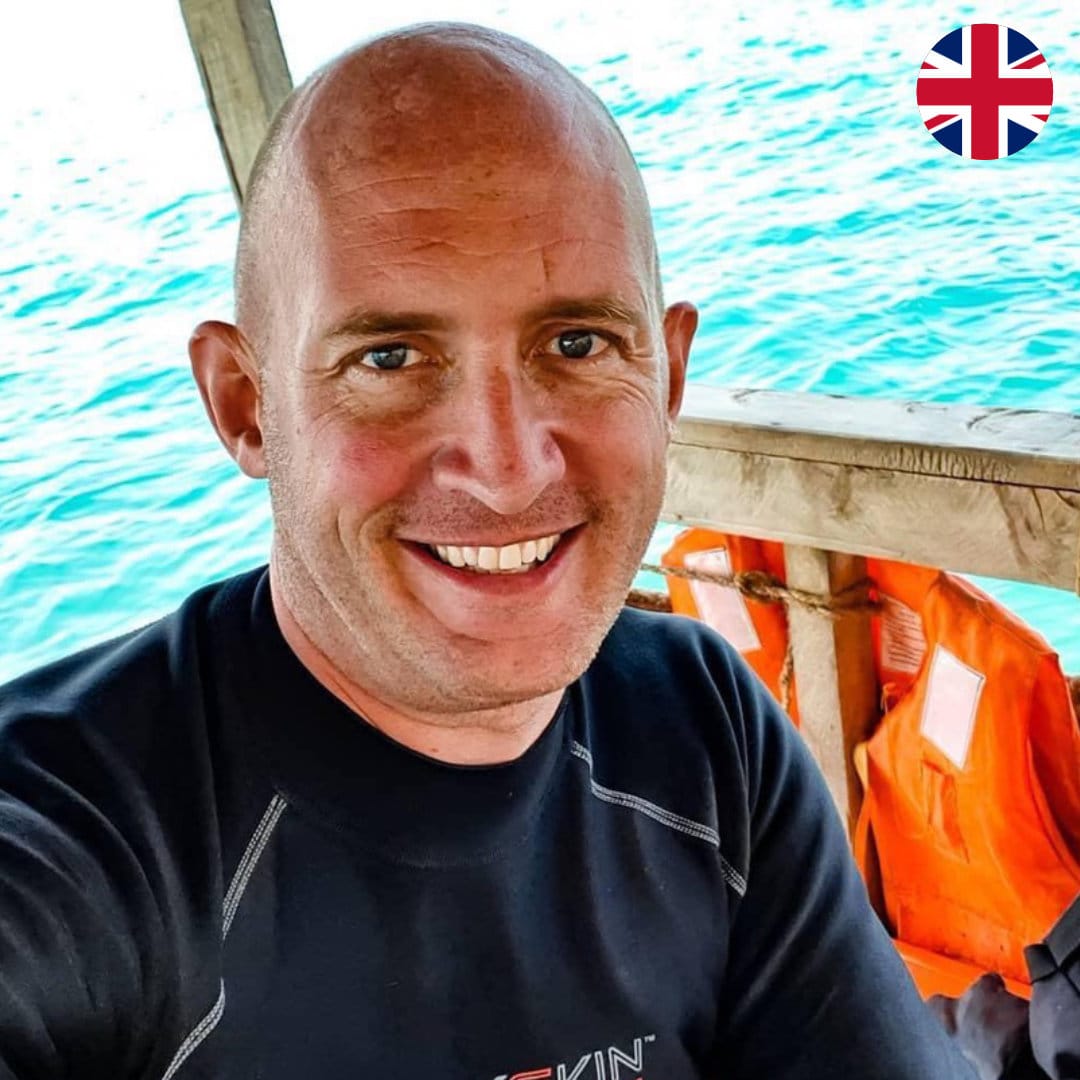
During the enforced coronavirus isolation period PADI Course Director Mark Slingo will be conducting the academic portion of the PADI Adaptive Techniques Specialty Instructor course and PADI Adaptive Support Diver.

Mark is the world’s first paraplegic PADI Course Director and one of the leading instructors regarding disabled diving worldwide as well as being the Director of Training for Disabled Divers International. He has taught a number of the introductory PADI Adaptive Techniques Instructor Courses around the globe and a great person to work with.

The course will be done by pre-study of the PADI Specialty Instructor guide and then through online seminars.

Following completion of the segment you will receive the training completion record to then complete the physical parts of the course with a PADI Course Director Specialty Instructor trainer in your area or with Mark directly either in your area, a worldwide scheduled course location or at his own dive centre.

If you wish there is also the chance to complete Disabled Divers International (DDI) Instructor Training to build on what you learn on PADI Adaptive Techniques and be able to offer limited certifications to divers who are unable to meet performance requirements.

Contact Mark on email mark.slingo@hotmail.com, WhatsApp +447429268569 or +254700945854 or Skype markslingo to find out more about the program and what will be covered in the online training. Use this time that we are all confined away to build your instructor repertoire and be able to offer scuba diving to a new group of people once we are all back in the water.

Eco-Friendly Divers- Free Reusable Water Bottle for All Ocean Tribe Divers

eco friendly divers water bottles

eco-friendly diver water bottleHere at Ocean Tribe we are trying to make an effort to be eco-friendly divers. As well as good role-model behaviour and encouraging good buoyancy and dive practices underwater and on land we are also trying to be eco-friendly divers right down to the products we use. For a while we have stopped using single-use plastic water bottles and now offer a metal, reusable water bottle for every diver who dives with Ocean Tribe.

The water bottle can be filled at the dive centre before going on the dive trip to ensure you have enough water to stay hydrated and then have a great useful souvenier of your dives with Ocean Tribe, following your dive trip or PADI dive course.

The bottles are equipped with interchangeable lids. One is a quick release top which is useful when you are doing sports or want to be able to get your water quickly and not splash too much. The other is a screw top lid when you wish to be able to access the water more easily. There is also a clip to attach it to your dive bag or rucksack.

Hopefully these actions will encourage our divers to use the bottles repeatedly rather than opting for a single-use disposable plastic bottle which will end up on a landfill or mroe worryingly as litter. The more we can do to have less plastic in the ocean, the better it will be.

What other things can I do to make myself a more eco-friendly diver?

  1. Perfect your buoyancy. The PADI Peak Performance Buoyancy course is a great way to fine-tune your buoyancy skills and ensure you are not in danger of harming the reef or making uncontrillable ascents through poor buoyancy. It is great fun and a vital skill for protecting the environment. It also can aid with your air consumption if you are not constatnlyn trying to adjust your buyancy and wasting energy. A great program to take and having good buoyancy is something all eco-friendly divers should aspire to.
  2. Streamline your Equipment- Using appropriate clips and pockets to make sure you don’t drag anything on the reef is also a great way to be an eco-friendly diver and makes you have less drag in the water and thus an easier dive.
  3. Pick up any litter you see underwater. This is a vital role of all divers and you should carry a net bag to be able to retrieve and dispose of any rubbish you find underwater. Additionally when you can, participate in beach and underwater clean ups to help keep our marine environment a clean place and safe for marine life.
  4. Get a Project AWARE certification card. Project AWARE takes action to create both local and global change for the ocean and the communities who depend on it. Their local actions collectively protect the most vulnerable marine species and decrease pollution. We work together for a clean, healthy ocean – and we have fun doing it! A small donation of $15 or more can help Project AWARE protect the ocean and also gets you the choice of some awesome PADI Project AWARE certifcation cards.

Coronavirus and Scuba Diving Precautions

coronavirus

The last few weeks of the worldwide spread of the coronavirus (COVID-19) have understandably made a lot of people nervous with the measures to avoid catching it. We have been asked a lot by divers and potential divers what precautions in scuba diving should be taken to counteract the spread of disease. Following advice from DAN we have put together a guide. Properly sanitised equipment is very important and the following steps can greatly reduce the risk of the disease transmission.


We as divers already take precautions against transmission of disease and keeping our equipment in good condition by washing it after every dive. It has been noted that “According to the CDC, household cleaners are as effective against COVID-19 as they are against the common cold and flu viruses”. Cleaning any equipment where transmission could take place including regulator second stages, alternate air sources, masks, snorkels and BCD oral inflators is paramount to making sure you are properly protected and should be adopted into your best diving practices as standard anyway.


Pre Dive Cleaning (Especially if you are using rental equipment)

  1. Wipe the following items with a disinfecting wipe. Mouthpieces for regulators and snorkels, BCD oral inflator, AIR 2 mouthpiece, and the inside of your mask.
  2. Rinse the equipment with fresh water.

Post Dive Cleaning- Effective Sanitisation

  1. Make a 10% bleach solution or a solution using a cleaning product such as “Steramine™ tablets or any other quaternary ammonium compound”.
  2. Make sure you are following the manufacturers recommend guidelines.
  3. Submerge the equipment in the solution.
  4. Rinse the equipment with fresh water

Post Dive Cleaning- Using Soapy Water

  1. Make a solution of hot soapy water
  2. Submerge the equipment in the water.
  3. Scrub the equipment with an item such as a soft toothbrush got be effective.
  4. Rinse the equipment with fresh water.
For more information on the subject then you might wish to look at the following resources.

Best Dive Apps- Your Scuba Diving in the Digital Age

What are the best dive apps? We live in a digital age now where such a plethora of information is accessed on our mobile devices and PCs. Quite naturally scuba diving has not escaped this evolution and there are hundreds of apps available out there to help scuba divers. But why would you need an app? After all scuba diving is an underwater sport far away from your mobile device.

Best Dive Apps for Logging your Dives

One of the first question s you will get asked by a dive can the when you book a dive trip or course is “how many dives have you logged?” It is important to log your dives as a prerequisite to further diver training and for dive schools to check your experience level. Dive logbooks are frequently left behind by divers prior to their trips or lost over the course of time. Having the ability to log your dives digitally means that you can back them up online and access your dive log from a mobile device to be able to quickly show your dive log.

DiveMate

Available on- Android

Cost- Free (with paid upgrades)

MacDive

Available on- OSX, iOS

Cost- $20 OSX, $9.99 iOS (Free Trial)

Subsurface

Available on- OSX, Windows, iOS, Android

Cost- Free

Best Dive Apps for Completing Your Diver Training Knowledge

As mentioned it is a digital age. To adjust to the amount of information being consumed on mobile devices the major dive training agencies have also gone down this path with innovations such as PADI eLearning. After all less printing for manuals and having them available digitally means that you can easily get access to your dive learning and have the most constantly updated materials. Additionally it cuts down on the classroom time you need to do, so you can concentrate on the actual diving.

PADI Training

Available on- iOS, Android

Cost- Free

PADI Library

Available on- iOS, Android

Cost- Free

(Slowly being replaced by PADI Training. You will need both apps to start with)- 03/20

Best Dive Apps for Checking Diving Conditions & Diver Safety

An important part of diver safety is evaluating the conditions you will be diving in to ensure that they are safe to dive in. Checking the weather, wind, tides, swell and other environmental factors is a vital task. There are a number of cover-all or task specific apps available to aid divers in evaluating dive conditions and helping with diver safety.

Windy

Available on- iOS, Android
Cost- Free

TripWhistle Global SOS – International Emergency Phone Numbers (911, 112, etc) for Travelers Abroad

Available on- iOS,
Cost- Free

Best Dive Apps for Capturing Your Dive Moments and Getting Social

This is a world where social media is playing a more dominant role. Social networks are great places for you to share your love of diving and meet other divers. The evolution of mobile phones has also meant that the cameras on the devices can now rival stand-alone cameras. There are some really cool housings such as the Kraken, available to take your mobile phone camera, capture the underwater world, adjust the colouring and share the moments with underwater divers. Some can even go further and turn your mobile phone into a dive computer!

Deepblu

Available on- iOS, Android
Cost- Free

Dive+

Available on- iOS, Android
Cost- Free (In-app subscriptions)

Best Dive Apps for Planning Your Dives

Traditionally dive planning was done with tables and written calculations. This has led to the evolution of the dive computer which can be used to plan and execute dives but apps can also assist in dive calculations if the right formulas are inserted. Ease your dive planning using specific apps.

Deco Pro

Available on- iOS
Cost- Free

Best Dive Apps for Finding Your Dive Centre

When you are travelling rot a new dive destination you obviously want to know the dive centres that are available for you to dive with. The major training agencies all show their registered dive centres on their apps and also give you access to other dive tools such as dive tables and other guides.

PADI- Scuba Diving Essentials

Available on- iOS, Android
Cost- Free

While apps are not going to replace the thrill you get from scuba diving they do allow you to plan, share and store your dive memories more easily and bring your love of diving onto your electronic devices. It can aid your dive education and even make dives more exciting giving you extra purpose such as going to capture an image to share with the world or dive a particular plan. Many of the apps are free and don’t take up a lot of space so they are well worth having. These are just a few of them available out there selected by divers we have talked to. What are your thoughts?

10 Golden Rules For Snorkelling

PADI Discover snorkelling

Snorkelling is the easiest way to access and see the underwater world, requiring little training and the bare minimum of gear. You just need a mask, snorkel, fins and a floatation device. It’s a great way to start your underwater adventure. As snorkelers there are a few golden rules you should follow to ensure you have the optimal experience and look after the underwater environment.

1. Never touch any marine life- Either with your hands or feet, you should never touch either the corals or any sea creatures. You can do irreparable damage to corals and there is no need to touch fish, dolphins, turtles or other marine life.

2. Show respect to the marine life by keeping your distance at all times. Seriously would you like it if you were crowded by loads of people leering at you closely.

3. Try to use coral-reef friendly suncream. A lot of branded suncreams have chemicals in them which can be harmful to coral reefs. Try to use a reef-friendly suncream or use a rash guard/ t-shirt/ skin suit to protect yourself from the sun and protect the reef further. See this article on reef-friendly sunscreens

* Avoid sunscreens containing *petrolatum*, commonly known as *mineral oil*, which takes years to biodegrade, and are known to be harmful or fatal to aquatic life and waterfowl.
* Avoid sunscreens with high content of *Titanium Dioxide*. This mineral does not biodegrade and is found to react in warm seawater to form hydrogen peroxide which is harmful to all sea life.
* *Oxybenzone* and *octinoxate*, the two chemicals recently banned in Hawaii and are believed to cause coral bleaching.

4. Pick responsible and ethical boat operators for your snorkeling trips. Cheaper is not always better. When choosing an operator, make sure that they have an environmental policy and do not encourage you to do things such as touching the marine life and posing holding starfish for example. If an operator is just in it for money and not caring for the environment then this can cause long term damage to the reef.
5. Use operators with decent snorkelling and safety equipment. You are going snorkelling to appreciate the underwater world. So you want to use the best equipment to look at it, or at least equipment that is not old, uncomfortable or leaking. When booking, ask to see the equipment that you will be using.

6. Do not take souvenirs from underwater. No matter how good you think that shell will look on your bathroom cabinet, there is no excuse for taking it away from its natural environment. Shells often provide a home for a lot of marine life and you have no way of knowing what its inside. Leave it in its own ecosystem. In Kenya where Ocean Tribe is based it is also illegal and can get you into trouble at the airport if you try to leave with shell souvenirs. Additionally avoid purchasing shells from unscrupulous vendors on the beach as this will have the same result.

7. Join beach and underwater clean-ups to help preserve the underwater world. Many dive centres such as here at Ocean Tribe like to organise Project AWARE cleanup days which focus on removing trash and pollutants from the ocean. These can involve diving, snorkelling and cleaning up the beach to make a safer, cleaner marine eco-system. Get involved whenever you can.

8. Be safe. Don’t snorkel in difficult conditions such as high surf, watch for currents and be mindful of your depth. If you are not a strong swimmer then you might want to consider wearing a life jacket or other floatation device to keep safe.

9. Avoid using plastic as much as possible when you travel. Try and help the environment on your snorkel trip by bringing your own refillable water bottle and dry bag, rather than using single use plastic bottles and carrier bags. Plastic waste its one of the biggest ocean pollutants and the more we can do to reduce this the better.

10. If you are enjoying the snorkelling then consider taking your PADI scuba diving certification by enrolling on the PADI Open Water Diver course. You already have an interest in the underwater world, so wouldn’t it be cool to get down there closer to the marine life and see things that just can’t be accessed from surface snorkelling. It’s a logical next step and one that you definitely won’t regret.

What Scuba Equipment Should I Buy First?

what scuba equipment should I buy first

‘What scuba equipment should I buy first?’ Is a very common question that our PADI Instructors and PADI Divemasters get asked by certified divers and beginners looking to really get invoved in diving. It is also a very good question as getting the right scuba gear can drastically improve your diving experience and make diving easier for you. Now obviously the type of gear you buy depends on your budget and diving needs so we will attempt to give a generic guide to the order you should buy gear in and try to answer what ‘scuba equipment should I buy first?’

1.Mask

We go underwater to see things. As such a good scuba diving mask is the most important item a diver should buy. It’s not at the top end of the expense scale of dive equipment and a well-fitting, comfortable mask really can make a difference to how you percieve your dive experience. All divers have individual preferences for their masks such as clear/black silicone, window size, window style, mask strap for example. You should try as many masks as possible to find the one that works for you. A final piece of advice. When you find a mask you like. Buy two in case you misplace or break it.

2.Snorkel

The natural companion to the mask, a decent snorkel is a great piece of scuba equipment to have. It enables you to enjoy the ocean in a non-diving relaxing snorkeling or freediving environment and is a required piece of scuba equipment for most training agencies. Snorkels come in a different range of styles and materials so you should consult your PADI dive centre where you are buying it on the best type for you. If you are just using it for snorkeling and diving then it should have a good purge valve and easy attachment to the mask. If you are using it for other activities as well such as freediving then you might want a snorkel that floats and doesn’t have the purge valve. If you want to be able to store the snorkel in your BCD pocket then a folddable snorkel might be the right choice for you. but it is an inexpensive vital piece of dive equipment and should be in the first set you buy.

3.Fins

On your PADI Open Water course you were taught to use fins and how to kick correctly. Fins are also a lower costing piece of scuba equipment and there is a weide range fo fin styles and materials available out there. First up the question is what kind of water you will be diving in. If it is not tropical water you will probably want a fin that can be worn with boots, whereas the full foot fins are preferred by some for tropical conditions. Again trying different fins is crucial to finding the one that works best for you and the style and weight might be a factor if you are planning on travlling a lot.

4.Dive Computer

In this modern world dive computers are more and more evident on divers and an absllute must for regular divers. While it is important for you to learn and know how to use dive tables such as the PADI RDP, a dive computer will constantly recaculagte your no decompression limit as you change depths, keeping you constantly informed of your safety margins. It will also show you your depth and dive time and the higher end models can offer advanced features like air integration, gas switching and even heart monitoring in some cases. A dive computer is a vital piece of safety scuba equipment and an excellent buy for all divers.

5. Exposure Suit

Keeping warm and comfortable is very important to your enjoyment of a dive. As such wearing the approriate exposure suit, which fits you properly is absolutely vital. Now this all depends on the type and temperature of water you wish to dive in. For tropical conditions you might be ok with a rash guard, thermal rash guard or a shorty wetsuit. As the water gets colder then you will be looing at long thicker wetsuits or even a dry suit. This is not something you want to be cheap on and make sure it fits well to get the maximum enjoyment out of your diving. For dry suits you will need extra training in how to use the dry suit.

6. BCD

A good BCD is a great piece of scuba equipment to own. Having a BCD that fits absolutely correctly, and has the features you prefer can really aid your diving comfort, position and abiity to carry items underwater. BCDs care generally one of three styles, jacket style, wing style or a hybrid. There is also the option to use sidemount rigs. The BCD you use should suit the type of diving youi like and be the right item for other factors such as travel and attaching items. Having your own BCD is a must once you get into diving seriously and you should try as many styles as possible to find the one that best suits you.

7. Regulator, Alternate Air Source & Gauges

While the most important piece of the delivery system taking air from the scuba cylinder to the diver, the regulator is not size specific and can be quite pricey so we recommend this this is the final main piece of diving equipment that you purchase. This another piece of equipment that the conditions that you will use it in shoudl eb examined as special features such as environmental seals are needed for colder water. You will also need to decide whether you want a balanced or unbalanced regulator, what type of tank connection (Yoke or DIN) you prefer and the weight of the regulator with regards to travel. The type of alternate air source you want to use can also vary with some divers prefering to have an octopus, some an AIR2 and some a completely redundant air source. Consult your PADI pro for more information.

[icon_counter border_size=”2″ border_color=”#a4a4a4″ icon=”Defaults-info-circle” icon_size=”32″ icon_color=”#ffffff” text_color=”#ffffff” desc_color=”#ffffff” bg_color=”#ed00b9″ block_title_front=”I am a PADI Divemaster or Instructor. Does this apply to me?” block_desc_front=”Advice for New and Aspiring Pros” block_title_back=”Role Model Gear” block_desc_back=”It is very important as a dive pro that you have your own equipment. After all to be a professional you really should have the ‘tools of the trade’. By the same definition, you should also have as good a set of gear that you can afford and gear that work for you. Your divers and students will automatically look to you as a diving role model for equipment counselling and often look to the gear you wear as an example. ” ult_param_heading=””]

Final Thought

Being totally honest it is always better to have your own scuba equipment if you wish to pursue scuba diving as an ongoing hobby. Buy what you can afford and go for the piece of equipment that suits you. Just because it is the most expensive does not necessarily mean that it is the right thing for you. Your dive professional will be delighted to assist you in purchasing the right set of equipment. Try different styles of equipment. Ask other divers if you can try a piece they own. A lot of dive centres wl have trial equipment. Be weary of buyinmg online if you haven’t tried a piece of equipment. It is always better to go and try it out at your local dive centre to make sure it is the right fit and style. If you have any questions about anything in this article contact us at Ocean Tribe and we will be delighted to helpo in any way we can.

How to Create a PADI Profile and Access Your PADI eLearning Library

PADI eLearning

PADI eLearning is the cutting edge method that enables you to spend less time in the classroom when taking a diving course and concentrate more on your diving itself. For every course that PADI eLearning is available for, Ocean Tribe use it as the primary knowledge development tool. After you book and pay you will be emailed a code to access your eLearning. This needs to be entered in your PADI online profile to be ab le to access it. You will then be able to use PADI eLearning either online or via a mobile device using the PADI Library app (or PADI Training app for the IDC) on your tablet or phone.

How to create your PADI Profile for PADI eLearning

  1. Navigate to padi.com in your browser.

    PADI eLearning online

  2. Click on “Sign In” in the top right hand menu.
  3. Click on “PADI eLearning for Students” in the drop-down menu.
  4. In the new window, click on the right “Sign Up” tab.
  5. Enter your information.
  6. Click the “Sign Up” button.
  7. Enter your address details or click ‘skip’
  8. You will be directed to your PADI eLearning dashboard.
  9. Enter the code you have been emailed by PADI or Ocean Tribe to gain access to your PADI eLearning module.
  10. Access your PADI eLearning using this option requires an ongoing internet connection.

How to Get the PADI Training App

  1. PADI Training app for PADI eLearningOn your mobile device go to the Apple App Store or Google Play store and search for PADI Training. Alternatively click on the links here. https://play.google.com/store/apps/details?id=com.padi.learning.dev&hl=en or https://apps.apple.com/us/app/padi-training/id1471474067
  2. Download the app to your device.
  3. Tap on the downloaded app icon.
  4. Enter your login details you made when you set up your PADI profile. Hit ‘Sign in’
  5. Tap on the eLearning program you wish to study. The eLearning will be downloaded to your device. Access it section by section

You will need to complete knowledge reviews at the end of every section and in some cases a final exam. You can check the progress of your PADI eLearning as you go in the online section and your Ocean Tribe instructor can likewise. Feel free to contact Ocean Tribe about any issues you have  along the way or things you don’t quite understand. Your Ocean Tribe PADI Instructor will go through prescriptively with you anything you don’t understand when you take the ‘Quick Review’ quiz upon arrival for your PADI course.


Note: Emails from PADI can find their way into your Junk Email box so it is a good idea to check this if you are not receiving your eLearning or contact us at Ocean Tribe.

Masai Mara Safari & Diving Package

Masai Mara

MASAI MARA SAFARI & DIVING PACKAGE ITINERARY

Day 1 – Arrive in Nairobi and Fly to Masai Mara

Catch a morning flight to Masai Mara, departing around 8:00 AM and arriving between 10:00 and 10:30 AM, depending on your camp’s location. A driver-guide from the camp will meet you on arrival and take you on a short game drive while transferring to the camp.

Check-in, enjoy lunch, and head out for an afternoon game drive to explore the vast savannah.

📍 Full-Board Accommodation: Masai Mara Game Reserve.

Day 2 – Masai Mara Safari

Spend the day discovering the wildlife-rich plains of Masai Mara. Enjoy morning and afternoon game drives, spotting elephants, lions, cheetahs, and wildebeest.

📍 Full-Board Accommodation: Masai Mara Game Reserve.

Day 3 – Masai Mara Safari

Experience another full day in Masai Mara. Set out on morning and afternoon game drives, searching for the Big Five and other incredible wildlife.

📍 Full-Board Accommodation: Masai Mara Game Reserve.

Day 4 – Masai Mara to Diani Beach

Embark on a morning game drive before breakfast. Check out and have an early lunch at the camp. Transfer to the airstrip for your afternoon flight to Diani Beach, departing between 1:00 and 2:00 PM. Arrive at Diani Airport around 4:00–4:30 PM.

On arrival, transfer to your hotel

📍 All Inclusive/ Full-Board / Half Board/ Bed & Breakfast/ Self Catering Accommodation: Diani

Day 5-11 – Diani Beach & Scuba Diving

Relax on the stunning white-sand beaches of Diani and dive into its rich marine world.

Daily scuba diving trips depart from the on-site Ocean Tribe Dive Centre, offering breathtaking coral reef dives. Between dives, enjoy Diani’s vibrant scene, including bars, restaurants, and nightlife. Try exciting activities like kite-surfing, dolphin and whale shark snorkeling, spa treatments, and microlight flights.

📍 All Inclusive/ Full-Board / Half Board/ Bed & Breakfast/ Self Catering Accommodation: Diani

Safari & Dive Package Inclusions

  • 4×4 Safari Land Cruiser with driver-guide
  • Game drives in Masai Mara
  • Full-board safari accommodation (all-inclusive, B&B, and self-catering options available for the beach stay)
  • Drinking water in safari vehicles
  • AMREF emergency evacuation registration
  • National Park fees
  • 6 days of dive trips (12 dives)
  • Dive equipment rental
  • Transfers to and from Ocean Tribe Dive Centre
  • Professional dive guide
  • Fruit on board during dive trips
  • Personal Ocean Tribe water bottle and T-shirt

Not Included

  • Drinks on safari
  • Tips and personal expenses
  • Special dive site surcharges
  • Dive courses

Ngutuni and Ziwani Safari & Diving Package

Ngutuni Elephants

NGUTUNI AND ZIWANI SAFARI & DIVING PACKAGE ITINERARY

Day 1: Tsavo West to Ngutuni

Begin your safari with a visit to Ngutuni Private Game Sanctuary, just outside Voi. Arrive late morning, check in at Ngutuni Lodge, and enjoy lunch. Watch wildlife at the nearby waterhole, a popular spot throughout the year.

In the afternoon, head out for an exciting game drive in the sanctuary.

📍 Full-Board Accommodation: Ngutuni Lodge.

Day 2: Ngutuni to Ziwani Tented Camp

Start the day with a morning game drive or an optional one-hour bushwalk if not done on day one. Enjoy breakfast with stunning views of the waterhole before driving toward Taveta. Along the way, pass through the scenic Taita Hills and spot elephants, buffalo, and other wildlife.

Arrive at Ziwani Tented Camp in time for lunch. This secluded camp sits on a dam along the Sante River, home to crocodiles, hippos, and a variety of birdlife.

In the afternoon, take a one-hour guided bushwalk with the camp’s naturalist, or opt for an evening night game drive on the ranch.

📍 Full-Board Accommodation:  Ziwani Tented Camp.

Day 3: Ziwani to Diani Beach

Wake up early for a morning bushwalk or game drive. After breakfast, begin the journey back to the coast. Enjoy the changing landscapes along the way and arrive at Diani Beach around lunchtime.

On arrival, transfer to the hotel.

📍 All Inclusive/ Full-Board / Half Board/ Bed & Breakfast/ Self Catering Accommodation: Diani

Days 4-8: Diani Beach & Scuba Diving

Relax on the white sands of Diani Beach and explore its vibrant coral reefs.

Daily scuba diving trips depart from the on-site Ocean Tribe dive center, offering incredible underwater experiences. When not diving, enjoy thrilling activities like kite-surfing, dolphin and whale shark snorkeling, spa treatments, microlight flights, and more. Diani also offers lively bars, restaurants, and nightlife.

Learn to Dive Platinum Package

COURSE PACKAGES