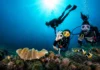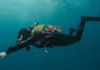
Few dives capture the imagination quite like dropping down a mooring line, watching the silhouette of a sunken ship slowly take shape beneath you, and finally crossing the threshold into a space the ocean has reclaimed. For divers who already love exploring wrecks but want to learn basic wreck penetration properly — with the training, equipment, and judgement to safely move beyond the exterior — this month’s featured specialty is the one to take: the SSI Advanced Wreck Diving Course.
What the SSI Advanced Wreck Diver Course Is
The SSI Advanced Wreck Diving program is designed to give certified divers the skills and knowledge to independently plan and conduct limited-penetration, no-decompression dives on wrecks within the daylight zone. According to the SSI standard, penetrations are limited to a maximum depth of 30 metres and a linear penetration distance of 40 metres, always within line-of-sight of natural light. It is a recreational overhead-environment course — the ideal place to learn basic wreck penetration before progressing to technical programs such as TDI Advanced Wreck or Extended Range Wreck Diving — and it bridges the gap between casual wreck exterior diving and full technical penetration training.
It is also a course best suited to divers who are already comfortable in the water. The prerequisites at Ocean Tribe are Deep Diving or Advanced Open Water certification, a minimum age of 15, and 20 logged dives. Maximum training depth is 40 metres.
What You Will Learn: Basic Wreck Penetration Skills, Step by Step
The course is genuinely skill-rich. Across two days, four open-water training dives, and a structured digital learning module, students learn basic wreck penetration techniques and the habits that make overhead-environment diving safe and repeatable. Areas of training include:
- Gas management for wreck dives, including turn-pressure rules and reserve planning for overhead environments.
- Wreck research and site selection, so divers can evaluate a wreck’s condition, history, hazards, and suitable entry points before stepping off the boat.
- Specialised equipment for wreck diving — primary and backup dive lights, reels and line, slates, diver’s tools, mesh bags, and the configuration of a streamlined rig that does not snag on collapsed structures.
- Mapping a wreck to build an accurate mental model of the site.
- Reel and line technique, including laying a static guideline, managing slack, choosing solid tie-off points, and the critical “lost line” drill.
- Light use and light-signal communication between team members — the universal OK, Attention, and Emergency beams that replace hand signals when visibility drops.
- Streamlining, trim, and propulsion to avoid silting out compartments or damaging fragile structures.
- Briefing and planning an overhead-environment dive: objective, duties, time, depth, route, gas limits, equipment, no-decompression limits, and emergency scenarios for lost line, lost diver, and low-on-gas situations.
- DSMB deployment from within an overhead environment.
The four training dives progress logically: a wreck orientation dive, an exploration dive that introduces safety lines and a swim-through, an exterior line-laying dive, and finally an interior line-laying dive — the culmination of the course.
Where the Training Is Conducted
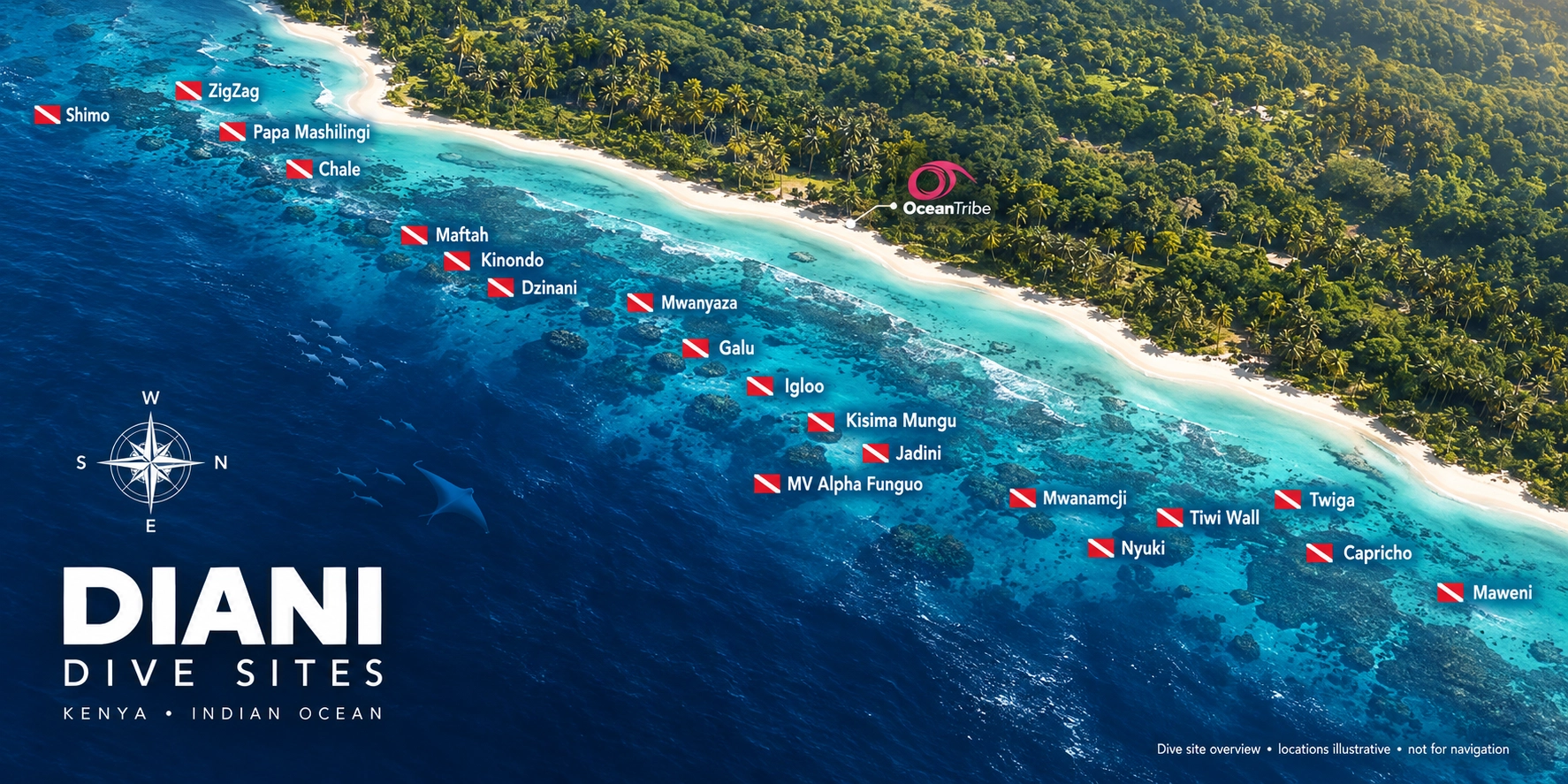
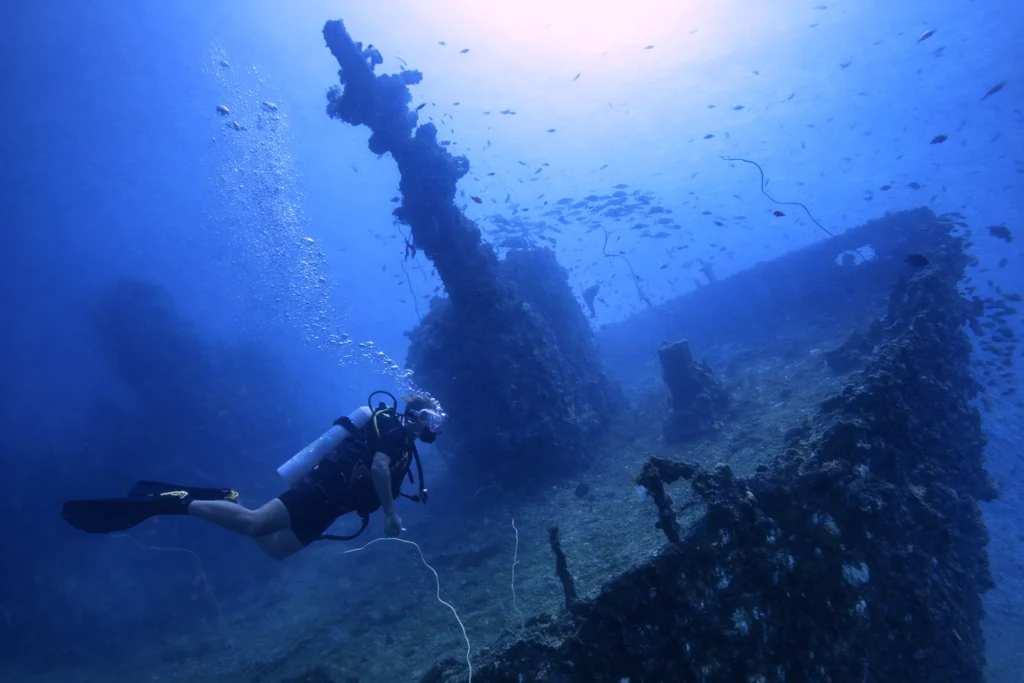
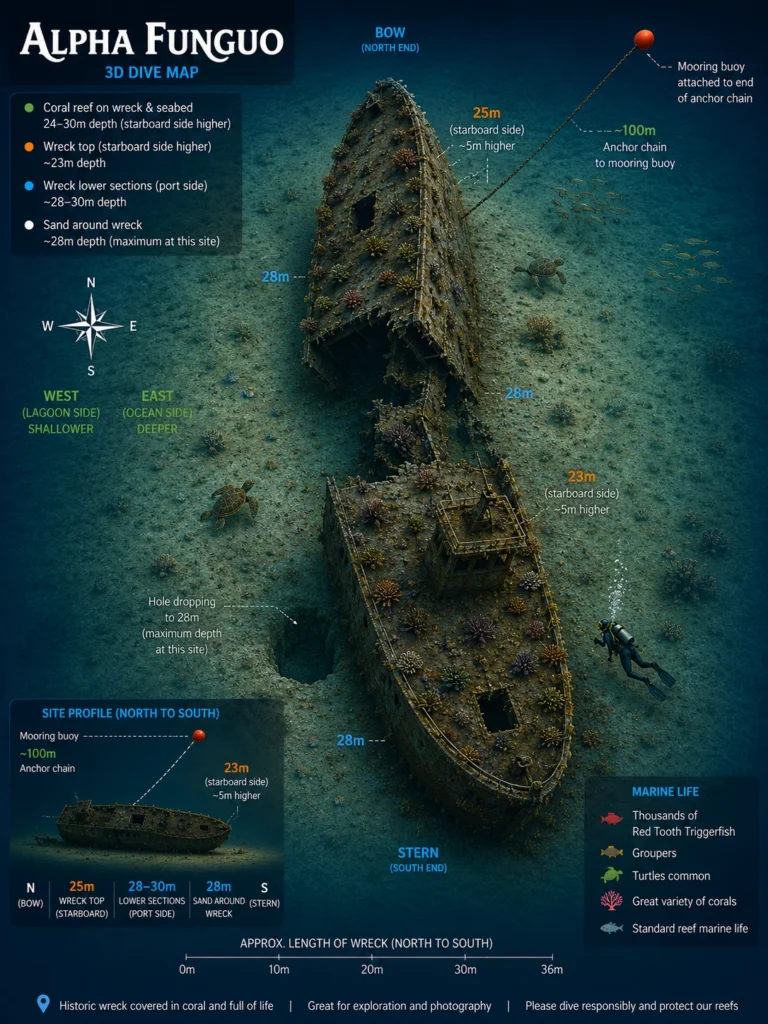
Ocean Tribe in Diani Beach, Kenya, runs the SSI Advanced Wreck Diving Course on what is arguably one of East Africa’s most rewarding training wrecks: the MV Alpha Funguo. The wreck sits in 22 to 30 metres of clear, warm Indian Ocean water, just a ten-minute boat ride from the dive centre, making it an ideal site to learn basic wreck penetration in real-world conditions.
The Alpha Funguo rests upright, leaning slightly to one side, with her deck, cargo holds, and superstructure still intact — the perfect canvas for a course built around mapping, light use, and controlled penetration through known entry points. Around the wreck, schools of barracuda, snapper, jackfish, and batfish swirl through the blue, while moray eels, frogfish, scorpionfish, nudibranchs, and the occasional octopus tuck into the wreck’s crevices. Whitetip reef sharks, kingfish, and stingrays make regular appearances. For a recreational training wreck, it is unusually photogenic — and the visibility tends to cooperate.
The course is delivered over two days. Day one covers orientation, briefings, the knowledge review, and dives one and two. Day two adds a dry-land line-laying practice session before dives three and four. SSI’s digital learning is completed beforehand in the MySSI app, so classroom time is replaced with structured pre-dive briefings and in-water teaching.
Why It Is a Great Course to Take
A few reasons stand out. First, the SSI Advanced Wreck Diver certification opens up a genuinely different category of diving — overhead environment diving, with the equipment configuration, dive-planning discipline, and team awareness it demands. Those habits transfer directly to deep diving, sidemount, and any future technical training.
Second, the Alpha Funguo is the ideal training platform. Most wreck courses are taught on whatever wreck happens to be local; here, the wreck has been selected and is regularly dived for precisely this purpose, with controlled entry points and a known internal layout.
Third, the course is excellent value. At Ocean Tribe it is currently priced at $299, including all digital materials, equipment, air fills, weights, and refreshments on the boat. Four training dives on a flagship wreck for that price is hard to find anywhere in the Indian Ocean region.
Finally, it is simply a course that changes the way you dive. After completing the SSI Advanced Wreck Diving program, you stop seeing a wreck as a single object to swim around. You start seeing it as a place — with rooms, routes, history, and risks worth respecting. That shift in perspective is the real certification.
Ready to learn basic wreck penetration on one of the Indian Ocean’s best training wrecks? To book this month’s specialty or to ask about combining it with a Deep, Nitrox, or Sidemount course, view the Advanced Wreck Diving Course page or read more about the MV Alpha Funguo wreck dive site.
Frequently Asked Questions
What if I don’t want to penetrate the wreck?
That is a perfectly reasonable choice — and you have options. Wreck penetration is not for everyone, and there is genuine value in diving wrecks from the outside, where the marine life and structure are often the highlight. Ocean Tribe runs the SSI Wreck Diving Specialty Course as a non-penetration alternative. The SSI Wreck Diving program gives you the knowledge and skills to safely conduct exterior, no-penetration dives around wrecks and artificial reefs — wreck research, gas planning, mapping, hazard awareness, and how to navigate around a wreck without ever entering it. It is the right course if you want to dive the MV Alpha Funguo confidently and competently without ever crossing an overhead-environment threshold. You can also simply enjoy the Alpha Funguo as a guided recreational dive without enrolling in either course, provided you are within depth limits for your current certification.
What is the difference between SSI Wreck Diving and SSI Advanced Wreck Diving?
The SSI Wreck Diving Specialty is a non-penetration course focused on diving safely around the outside of wrecks. The SSI Advanced Wreck Diving Specialty is where you learn basic wreck penetration — laying guidelines, using primary and backup lights, managing overhead-environment risks, and conducting limited interior penetrations within the daylight zone. They are complementary courses; many divers take the Wreck Diving course first and progress to Advanced Wreck later.
Do I need prior wreck-diving experience to enrol?
No prior wreck-specific experience is required, but you do need to be SSI Deep Diving or Advanced Open Water certified, be at least 15 years old, and have 20 logged dives. Comfort with buoyancy and trim is far more important than a logbook full of wrecks.
Is the SSI Advanced Wreck Diver course a technical diving course?
No. It is a recreational specialty with strict limits: no decompression, daylight zone only, maximum penetration depth of 30 metres, and a maximum linear penetration distance of 40 metres. If you want to go further or deeper into wrecks, the next step would be a TDI Advanced Wreck or Extended Range Wreck programme.
How deep will I go during the course?
Training dives are conducted on the MV Alpha Funguo, which sits between 22 and 30 metres. The maximum allowed training depth for the course is 40 metres, but most of the work happens between roughly 20 and 28 metres so that bottom times remain comfortable for skill development.
What equipment do I need to bring?
For the SSI Advanced Wreck Diving Course at Ocean Tribe, all standard scuba equipment, air fills, and weights are included. Specialised wreck-diving items — primary and backup lights, reels, and line — are supplied for the course. If you own your own dive light, slate, or diver’s tool, you are welcome to use them; otherwise everything you need is provided.
How long does it take to get certified?
Two days in the water, plus the SSI Digital Learning module that you complete in your own time before arrival via the MySSI app. Day one covers orientation, briefings, and dives one and two. Day two includes dry-land line-laying practice followed by dives three and four. You leave Diani as a certified SSI Advanced Wreck Diver.
Can I combine this with other specialty courses?
Yes — and many divers do. The Advanced Wreck Diving Course pairs particularly well with the SSI Deep Diving, Enriched Air Nitrox, and Recreational Sidemount courses. Ocean Tribe also offers multi-specialty packages such as the Mission Ready Diver package (Wreck, Deep, Sidemount, and Nitrox). Ask at booking for current combination pricing