Path to diving instructor is one of the most searched questions by people who fall in love with diving and want to turn it into a career. The good news is that the route is clear, structured, and achievable. With the SSI training system, you can go from complete beginner to professional instructor step by step, building real skills along the way.
This article breaks down exactly how it works, how long it takes, and what else you should be doing if you want to succeed as a dive professional.
Step 1: Start as an Open Water Diver
Every journey begins here. The Open Water Diver course is your entry point into scuba diving.
You will learn basic dive theory, equipment use, essential safety skills, and complete your first open water dives. This course usually takes 3 days, and once certified you can dive to 18 metres.
From here, your path to diving instructor officially begins.
Step 2: Advance Your Diving Skills
After Open Water, the next step is typically the SSI Advanced Open Water Diver course. However, it is important to understand that this course is not compulsory on the path to diving instructor.
SSI is a flexible system. You can progress by building experience through specialties instead, and in many cases this is actually the better route.
SSI Advanced Open Water Diver Course
This course is designed to build confidence and introduce you to different types of diving.
During the course, you will:
- Experience different diving environments and styles
- Improve buoyancy and control underwater
- Build awareness, confidence, and dive planning ability
- Gain an introduction to deeper diving and navigation
It typically takes 2 to 3 days and is a good way to broaden your experience early on.
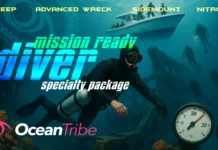
Ocean Tribe Advanced Alternative Combo Package (recommended)
Instead of the standard advanced course, you can choose to complete full specialty certifications. This option is not only valid within the SSI system, it is often more valuable. To enable this Ocean Tribe actually provides a combo package as an advanced alternative.
It includes:
This route offers clear advantages:
- Extends your depth range to 40 metres
- Develops strong, practical navigation skills
- Allows you to use nitrox for longer dives and added safety
- Provides full specialty certifications that count toward higher SSI recognition levels
Most importantly, this route builds real, usable skills rather than just giving you a taste of them.
At this stage, whichever route you choose, you should be logging dives consistently and gaining experience in different environments.
Step 3: Stress and Rescue Diver
This is where your mindset shifts from looking after yourself to looking after others.
The Diver Stress and Rescue course teaches you how to identify potential problems before they happen and how to deal with them if they do. It is one of the most valuable and rewarding steps in your path to diving instructor.
You will:
- Learn self-rescue techniques
- Recognise and manage stress in divers
- Handle emergency scenarios
- Develop confidence in assisting others
The course typically takes 3 to 4 days.
It also requires React Right, which includes first aid, CPR, and oxygen administration. This is completed on the first day of the Rescue program and is also a requirement for pro levels.
Step 4: Log Dives and Gain Real Experience
Before starting professional training, SSI requires:
- Minimum 40 logged dives to begin Divemaster training
- Minimum 60 logged dives to qualify as a Divemaster.
- Minimum 100 logged dives to pass Instructor Training
These dives should reflect real experience across different sites, conditions, and situations.
This is where structured internships or extended dive packages can make a big difference in your development.
Step 5: Divemaster (Dive Guide and Science of Diving)
This is your first professional level and a major milestone in the path to diving instructor.
To qualify, you complete:
You will learn to guide certified divers, conduct briefings, manage safety, and operate as part of a professional dive team.
This stage typically takes 4 to 8 weeks.
Step 6: Assistant Instructor
The Assistant Instructor course bridges the gap between Divemaster and Instructor.
You will begin teaching theory, assisting in water sessions, and refining your demonstration quality.
This course usually takes 4 to 5 days and is normally the first part of the Instructor Training Course.
Step 7: Instructor Training Course (ITC)
This is the final step before becoming an instructor.
The ITC prepares you to teach full courses, demonstrate skills to a high level, and manage students effectively.
You will develop:
- High-quality skill demonstrations
- Structured teaching methods
- Professional-level control and awareness
The programme typically takes 10 to 12 days, followed by the Instructor Evaluation (IE).
How Long Does the Path to Diving Instructor Take?
The path to diving instructor from beginner is not something that can be completed instantly. SSI requires a minimum training and experience period of at least 6 months between your initial Open Water certification and attending an Instructor Evaluation.
This ensures that instructors are not only qualified on paper but have real diving experience and maturity in the water.
In reality:
- Full-time, focused progression usually takes 6 months or more
- Many divers take 6 to 12 months to build solid experience
This is a good thing. Time in the water is what creates a competent, confident instructor.
Minimum Time Periods would be:
- Beginner to Instructor- 6 months
- Open Water to Instructor- 4 Months
- Advanced Open Water to Instructor- 3 Months
- Diver Stress and Rescue to Instructor- 2 Months
- Divemaster to Instructor- 2 weeks but 1 month at least better.
What Courses Are Required?
The core SSI path to diving instructor includes:
- Open Water Diver
- Advanced training or equivalent experience in deep, navigation and night diving.
- Stress and Rescue Diver
- React Right
- Science of Diving
- Dive Guide
- Assistant Instructor
- Instructor Training Course
- Instructor Evaluation\
Dive Career Internship Packages
One of the most effective ways to follow the path to diving instructor is through a structured dive career internship package.
These programmes are designed to take you from beginner through to professional level in a focused and supportive environment. Instead of just completing courses, you gain daily, hands-on experience within a working dive centre.
A good internship will include:
- A clear progression from Open Water through to Divemaster and Instructor
- Daily diving to rapidly build experience and confidence
- Real involvement in dive centre operations
- Workshops such as buoyancy training, teaching techniques, and dive briefings
- Mentoring from experienced instructors
At Ocean Tribe, internship packages also include additional development such as video analysis, CV preparation, and job-seeking support, helping you transition into employment after qualification.
This approach not only meets the requirements of the SSI system but produces far more capable and employable dive professionals.
What Else Makes a Great Diving Instructor?
Perfect buoyancy is essential. You must be able to demonstrate skills clearly and effortlessly.
Strong communication skills help you teach divers from all over the world.
Calm problem solving allows you to manage situations without stress.
Professionalism builds trust with both students and dive centres.
Additional specialty instructor ratings such as Enriched Air Nitrox, Deep Diving, and Perfect Buoyancy increase your employability.
Adaptability ensures you can teach a wide range of students effectively.
Why Choose the SSI System?
SSI offers a flexible and modern training system that allows divers to progress through experience and specialties rather than rigid course structures.
The MySSI app provides seamless access to learning and certifications.
The system rewards progression and focuses on producing confident, capable professionals.
Final Thoughts on the Path to Diving Instructor
The path to diving instructor is about more than certifications. It is about developing the skills and mindset to lead and teach others underwater.
You do not have to follow a single rigid route. SSI allows flexibility, and in many cases, choosing specialties over a standard advanced course will make you a stronger diver.
Take your time, build experience, and focus on quality training.
Do that, and you will not just become an instructor. You will build a career that can take you anywhere.