Scuba diving is one of the most accessible and rewarding adventure sports in the world, yet it is still surrounded by outdated ideas and misinformation. These myths about scuba diving often stop people from ever trying it, or leave new divers with unnecessary fears and unrealistic expectations.
The reality is very different. Modern scuba training is safe, inclusive, and designed for real people, not action-movie heroes. Below, we break down the most common myths about scuba diving and explain what actually matters when you step into the water.
Myth 1: You Need to Be an Expert Swimmer or Super Fit
You do not need to be an elite swimmer or ultra-fit to scuba dive. Basic water confidence is enough. Entry-level courses require a simple swim and a short float or tread water test. Scuba diving relies on buoyancy, breathing control, and relaxed movement rather than strength or speed.
Many divers are surprised by how gentle diving feels. With proper weighting and trim, you move slowly and efficiently. Fitness helps, but it is not a barrier to entry.
Myth 2: Scuba Diving Is Extremely Dangerous
Scuba diving is often portrayed as high risk, but in reality it is statistically very safe when done within training limits. Modern equipment, conservative dive planning, and clear standards have made recreational diving far safer than many everyday activities.
Most serious incidents occur when divers ignore training, exceed limits, or rush skills. Good instruction, proper supervision, and sensible decision-making make scuba diving a controlled and well-managed activity.
Myth 3: Sharks Are a Major Threat
This is one of the most persistent myths about scuba diving. Sharks are not interested in scuba divers, and encounters are extremely rare. In fact, many divers actively seek out shark dives because the animals are calm, curious, and impressive to observe.
Divers are far more likely to be injured by dehydration, sun exposure, or slips on a boat deck than by marine life.
Myth 4: You Breathe Pure Oxygen Underwater
Scuba tanks do not contain pure oxygen. Recreational divers breathe compressed air or enriched air nitrox, which contains slightly more oxygen than air but is still carefully controlled.
Breathing pure oxygen at depth would be dangerous. This is why divers are trained in gas management and depth limits from the very beginning.
Myth 5: You Must Buy Expensive Equipment to Start
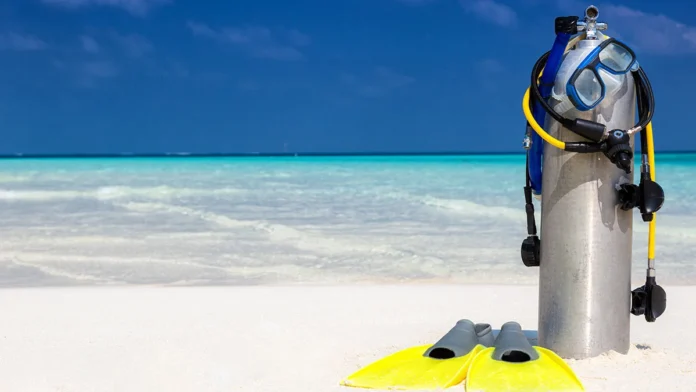
You do not need to own a full set of scuba gear to learn to dive. Most dive centres include equipment rental in course pricing. Beginners usually only need personal items such as a mask, snorkel, and fins.
Renting equipment allows new divers to learn what they like before investing. Scuba can be as affordable or as high-end as you choose.
Myth 6: Scuba Diving Is Only for the Young, Fit, or “Extreme” Crowd
Scuba diving is one of the most inclusive sports available. People of all ages, body types, and backgrounds dive regularly. Adaptive and classified diving programs allow people with physical, sensory, or neurological disabilities to dive safely with appropriate support.
Diving is not about pushing limits. It is about comfort, awareness, and enjoyment.
Myth 7: You Can’t Wear Contact Lenses When You Dive
You can dive while wearing contact lenses. Soft disposable lenses are commonly used by divers and are considered safe. Many divers prefer them because they allow clear vision even when the mask is removed.
The key is to use a well-fitting mask and keep your eyes closed during mask-removal skills. Prescription dive masks are also widely available and work extremely well.
Myth 8: One Training Agency Is Better Than the Others
There is no single “best” scuba training agency. Major agencies such as SSI, PADI, SDI, and others all follow international training standards and issue globally recognised certifications.
The quality of your experience depends far more on the instructor and dive centre than the logo on the certification card. Good instructors focus on skill mastery, safety, and comfort, regardless of agency.
Myth 9: Learning to Dive Takes a Long Time
Most people can complete an entry-level scuba certification in three to four days. Online learning allows you to complete theory at home, leaving more time for practical training in the water.
Training is structured, progressive, and designed to build confidence quickly without rushing.
Myth 10: All the Best Diving Is Deep or Only in the Tropics
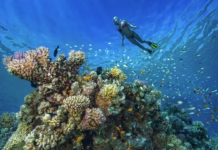
Most marine life lives in shallow water. Many of the best dives take place well within beginner depth limits. Colourful reefs, turtles, rays, and reef fish are commonly found in shallow environments.
Scuba diving is not limited to tropical destinations either. Cold-water, lake, quarry, and wreck diving all offer unique and rewarding experiences.
Myth 11: You Must Be Fearless and Never Panic
Feeling nervous before or during a dive is normal. Training exists precisely to help divers manage stress, solve problems calmly, and build confidence over time.
Good instructors expect questions, hesitation, and learning curves. Confidence underwater is built, not assumed.
The Reality Behind the Myths About Scuba Diving
Most myths about scuba diving come from outdated ideas, movies, or second-hand stories. Modern scuba training is safe, flexible, and designed for real people with real lives.