WELCOME TO THE OCEAN TRIBE ONLINE DIVE THEORY LEARNING CENTRE
This is your go-to hub for understanding scuba theory. We’ve gathered clear explanations, expert tips, and top videos from across the diving world. Everything is designed to help you learn faster and smarter.
Browse each category to explore detailed topics. Watch helpful videos. Review key concepts. Reinforce your dive knowledge.
Whether you’re just starting or preparing for your SSI Instructor Training Course, this is the place to build confidence and clarity.
Your path to becoming a dive professional starts here. Let’s dive in.
The SSI Classified Diving program has been created to enable persons with disabilities who might not be able to earn full certifications the ability to dive and get certified with different safety parameters. Learn to work with disabled divers.
Teaching divers with disabilities is a two-way process. Instructors don’t just pass on skills. They develop new ones themselves. In fact, many dive professionals say they grow more as educators when teaching divers with disabilities than in other areas of scuba instruction.
Structured adaptive programmes such as the SSI Classified Diver program have made teaching divers with disabilities more accessible and more consistent across the industry. SSI built this framework by combining decades of adaptive diving knowledge from organisations such as the Disabled Divers International, Diveheart, Handicapped Scuba Association (HSA) and IAHD with the global reach of a major training agency. The result is a clear, flexible system that allows qualified instructors to safely adapt Open Water and continuing education courses for divers who require varying levels of assistance. The dedicated disabled diving organisations Diveheart, the DAN sponsored Diverse Ability and HSA provide specific training and courses but the cool thing about Classified Diving is that it allows you to teach within your main training organisation. This is also true of the SDI Scubility programs
For less reaching programs the PADI Adaptive Techniques program is a great start for teaching divers with disabilities to be able to meet PADI standards and earn standard PADI certifications. RAID have their own program called RAIDaptive.
For instructors, teaching divers with disabilities is not only about inclusion. It is about becoming a more capable, empathetic, and effective professional. Below are the key lessons instructors consistently gain from adaptive diving education.
Alt text: Two scuba instructors assist a smiling diver using a specialised beach wheelchair as they exit the water after a dive.
Stronger Communication Skills
Clear communication matters in every course, but it becomes essential when teaching divers with disabilities. Instructors quickly learn how to simplify explanations, remove unnecessary jargon, and focus on what truly matters for safety and skill execution.
Teaching divers with disabilities often requires instructors to break skills into smaller steps, demonstrate more visually, and confirm understanding through repetition and feedback. When verbal communication is limited, instructors adapt by using touch contact, written slates, flashcards, hand guidance, or alternative signalling systems.
This process turns instructors into better communicators overall. They learn to read body language, recognise hesitation early, and adjust briefings in real time. These improved communication skills do not stay within adaptive courses. They transfer directly into beginner training, advanced courses, and professional-level instruction.
Adaptability and Creative Problem Solving
No two adaptive students present the same needs. Teaching divers with disabilities forces instructors to move beyond rigid teaching templates and focus instead on outcomes.
Standard techniques may need modification. Equipment setups may need adjustment. Skill sequences may need re-ordering. Each adaptive student presents a practical challenge that sharpens an instructor’s ability to think creatively and safely.
For example, an instructor may adapt propulsion techniques for a diver with limited leg mobility, refine buoyancy strategies for students with altered trim, or modify equipment configurations for comfort and independence. Teaching divers with disabilities builds a deep toolkit of adaptive solutions that instructors can draw on in any teaching environment.
This adaptability makes instructors calmer, more confident, and far more effective when unexpected issues arise during any course.
Greater Empathy and Patience
One of the most powerful outcomes of teaching divers with disabilities is the development of genuine empathy. Working closely with divers who must overcome physical or sensory challenges underwater gives instructors a new perspective on effort, trust, and resilience.
Many adaptive instructor programmes include empathy-based training exercises that allow professionals to experience limitations first-hand. This fundamentally changes how instructors view student stress, fear, and confidence building.
Teaching divers with disabilities also demands patience. Some skills take longer to master. Some students require additional repetition or rest time. Instructors learn to slow down, remove pressure, and focus on progress rather than speed.
The reward is significant. Few teaching moments match the impact of watching an adaptive student complete their first open water dive. These experiences consistently make instructors more compassionate teachers and stronger mentors across all courses they teach.
Alt text: An adaptive scuba instructor supports a student underwater in a pool, using touch contact and eye communication during skills training.
Professional Growth and Inclusive Leadership
Teaching divers with disabilities often reconnects instructors with the reasons they became dive professionals in the first place. Adaptive training brings purpose back into teaching and reminds instructors that scuba diving can genuinely change lives.
Handling non-standard training scenarios builds confidence fast. Instructors who regularly teach divers with disabilities are better prepared for real-world teaching challenges and less dependent on rigid course structures.
Over time, these instructors often become leaders within their dive centres and local communities. Their experience encourages more inclusive thinking, improves team culture, and helps create dive environments where all divers feel welcome.
Dive centres that actively support teaching divers with disabilities frequently report stronger staff engagement, better teamwork, and a clearer sense of purpose. Inclusion benefits everyone, not just adaptive students.
Practical Takeaways for Instructors
Instructors considering teaching divers with disabilities should keep the following principles in mind.
Take time to understand each diver’s abilities, limitations, and goals. Open communication builds trust and allows you to tailor training effectively.
Stay flexible with equipment and techniques. Small adjustments to weighting, exposure protection, entries, or harness systems can make a significant difference to comfort and safety.
Create a calm, supportive learning environment. Confidence grows when students feel safe, respected, and encouraged.
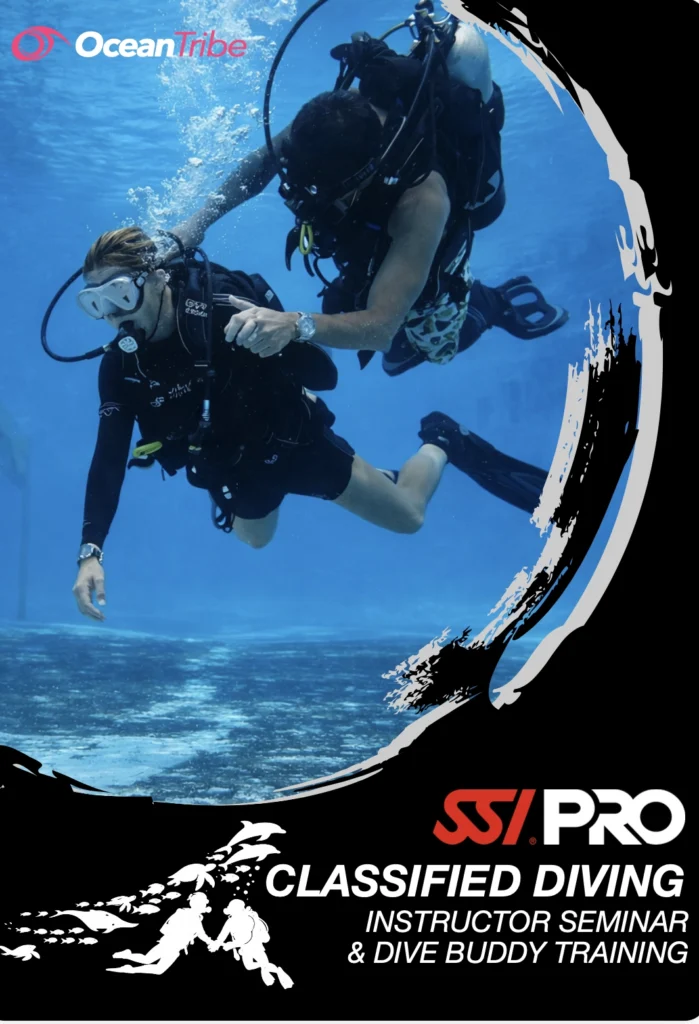
Commit to continuous learning. Formal training such as the SSI Classified Diving Instructor course provides structured tools, risk management strategies, and professional credibility when teaching divers with disabilities.
Collaborate with other professionals. Sharing experiences and solutions strengthens both individual instructors and the wider dive community.
Why Teaching Divers With Disabilities Makes Better Instructors
Teaching divers with disabilities improves communication, adaptability, empathy, leadership, and confidence. It challenges instructors to become better educators, not just better demonstrators.
Most importantly, it reinforces a simple truth: scuba diving is not about physical perfection. It is about skill, awareness, teamwork, and passion for the underwater world.
By embracing the opportunity to teach divers with disabilities, instructors don’t just expand access to diving. They elevate their own professionalism and help shape a more inclusive future for the sport.
Find out more about the SSI Classified Diving Instructor program offered by Ocean Tribe’s Mark Slingo in Kenya and all around the world by downloading the brochure here. Mark is a great IT to work with as he has taught 99% of his dive career with a disabilities following an. accident 20 years ago.
CLICK TO DOWNLOAD BROCHURE
"Don't listen to anyone who tells you that you can't do this or that. That's nonsense. Make up your mind, you'll never use crutches or a stick, then have a go at everything. Go to school, join in all the games you can. Go anywhere you want to. But never, never let them persuade you that things are too difficult or impossible."
Scuba diving gives you freedom like nothing else. For paraplegic divers, choosing the right equipment makes all the difference in safety, comfort, and enjoyment....