Home Blog Page 4

Next Steps After Open Water: Why Deep, Navigation & EANx Specialties Are the Better Choice

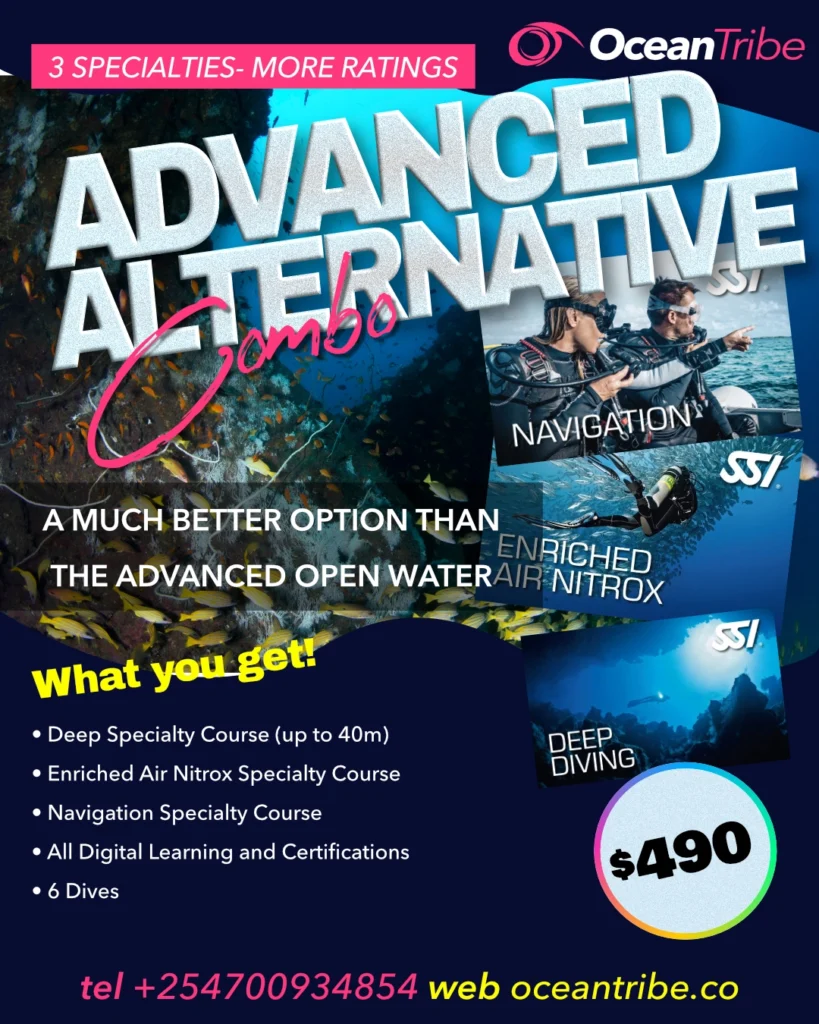
Advanced open water diver alternative package

Congratulations! You’ve completed your Open Water Diver certification — you’re now a qualified diver ready to explore the world’s reefs, wrecks, walls and drop-offs. But what’s the best next step after Open Water? Rather than heading straight into a traditional Advanced Open Water Diver course, there’s a high-value alternative that gives you deeper qualifications, real skills, and faster progress toward advanced ratings: taking three full specialty courses — Deep DiverNavigation, and Enriched Air Nitrox (EANx) — in place of a single broad course.

Why Traditional Advanced Isn’t Always the Most Efficient Step

The SSI Advanced Open Water Diver program lets you try five adventure dives from a list of specialties like deep, navigation, wreck, night and others. It’s designed as an introduction to advanced skills and helps you gain confidence under supervision.  

However, because the adventure dives are sample experiences rather than full certifications, you don’t finish with distinct specialty cards — and that limits the real value of the training when it comes to logged achievement and progression.

A Better Alternative: Deep, Navigation & EANx Specialties

Here’s what you get when you choose full specialty courses instead:

1. Qualified to Dive Deeper (Up to 40 m)

The Deep Diver specialty teaches you how to plan and execute dives to depths up to 40 m/130 ft, safely manage gas consumption, and handle deeper dive planning effectively. This goes further than the typical depths you’re introduced to during adventure dives alone and equips you with a certification to dive deeper legally and confidently.  This is 10m deeper than the 30m the Advanced Open Water Diver course qualifies you to.

2. Confidence and Precision With Underwater Navigation

The Navigation specialty focuses on practical compass use and natural navigation techniques. Rather than just a taster during an adventure dive, full navigation training gives more practice and skill development, helping you find your way underwater reliably and making you a more independent and confident diver.  

3. Dive Smarter With Nitrox

The Enriched Air Nitrox (EANx) course teaches you how to plan dives using enriched air mixtures (up to 40% oxygen), expanding your bottom time, increasing safety margins, and allowing shorter surface intervals between dives — a huge advantage on dive trips and liveaboards.  


Extra Benefits That Really Matter

Earn Recognized Specialist Certifications

Completing these three specialties gives you three separate SSI specialty certifications — each one a credential you can proudly show and use. As part of SSI’s recognitions pathway, these specialties also count toward higher ratings like:

  • SSI Specialty Diver (from completing 2 specialties and 12 logged dives)
  • SSI Advanced Specialty Diver (4 specialties + 24 logged dives)
  • SSI Master Diver (4 specialties, Diver Stress & Rescue, + 50 logged dives)  

That means you’re building measurable progress toward advanced recognition levels rather than just adding one broad qualification.

Stronger Core Skills to Level Up Your Diving

Not only do these specialties improve your technical competence, they also build practical confidence that directly impacts how comfortable you feel underwater:

  • Better depth planning and air management
  • Reliable navigation skills — no more losing your way
  • Extended dive times and safer repetitive dive profiles

These are skills you’ll use on every dive, not just boxes you tick. And they form a stronger foundation if you want to continue to professional pathways like Divemaster or Instructor later on.


Who This Path Is Best For

This specialty path is ideal if you want:

  • More real qualifications and credentials
  • Deeper certification than the standard 30 m recreational limit
  • Skills that matter for travel dives, liveaboards, and varied environments
  • Faster progress toward Advanced Specialty Diver and Master Diver ratings

Final Takeaway

When you’re asking “What’s the best next step after Open Water?”, the answer isn’t always to follow tradition. Choosing Deep, Navigation and EANx specialties instead of or alongside a standard Advanced Open Water program gives you greater depth capability, real specialty certifications, smarter dive planning skills, and a clearer path toward advanced recognition — all in roughly the same amount of training time. That’s more value for your time and investment, and better skills for every dive you take

Your Diving Journey in Kenya: From Beginner to Pro

Your Diving Journey

Starting your diving journey is about far more than learning how to breathe underwater.

It’s about discovery. Confidence. Growth.

And for many, it becomes a life-changing path that leads to professional diving.

Kenya offers one of the most inspiring places in the world to begin that journey. Warm water, thriving reefs, and a relaxed coastal lifestyle create the perfect environment to learn, grow, and evolve as a diver.

At Ocean Tribe in Diani Beach, we guide divers step by step — from their very first dive all the way to professional instructor level.


Where Your Diving Journey Begins

Every diver remembers their first breath underwater.

The moment the noise fades.

The moment calm takes over.

Diani Beach is ideal for that first experience. Conditions are gentle, visibility is excellent, and the marine life is vibrant yet forgiving. This allows new divers to relax, build confidence, and enjoy the experience rather than feeling overwhelmed.

From the very beginning, your diving journey feels natural, unhurried, and exciting.


Building Skills and Confidence Underwater

As you gain experience, your comfort and awareness grow.

You learn to control your buoyancy, manage your air, and move effortlessly through the water.

This stage often includes continuing education such as:

  • Navigation
  • Deep Diving
  • Enriched Air Nitrox

Each course builds on the last, giving you stronger skills and a deeper understanding of the underwater world.

Over time, your dives become calmer, smoother, and more enjoyable — a clear sign of real progression.


Why Kenya Is Ideal for Your Diving Journey

Kenya’s coastline offers the perfect environment for developing divers.

Warm waters, steady conditions, and diverse marine life allow you to focus on learning rather than battling the elements. You gain experience naturally and consistently, which is essential when working toward professional levels.

Diani Beach, in particular, offers a unique balance of training-quality dive sites and relaxed coastal living — making it easy to stay motivated and focused over longer training periods.


From Passion to Professional

For many divers, a moment arrives when curiosity turns into ambition.

What started as a holiday experience becomes a desire to go deeper — not just underwater, but into the profession itself.

At Ocean Tribe, this transition happens through a carefully structured pathway. As your experience grows, you move into professional-level training that builds leadership, awareness, and responsibility.


The Professional Pathway Explained

Your professional journey typically follows a clear progression, supported by over 100 logged dives across six months or more, allowing real experience to develop naturally.

Dive Guide

This is your first professional-level certification.

You learn how to guide certified divers, manage groups, plan dives, and operate confidently in real-world conditions.

Science of Diving

Alongside guiding, you complete the Science of Diving program.

This develops your understanding of physics, physiology, decompression theory, and equipment — essential knowledge for professional decision-making.

Divemaster

The Divemaster rating combines Dive Guide and Science of Diving into one professional qualification.

At this stage, you:

  • Assist instructors
  • Supervise certified divers
  • Build leadership and problem-solving skills
  • Gain hands-on experience in a working dive centre

This is where divers truly step into a professional role.


Instructor Training Course (ITC)

The final step in your journey is the Instructor Training Course.

Here, you learn how to:

  • Teach academic knowledge
  • Conduct confined and open water training
  • Evaluate student performance
  • Manage safety and standards at a professional level

By the end of the ITC, you are ready to teach, mentor, and inspire the next generation of divers.


A Journey Built on Experience

Throughout your training, you’ll log over 100 dives, gaining confidence, calm decision-making, and situational awareness that can only come from time in the water.

This is not rushed training.

It’s a journey built on experience, mentorship, and personal growth.


Why Choose Ocean Tribe

Ocean Tribe is more than a dive centre.

It’s a community built around quality training, genuine support, and a love for the ocean.

We work with small groups, provide personal mentorship, and guide each diver according to their goals — whether recreational or professional.

Here, your diving journey is respected, supported, and celebrated.


Start Your Diving Journey in Kenya

Whether you are just starting out or ready to take the next professional step, your path begins here.

At Ocean Tribe, we’re ready to help you turn passion into purpose — one dive at a time.

Why Do a Dive Course Package Combo in Kenya

refer a friend

If you are planning a dive holiday, choosing a dive course package combo in Kenya is one of the smartest ways to learn, explore, and get real value from your time underwater.

Kenya offers warm water, beautiful reefs, and relaxed diving conditions.

It is the perfect place to combine training, adventure, and personal growth.

At Ocean Tribe in Diani Beach, our dive course packages are designed to help you progress naturally — whether you want to try diving for the first time or start a full professional dive career.


What Is a Dive Course Package Combo?

A dive course package combo brings together multiple courses into one smooth learning journey.

Instead of booking each course separately, you move forward step by step with:

  • Better value for money
  • More time underwater
  • Stronger skill development
  • A relaxed, structured learning experience

It’s the most enjoyable and effective way to learn to dive.


Why Kenya Is Perfect for Dive Training

Kenya’s coastline offers ideal diving conditions year-round.

Warm Indian Ocean water.

Good visibility.

Calm reef systems.

These conditions help divers progress quickly and confidently.

Diani Beach is especially popular for training thanks to its gentle conditions and beautiful marine life.

Learning to dive here feels easy, natural, and fun.


Popular Dive Course Package Combos at Ocean Tribe

Open Water + Perfect Buoyancy

Ideal for beginners who want to feel confident and relaxed underwater.

You learn the basics and then refine your buoyancy, trim, and control.


Open Water + Enriched Air Nitrox

Perfect for divers planning multiple dive days.

You learn to dive and gain your Nitrox certification for longer bottom times and shorter surface intervals.


Open Water + Advanced Open Water

A great option if you want to progress quickly.

This combo builds experience, confidence, and adventure skills in just a few extra days.


Open Water + Ecology Specialty

Perfect for ocean lovers who want to understand marine life while learning to dive.

A great choice for environmentally conscious travellers.


Advanced Course Combos

Already certified?

You can combine specialties such as:

  • Enriched Air Nitrox
  • Deep Diving
  • Navigation

These packages help you explore deeper sites and build real confidence underwater.


Full Dive Career Internship Packages

For those ready to take things further, Ocean Tribe also offers full dive career internship packages.

These programmes are designed for divers who want to:

  • Become Divemasters
  • Progress to Instructor level
  • Build real-world experience in a professional dive centre

Our internships include structured training, mentorship, real teaching experience, and exposure to day-to-day dive operations.

You don’t just earn certifications — you gain confidence, leadership skills, and industry experience that prepares you for a global diving career.

Many of our interns arrive as recreational divers and leave as professionals ready to work anywhere in the world.


Why Choose a Dive Course Package Combo?

A package gives you more than just training.

You benefit from:

  • Better value than booking courses separately
  • A smoother learning journey
  • Consistent instruction
  • More time to relax and enjoy your holiday

It also allows our instructors to tailor the experience to your pace and goals.


Dive, Relax, and Explore Kenya

Learning to dive in Kenya is about more than time underwater.

Between dives, you can enjoy:

  • White-sand beaches
  • Local culture and cuisine
  • Optional safari adventures

It’s the perfect blend of adventure and relaxation.


Plan Your Dive Course Package in Kenya

Ready to make the most of your time underwater?

Explore our dive course package combos and professional internship programmes and discover why so many divers choose Ocean Tribe when they dive in Kenya.

Dive in Diani: Explore Kenya’s Underwater World

Dive in Diani Beach

If you are planning a trip to the Kenyan coast, there is no better way to experience it than to dive in Diani.

With warm tropical waters, colourful coral reefs, and abundant marine life, Diani Beach is one of East Africa’s most rewarding diving destinations.

Whether you are visiting for a holiday, honeymoon, safari extension, or beach escape, diving in Diani adds something truly unforgettable to your stay.


Why Dive in Diani

Diani Beach offers great conditions for scuba diving all year round.

The water is warm.

Marine life is excellent.

Currents are generally gentle.

This makes it perfect for beginners, relaxed holiday divers, and experienced underwater explorers alike.

Expect to see vibrant coral gardens, turtles, rays, reef sharks, and huge schools of tropical fish. During certain seasons, lucky divers may even encounter dolphins, manta rays, or whale sharks offshore.

Every dive feels calm, colourful, and immersive.


A Perfect Activity for Your Kenya Holiday

Diving in Diani fits perfectly into any travel itinerary.

You can enjoy morning dives and still have the rest of the day to relax on the beach, visit local restaurants, or explore nearby attractions.

Many visitors combine their dive holiday with:

  • A safari in Tsavo East or West, the Masai Mara or Amboseli
  • A relaxing beach stay along the South Coast
  • Snorkelling, paddleboarding, or cultural tours

It’s the ideal balance of adventure and relaxation.


Dive with Ocean Tribe in Diani Beach

Ocean Tribe is a professional SSI Diamond ITC dive centre located directly on Diani Beach at the 41 Beach Club.

We specialise in relaxed, high-quality dive experiences for travellers of all levels.

Our team offers:

  • Guided fun dives for certified divers
  • Beginner experiences and learn-to-dive courses
  • Private and small-group diving
  • Full equipment rental and support

We focus on safety, comfort, and enjoyment, so you can simply relax and enjoy the ocean.


Perfect for Beginners and Certified Divers

Never dived before?

Diani is one of the best places in Africa to try scuba diving for the first time.

Already certified?

Enjoy colourful reef dives, gentle drifts, and exciting marine encounters.

Whether it’s your first dive or your fiftieth, every experience is tailored to you.


More Than Just Diving

When you dive in Diani, the experience goes far beyond the water.

Relax on white-sand beaches.

Enjoy fresh coastal cuisine.

Watch the sunset over the Indian Ocean.

Diani offers a laid-back atmosphere that makes every day feel like a holiday.


Why Choose Ocean Tribe

Ocean Tribe is known for friendly service, professional standards, and unforgettable experiences.

We believe diving should feel easy, personal, and inspiring.

That’s why so many travellers return to dive with us again and again.


Plan Your Dive in Diani

Ready to explore Kenya’s underwater world?

Join Ocean Tribe and discover why so many travellers choose to dive in Diani.

Book Your Dive Now

Why Become an SSI Instructor at Ocean Tribe in 2026

SSI Instructor Training Course

f you are asking why become an SSI instructor, you are already thinking about your future in diving.

You are ready for more responsibility.

More confidence.

And more opportunity.

At Ocean Tribe in Diani Beach, Kenya, we train divers to become confident, capable, and employable professionals. Our SSI Instructor Training Course is designed to prepare you for real-world teaching, not just passing an exam.

This is where passion becomes a profession.


Why Become an SSI Instructor

Becoming an SSI Instructor opens doors around the world.

It allows you to turn your love for diving into a long-term career.

SSI focuses on education that is modern, structured, and flexible.

You learn how to teach, not just what to teach.

You gain confidence in the water and clarity on land.

When people ask why become an SSI instructor, the answer is simple.

Because SSI creates professionals who are prepared, adaptable, and respected worldwide.


Train in Paradise at Ocean Tribe

Ocean Tribe is located on Diani Beach, one of the most beautiful coastlines in Kenya.

Warm water.

Excellent visibility.

Calm, consistent conditions.

This environment allows you to focus on learning rather than fighting challenging conditions.

Training takes place across sheltered lagoons, open water sites, and purpose-built training areas.

You progress naturally.

You build confidence daily.

You become comfortable teaching in real-world conditions.


A Professional Training Environment Built for Success

Ocean Tribe is a certified SSI Diamond Instructor Training Centre.

Training is structured, supportive, and professional.

You benefit from:

  • Dedicated classrooms
  • Fully equipped dive facilities
  • Easy access to boats and training sites
  • A supportive team of experienced Instructor Trainers

Every candidate receives personal guidance.

Feedback is constant.

Progress is measurable.

This is professional instructor training done properly.


Real Teaching Experience That Matters

One of the main reasons why become an SSI instructor at Ocean Tribe is the quality of real teaching experience.

You do not just practise skills in isolation.

You work with real students.

You assist on real courses.

You learn how to manage real situations.

This prepares you for employment anywhere in the world.


A Supportive and Inclusive Dive Community

Ocean Tribe is known for its inclusive approach to training.

We work with divers of all backgrounds and abilities.

This creates instructors who:

  • Communicate clearly
  • Adapt to different learning styles
  • Teach with empathy and confidence

These are skills that employers value highly.


Career Support Beyond Certification

Becoming an SSI Instructor is only the beginning.

At Ocean Tribe, you also receive support with:

  • Career planning and job placement guidance
  • CV and interview preparation
  • Equipment advice and professional setup
  • Access to further SSI specialty instructor training

This long-term support is one of the key reasons divers choose Ocean Tribe for their professional training.


Why Become an SSI Instructor in 2026

The dive industry continues to grow.

Well-trained instructors are always in demand.

2026 is the perfect time to invest in your future.

To gain professional skills.

To build confidence.

And to join a global network of dive professionals.

If you are still asking why become an SSI instructor, the answer is simple.

Because you want more than just a certification.

You want a career.

You want purpose.

You want to belong.


Start Your SSI Instructor Journey at Ocean Tribe

Join us in Diani Beach and take the next step toward becoming a professional dive instructor.

Explore upcoming SSI Instructor Training Courses and discover why Ocean Tribe is one of East Africa’s leading training centres. Training Courses at Ocean Tribe and take your next step toward a professional diving career.

Check out the SSI ITC Details on the website or download the PDF attached.

Ocean Tribe Opens a New Scuba Diving Diani Base at 41 Beach Club

Ocean Tribe new base. signs of s good dive centre

Ocean Tribe is proud to introduce our new scuba diving Diani base at the beautiful 41 Beach Club, one of the most exciting new beachfront locations on Diani Beach.

Set directly on the sand, this new base offers the perfect blend of professional diving, relaxed coastal atmosphere, and easy access to the ocean. Whether you are here to dive, unwind, or enjoy both, the 41 Beach Club provides an exceptional setting for your time on the south coast of Kenya.

A Prime Beachfront Location in Diani

The 41 Beach Club has quickly become one of Diani’s most talked-about destinations. With its relaxed atmosphere, stylish design, and uninterrupted ocean views, it is an ideal home for our newest scuba diving Diani base.

Guests can enjoy a beachfront bar and restaurant, comfortable beachside cabanas, and a laid-back space to relax between dives. It is easy to arrive for a morning dive and end up staying all day. It even has a beach volleyball court and games room equipped with pool table and fusball.

For more information about the venue, visit https://the41beachclub.com/.

A Fully Equipped Scuba Diving Diani Base

Our new scuba diving Diani base is fully equipped with everything needed for a safe, comfortable, and enjoyable dive experience. From high-quality rental equipment to experienced instructors and professional dive support, Ocean Tribe continues to deliver the high standards divers expect.

Our dive boat is now moored directly at this location, making logistics simple and giving you more time in the water and less time moving around. This base is suitable for beginner divers, certified divers, and those continuing their training with Ocean Tribe.

Ideal Location for Dive Training

One of the key advantages of this scuba diving Diani base is its proximity to training facilities. The Flamboyant Boutique Hotel swimming pool is located just 50 metres away and offers a 4-metre depth, making it ideal for confined water training, beginner courses, and skill refreshers.

This close setup allows for efficient training sessions while keeping everything relaxed and accessible.

A Hub for Ocean Adventures

The 41 Beach Club is also home to a growing watersports community. Within the same centre, you will find Go Jump Kenya, offering unforgettable skydiving experiences, and Kite 254, providing professional kitesurfing services and lessons.

This makes the location a true hub for ocean and adventure sports, with multiple ways to experience Diani from land, sea, and sky.

Multiple Ocean Tribe Dive Bases in Diani

Alongside our new scuba diving Diani base at 41 Beach Club, Ocean Tribe continues to operate from additional locations across Diani Beach, including Alliance Safari Beach Hotel and Baobab Beach Resort and Spa.

This gives guests the flexibility to choose the most convenient location while enjoying the same professional Ocean Tribe experience across all bases.

Dive and Stay Packages in Diani

Ocean Tribe also offers dive and stay packages in partnership with several leading beachfront resorts. These include 41 Beach Club, Alliance Safari Beach Hotel, Baobab Beach Resort and Spa, Leopard Beach Resort and Spa, and Diamonds Leisure Beach and Golf Resort.

These packages combine comfortable accommodation with unforgettable diving experiences along the Kenyan coast.

Dive and Safari Experiences in Kenya

For guests looking to explore more of Kenya, Ocean Tribe also offers dive and safari packages. These combine world-class scuba diving with unforgettable wildlife experiences in destinations such as Tsavo, Amboseli, and the Masai Mara.

It is the perfect way to experience both the ocean and the wild landscapes that make Kenya so special.

Discover the New Scuba Diving Diani Base

If you are looking for a relaxed, professional, and well-located scuba diving Diani base, Ocean Tribe at 41 Beach Club is ready to welcome you.

Come and dive with us, relax by the ocean, and experience Diani Beach the Ocean Tribe way.


Becoming a Scuba Instructor And The Skills AI Cannot Do

dive computer choosing

Becoming a scuba instructor is one of the most rewarding ways to live and work around the ocean. You get to share underwater experiences, teach new divers, build confidence, and guide people through life-changing moments. Many people worry that AI will replace jobs, but in scuba diving the opposite is true. The skills needed to become an instructor rely on human judgement, empathy, and real-world experience that technology cannot match.

Below is a clear look at the pathway to becoming a scuba instructor and the core skills AI will never replicate.


What It Takes To Become A Scuba Instructor

Training Pathway

The journey starts with becoming an advanced diver and then a Divemaster. From there you enter your Instructor Training Course. This is where your skills are polished, your knowledge deepens, and you learn how to teach in a professional and safe manner. At Ocean Tribe this means hands-on coaching, real scenarios, and practice in the ocean.
Real Diving Experience

You build experience by logging dives in different environments. Waves, currents, visibility, marine life, and human behaviour change constantly. Real experience builds situational awareness and confidence. AI can list the data, but it cannot feel the water, sense the conditions, or understand the tension in a nervous student.

Safety and Problem Solving

Instructor candidates learn to prevent problems before they occur. They learn how to read people, react instantly, and manage stress both in themselves and in their students. This is built through repetition, observation, and time in the water with other divers.

Teaching Ability

You learn to take complex ideas and make them simple. You learn to demonstrate skills with precision. You learn to use calm communication to guide divers through fears and challenges. These skills require tone, expression, body language, and a human presence underwater.


The Skills AI Cannot Do

Reading Human Emotion

AI can analyse words, but it cannot see fear in a diver’s eyes at 12 metres. It cannot detect when someone is breathing too fast or when their body language shows discomfort. Instructors use empathy and intuition to keep people safe.

Managing Real Emergencies

No two emergencies look the same. Current changes, entanglements, equipment failures, and unexpected human reactions require instant decisions. You need judgement, experience, and calm control. AI cannot take a regulator and give air. It cannot tow an exhausted diver back to the boat.

Demonstrating Physical Skills Underwater

Every instructor must show perfect buoyancy, clear skills slowly, and guide students’ hands when needed. No piece of technology can replicate the physical act of demonstrating a fin pivot, a controlled ascent, or mask clearing with reassuring eye contact.

Building Confidence

People learn to dive because a human being encourages them. Students look at their instructor for trust, steadiness, and reassurance. AI cannot put a hand on someone’s shoulder, cannot smile through a regulator, and cannot share the sense of achievement when someone takes their first breath underwater.

Leadership

Diving is about people. An instructor leads by example. They organise dive teams, build relationships with students, brief groups, assign roles, and create a positive atmosphere. Real-world leadership depends on presence, personality, and experience.

Environmental Awareness

A skilled instructor knows where the current will shift, where the turtle usually sleeps, how to avoid damaging coral, and how to read the mood of the ocean on any given day. These micro-decisions are learned over hundreds of dives and lived experience.


Why Becoming an Instructor Still Matters

Even in a world where technology is everywhere, scuba instruction remains one of the most human jobs on the planet. It blends adventure, responsibility, creativity, and heart. AI can support training with theory, translations, knowledge checks, videos and animations. But the real magic of diving happens between people. It happens underwater when someone learns to trust you. It happens on the surface when a student realises they have overcome fear. It happens when you show someone the ocean for the first time.

Becoming a scuba instructor means choosing a path that AI cannot replace. It means gaining skills that are timeless. It means joining a community where your judgement, experience, and personality matter.

If you are ready to turn your passion into a profession, your future in diving is waiting. And it is a future built on human skill, not algorithms.

Things to Look for When Choosing a Dive Centre

Dive boat

Choosing the right dive centre is one of the most important decisions you can make as a diver. Whether you are planning your first scuba course or an advanced dive holiday, the right choice means safety, good training, and a great experience. Here are the key things to look for when choosing where to dive.

Is the dive centre verified by a training agency and to what rating?

Start by checking if the dive centre is officially verified by a recognised training agency such as SSI, PADI, RAID, or NAUI. Each agency awards ratings that reflect the professionalism and training quality of a centre. An SSI Diamond Dive Centre or a PADI 5-Star IDC Centre has proven it meets high standards in education, safety, and customer service.

You can confirm their verification through the agency’s website or by asking to see their certification displayed at the dive centre.

Are all of the dive professionals on staff renewed and current, and to what level?

Even if the centre itself is certified, the dive staff must also be current members of their training agencies. Active status means they are insured, have renewed their membership, and are up to date with the latest safety and teaching standards.

Ask what levels their team members hold. A centre with Instructor Trainers, Course Directors, or experienced staff mentors is often a sign of depth and experience.

What is the dive equipment like? What is the air filling station like? Can you sample the air?

Look carefully at the condition of the dive gear. Good centres maintain clean, modern, and well-serviced equipment. Regulators should be regularly serviced, BCDs should hold air properly, and wetsuits should be rinsed and stored correctly.

The air filling station is just as important. Cylinders must be inspected and hydro-tested on schedule. The compressor area should be tidy and well ventilated. Filters must be changed regularly, and you should be able to sample the air. It should smell and taste clean, never oily or musty.

Do they have a safety protocol you can see with an emergency action plan?

Every professional dive centre should have a clear written Emergency Action Plan (EAP). This plan outlines what to do in case of an accident, who to contact, and the location of the nearest recompression chamber.

Do not hesitate to ask to see it. A professional team will be happy to explain how it works and show you their emergency oxygen, first aid kit, and communication systems.

Are you able to view the agency standards for the program you are looking to take?

Training standards should never be secret. Any professional centre will let you view the official course standards so you know exactly what is covered and what you must achieve to pass.

If you are learning with SSI, you can view all training standards in the MySSI app. This transparency ensures that both the instructor and the student understand what is expected during training.

Do they ask to see your dive certification and dive log, and what are their procedures for a skills update?

A responsible dive centre will always check your certification and dive log. This helps them assess your experience level and comfort in the water.

If you have not dived recently, they should suggest a skills refresher or check dive. This is for your safety and ensures you are confident before attempting deeper or more advanced dives.

What dive sites will they be visiting and are they suitable for your level of diving?

Ask which dive sites they plan to visit and make sure they are suitable for your level of experience. Beginners should start with calm, shallow reef dives, while more advanced divers may enjoy wrecks or deeper drift dives.

A good centre will match dive sites to divers’ skills and conditions rather than just choosing the most convenient option.

How big are their dive groups per dive leader and their boat capacity?

Group size affects both your safety and enjoyment. Smaller groups allow more personal attention and easier supervision underwater. Ideally, there should be no more than four to six divers per guide.

Also check the dive boat. It should have enough shade, space for equipment, emergency oxygen, and a first aid kit. Overcrowded or poorly equipped boats are warning signs.

Are they polite and approachable and seem knowledgeable about scuba diving and the dive trips and courses available?

A good dive team should be friendly, approachable, and confident in what they do. You should feel comfortable asking questions about equipment, dive sites, or training programs.

Knowledgeable staff who enjoy sharing their experience create a positive and safe learning environment. If they seem uninterested or impatient, that is not a good sign.

What is included in their package price? Are there any hidden charges?

Once you have checked everything else, look at the price. Make sure you understand exactly what is included. Does it cover equipment rental, boat transport, certification fees, and marine park charges?

A cheaper price may not be better if it hides extra costs. Compare what each centre includes before deciding.

In summary

Notice that none of these points, until the last one, mention price. That is because price alone does not show how safe, professional, or well-run a dive centre is.

The best dive centres follow training standards properly, keep their staff current, maintain reliable equipment, and have clear safety procedures. So choosing a dive centre is very important. When a centre meets these standards, you are not just paying for a dive, you are paying for confidence, safety, and quality underwater.

Things You Need to Know About Becoming a Divemaster

Divemaster course

Becoming a Divemaster is one of the biggest steps in your scuba diving journey. It’s the point where you go from being a passionate diver to becoming a true dive professional. If you’ve ever dreamed of working underwater, guiding dives, or starting a career in the diving industry, this is where it begins. Here are the key things you need to know about becoming a Divemaster.


What Does a Divemaster Actually Do?

A Divemaster (DM) is the first professional level in scuba diving. You’ll learn to supervise certified divers, assist instructors with courses, and help beginners discover the ocean safely. You become the bridge between fun diving and teaching — leading groups, planning dives, checking conditions, and making sure everyone enjoys a safe and memorable experience.

At Ocean Tribe, our Divemaster interns are part of the daily diving operation from day one. You’ll help prepare boats, set up gear, guide certified divers, and gain real hands-on experience in how a dive centre runs.


The Training: More Than Just Diving

Divemaster training is about far more than improving your dive skills. You’ll build leadership abilities, learn to handle dive logistics, and sharpen your rescue techniques. You’ll also gain confidence in problem-solving, team management, and communication — all essential in becoming a professional.

The SSI Divemaster course at Ocean Tribe includes:

  • Advanced water skills and stamina training
  • Dive planning and environmental awareness
  • Supervised leadership and guiding experience
  • Real-life practice with guests and courses
  • Optional workshops in equipment, marketing, and compressor operations

It’s a demanding but incredibly rewarding program that prepares you for a lifelong adventure in diving.


How Long Does It Take to Become a Divemaster?

This depends on your starting point and availability. Some do it as an intensive 6-week internship, while others spread it out over a few months. At Ocean Tribe, we tailor the Divemaster Internship to your pace — from “Bare Bones” to full “Pro Pack” career pathways — whether you’re starting from Open Water or already Rescue certified.


What Qualifications Do You Need?

To begin your Divemaster course, you’ll need:

  • A minimum of 40 logged dives (60 by the time you’re certified)
  • SSI Advanced Adventurer (or equivalent)
  • SSI Stress & Rescue Diver (or equivalent)
  • Current first aid and CPR certification

If you’re missing any of these, you can include them in a complete Dive Career Package and progress all the way from beginner to pro in one continuous program.


What About Job Opportunities?

Once you’re certified, the world opens up. Dive resorts, liveaboards, and training centres are always looking for skilled Divemasters. Many use this qualification to work in dream destinations, travel the world, or take the next step to becoming an Instructor.

At Ocean Tribe, many of our Divemaster graduates go on to join our Instructor Training Courses in Diani, Kenya — combining diving with travel, safari adventures, and real-world experience in one of East Africa’s best dive destinations.


How Much Does It Cost to Become a Divemaster?

Costs vary between regions and training agencies. At Ocean Tribe, our Divemaster internships are designed to fit different budgets, with options that include training, equipment, and unlimited diving. You can even join as part of a longer-term Instructor Internship to save on overall costs and build your full career path.


Why Do It in Kenya?

Diani Beach is one of the most beautiful and relaxed dive destinations in the world. Warm water, healthy coral reefs, turtles, dolphins, wrecks, and drift dives — all within minutes of shore. On land, you’ve got white-sand beaches, wildlife safaris, and vibrant coastal culture. Training here gives you not just certification, but adventure.


Final Thoughts

Becoming a Divemaster isn’t just another dive course — it’s a lifestyle change. You’ll gain new confidence, meet incredible people, and turn your love of the ocean into a profession. Whether you want to work in diving full-time or simply become a more capable, respected diver, it’s one of the most fulfilling paths you can take underwater.

What Is the Deepest Anyone Has Gone on Scuba?

Deepest Anyone Has Gone on Scuba

Have you ever wondered what is the deepest anyone has gone on scuba? The current answer is over 332 meters (at the time of writing in September 2025). This record pushes the limits of human physiology and scuba technology. For decades, divers have tried to set records to discover the deepest anyone has gone on scuba. This article looks at the history of these attempts, the dangers of extreme depth, and how scuba compares to freediving and submersibles.

A History of Record-Breaking Deep Dives

The first major attempts began in the 1960s. In 1960, Swiss diver Hannes Keller reached 100 meters in a lake using scuba gear. At the time this was groundbreaking. In the following decades, technology and techniques improved, allowing divers to go deeper. By the late 1980s, legendary cave diver Sheck Exley had reached about 265 meters. In 1994 he died attempting an even deeper dive in Mexico’s Zacatón sinkhole. His dive computer showed he had gone down to 276 meters before tragedy struck.

The 300 meter barrier was first broken in 2001 by John Bennett of Australia, who descended to 308 meters. In 2003, British diver Mark Ellyatt reached 313 meters in Thailand. South African diver Nuno Gomes took the record in 2005 with a depth of 318.25 meters in the Red Sea. That same year, French diver Pascal Bernabé claimed 330 meters near Corsica. Guinness World Records did not recognize Bernabé’s dive because the evidence was not sufficient. Gomes’s record stood officially.

The current record for the deepest anyone has gone on scuba was set by Ahmed Gabr of Egypt in 2014. He reached 332.35 meters in the Red Sea, and this record is certified by Guinness World Records. Gabr’s descent took about 15 minutes, but his ascent lasted almost 15 hours because of the many decompression stops required.

There are other related records. In 1996, Nuno Gomes also set the deepest cave dive record at 282 meters in Boesmansgat, South Africa. In 2004, Verna van Schaik set the women’s record at 221 meters in the same cave. These records show both the potential and the dangers of deep scuba diving.

The Challenges and Dangers of Extreme Depths

Going hundreds of meters deep on scuba is very different from normal diving. At 300 meters, the water pressure is more than 30 times that of the surface. This creates serious risks for anyone attempting to reach the deepest anyone has gone on scuba.

  • Nitrogen Narcosis: At depth, nitrogen in the breathing gas affects the brain. It can cause confusion and euphoria, like being drunk. To avoid this, divers replace much of the nitrogen with helium, using special gas mixes called trimix.
  • Oxygen Toxicity: At high pressure, oxygen becomes toxic. It can cause seizures or blackouts. Deep divers lower the oxygen content in their gas mixes to reduce this risk.
  • Decompression Sickness: As divers go deep, nitrogen dissolves into body tissues. If they ascend too fast, nitrogen bubbles can form and block circulation. This is known as “the bends.” To prevent this, divers ascend very slowly with planned decompression stops.
  • Equipment Strain: Regulators, tanks, hoses, and masks are under huge stress at extreme depths. A single failure could be fatal. For safety, divers carry redundant tanks and equipment.
  • Cold and Darkness: At 300 meters, it is pitch dark and close to freezing. Divers wear insulated suits or heated suits to survive. Powerful lights are also essential.

Even with training and planning, deep dives can be deadly. Sheck Exley in 1994 and Guy “Doc Deep” Garman in 2015 both died in attempts to break depth records.

Scuba vs Freediving vs Submersibles

It helps to compare scuba diving with other ways of reaching the deep ocean.

  • Freediving: Divers descend on a single breath. In 2007, Austrian freediver Herbert Nitsch set the record at 214 meters in the “No Limits” category. Freedivers avoid decompression problems but face blackout risks from lack of oxygen.
  • Scuba Diving: Scuba allows longer exploration but has a hard limit around 332 meters due to human physiology. Most recreational divers stay within 40 meters. Extreme depth records are rare and dangerous, with limited scientific value. Still, the deepest anyone has gone on scuba shows just how far the limits of the sport can be pushed.
  • Submersibles: Humans have gone far deeper in submersibles. In 1960 the bathyscaphe Trieste reached 10,916 meters in the Mariana Trench. James Cameron in 2012 and Victor Vescovo in 2019 also dived submersibles to nearly 11,000 meters. Submersibles are designed for research and exploration. They allow humans to go thousands of meters deeper than scuba will ever allow.

Conclusion

The answer to what is the deepest anyone has gone on scuba is 332.35 meters, set by Ahmed Gabr in 2014. (at the time of writing in September 2025) Behind this number is a story of decades of attempts, triumphs, and tragedies. Scuba diving can only take us so far before physiology and physics stop us. Freedivers show what humans can do on one breath, while submersibles show how machines take us to the true depths.

The scuba record is not just a number. It is a testament to human courage, training, and the will to explore. For most divers, however, the real value lies in safe diving at normal depths, where the underwater world can be enjoyed without extreme risk.

References

  • Verly Vee, Understanding the Most Incredible of Deep Diving, Bali Fun Diving Blog, Oct. 2023.
  • Inside Scuba, Deep Diving Records: Exploration or Dangerous Obsession?, Feb. 2024.
  • DIVE Magazine (UK), Scuba Diving World Records, Dec. 2021.
  • Encyclopædia Britannica, Challenger Deep – Expeditions & Facts.

Learn to Dive Platinum Package

COURSE PACKAGES